







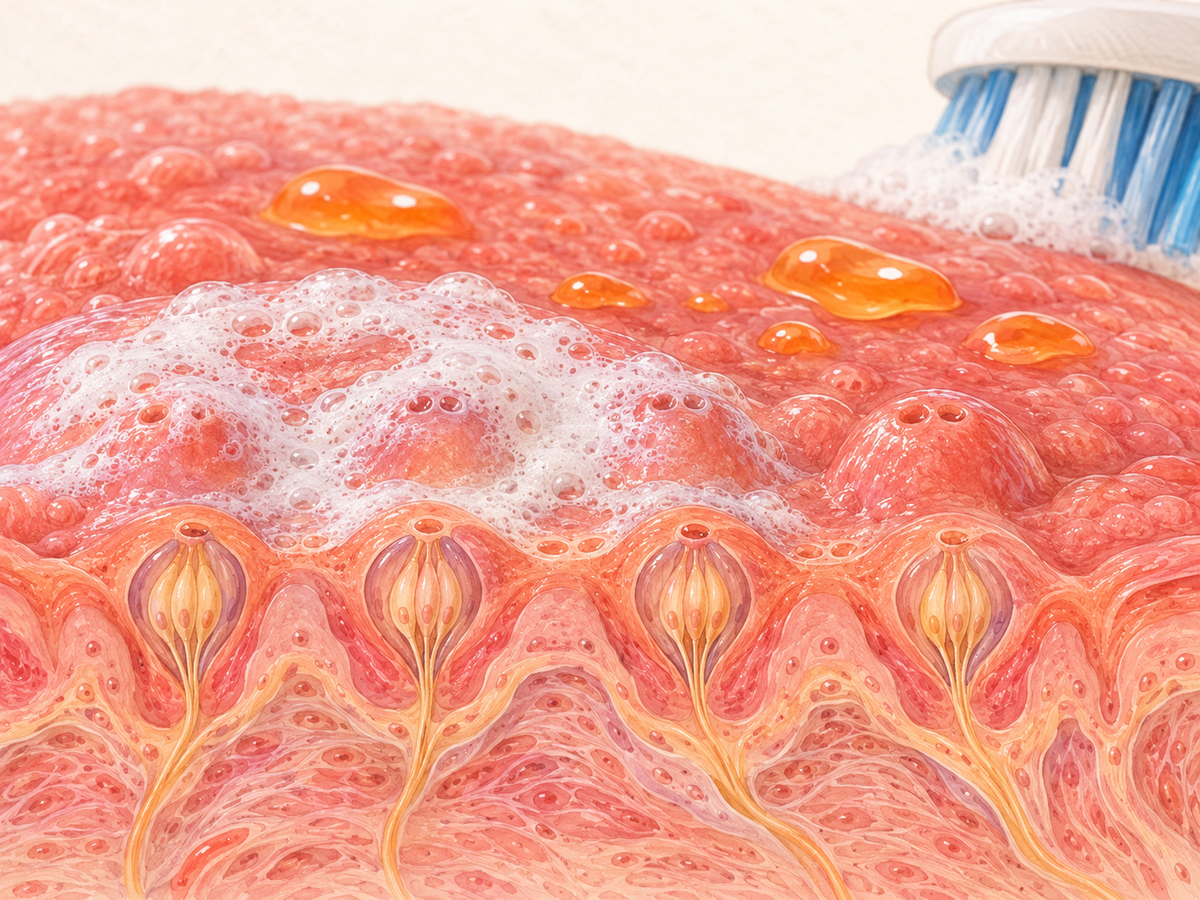
Orange juice can taste bitter, sour, or strangely metallic after brushing mainly because of sodium lauryl sulfate (SLS), a foaming ingredient in many toothpastes. SLS temporarily dulls your tongue’s ability to detect sweetness, so the juice’s acidic and bitter notes stand out. The effect is harmless and usually fades within about 30–60 minutes.
Quick fix: wait 15–30 minutes after brushing, rinse well with water, or drink orange juice before you brush. An SLS-free toothpaste may also help if you want juice right away.
The SLS Effect
SLS is a detergent-like foaming agent, also called a surfactant. It is added to many toothpastes to create the foam that forms when you brush.
The problem is that SLS can temporarily disturb the outer surface of your taste buds, the small sensors on your tongue that detect sweet, salty, sour, and bitter tastes. Sweet and salty signals can become weaker, while bitter and sour signals stay stronger by comparison. Research on SLS and taste found that sweetness and saltiness were reduced, while sourness was not suppressed and could even gain a bitter note.
Think of it like a sound mixer. The “sweet” channel gets turned down, but the “bitter” and “sour” channels stay up. That imbalance makes a normally pleasant drink taste wrong.
Some people notice this more than others. It does not mean your taste buds are permanently damaged.
Why OJ Turns Bitter
Orange juice is naturally sweet, acidic, and slightly bitter. The sweetness usually helps balance the acid and bitter notes.
When SLS mutes sweetness, that balance collapses. The acidity and bitter compounds become dominant, so the same juice can taste sharply sour or metallic. A study of toothpaste components found that sweet and bitter tastes were affected soon after tooth cleaning, while sour taste was largely unchanged.
This is a taste-perception trick, not a sign that the juice has spoiled or that something unsafe is happening. The juice is the same; your tongue is temporarily reporting it differently.
The Mint Factor
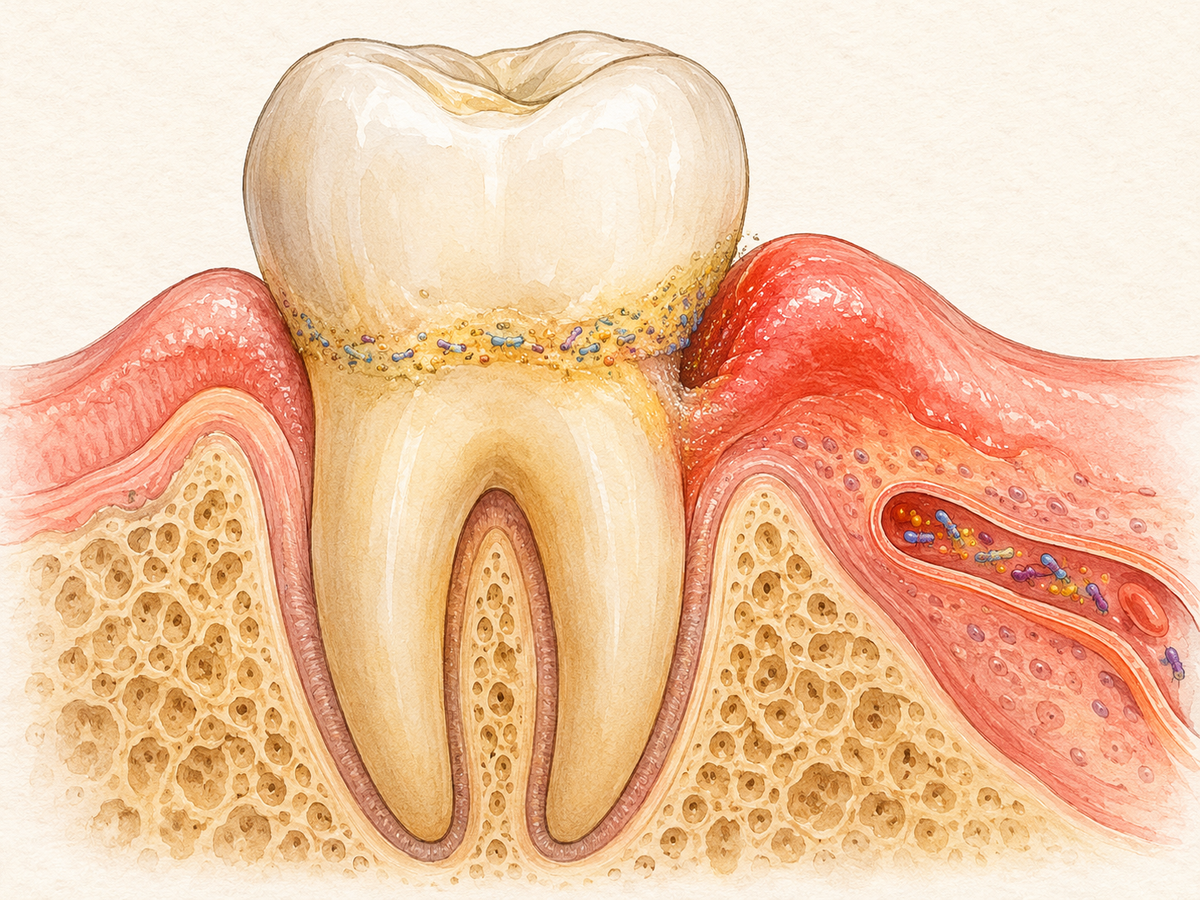
Mint and menthol—the cooling compound in many toothpastes—can linger in the mouth and make the clash worse. Citrus and mint are a rough flavor combination, and leftover mint can sharpen the unpleasant aftertaste.
This effect is real, but it is secondary. The SLS effect is usually the bigger reason orange juice tastes bad.
Even non-mint toothpastes can cause the problem because SLS is still there. Toothpaste flavorings other than mint can also leave their own lingering taste. One study on residual toothpaste flavor found that a minty aroma could still appear in some foods and drinks after brushing, and orange juice needed the longest delay before it tasted normal.
How Long It Lasts
For many people, the weird taste lasts about 30–60 minutes. It may be shorter if you rinse thoroughly. It may last closer to an hour if you used a lot of toothpaste or drank juice very soon after brushing.
Saliva helps wash away the detergent-like residue, or surfactant, over time. As that residue clears, your taste buds start working normally again.
The important thing is that the bad taste is temporary. It is not a sign of harm or permanent taste loss.
How to Drink OJ Without the Weird Taste
If you want orange juice in the morning, you can make a few simple changes:
- Wait 15–30 minutes after brushing before drinking juice. This gives saliva time to clear much of the residue.
- Rinse your mouth thoroughly with water after brushing. Rinsing can reduce the amount of toothpaste left behind.
- Drink orange juice before brushing. That way the juice hits a neutral mouth. If you brush afterward, you may want to rinse with water and wait a little before brushing because orange juice is acidic.
- Try an SLS-free toothpaste. These toothpastes are available and may reduce the taste change for some people. SLS is known to alter taste for a short period after use, according to a dental product review.
Do not skip brushing to avoid the taste. Brushing is still important for your teeth and gums.
When It’s Worth Checking
Occasional taste changes right after brushing are normal. They usually fade on their own.
| Usually normal | Worth checking |
|---|---|
| Brief bad taste after brushing that fades within about an hour | Taste changes that last for hours or all day |
| No pain or mouth sores | Mouth sores, swelling, or pain |
| Better after rinsing with water | Not better even with SLS-free toothpaste |
Some people get repeated mouth irritation or canker sores from SLS-containing toothpastes. For those people, an SLS-free toothpaste may reduce the number of ulcers and pain, according to a systematic review. But a professional evaluation can help identify whether taste changes are tied to something else, such as a medication, dry mouth, or an oral condition.
A brief odd taste after brushing is common. If it lingers or comes with pain or sores, ask a dentist or doctor for help rather than ignoring it.
 Best Overall
 Best Value
 Best for Sensitive Teeth
This article has been reviewed by an oral health professional for accuracy. It is intended to provide general educational information and should not be used as a substitute for personalized medical advice, diagnosis, or treatment. If you have questions or concerns about your oral health, please consult a dentist, physician, or other qualified healthcare provider.