












Your tongue is a flexible, bone-free muscle. It lets you taste, speak, chew, swallow, and help keep your airway open while you breathe. Most of this work happens automatically, but lasting pain, taste changes, numbness, or swallowing problems should be checked by a dentist or doctor.
Your Tongue Is Built Like a Flexible, No-Bone Tool
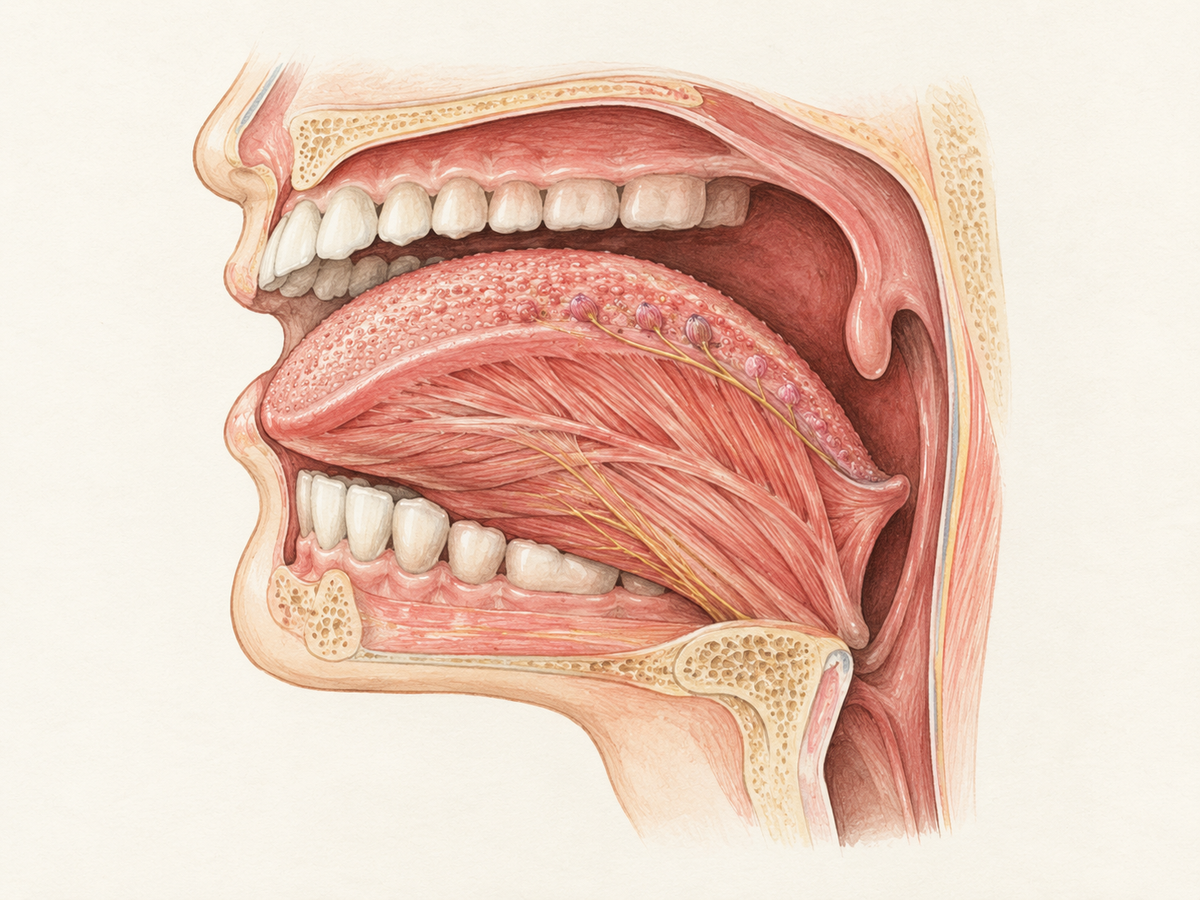
Your tongue has no bones. Instead, it is a muscular hydrostat, which means a flexible muscular organ that can change shape without a skeleton. Think of the way an octopus arm or an elephant trunk can bend and move.
Two muscle groups make that movement possible. Intrinsic muscles are inside the tongue and change its shape. Extrinsic muscles attach the tongue to nearby structures and move it around. Together, they let the tongue lengthen, shorten, curve, and press against the teeth and roof of the mouth.
Tiny bumps called papillae cover the top surface of the tongue. Some papillae are involved in texture and touch, and others contain taste buds. A network of cranial nerves and sensory receptors lets the tongue feel touch, temperature, and pain while also controlling movement, according to an overview of tongue anatomy.
Taste Is More Than Your Tongue
Taste buds are the tongue’s taste sensors. They detect five basic tastes: sweet, salty, sour, bitter, and umami, which is a savory or meaty taste.
But flavor is bigger than those five categories. Your sense of smell, food texture, and temperature combine with taste to create the full flavor experience. When you chew, aromas travel up the back of the mouth toward the nose. That is why a stuffed-up nose can make food seem bland.
The old “tongue map” idea — that sweet is only at the front and bitter only at the back — is not accurate. Taste receptors for the basic tastes are spread across the tongue, soft palate, and throat, though small differences in sensitivity may exist, according to research on the tongue map.
Taste is not just for pleasure. It helps you screen food before it goes farther into the body. That is one reason bitter or spoiled flavors may make you reject something quickly, as described in this review of taste processing.
Speech: How the Tongue Shapes Sound
Speech starts with air moving from the lungs past the vocal cords. The tongue then shapes that air into vowels and consonants by pressing against the teeth, the roof of the mouth, and the lips.
The jaw, lips, and tongue work together. The tongue makes many fast, small shape changes during speech, according to research on tongue muscle architecture and function.
Because clear speech depends on quick and precise tongue movement, stiffness or weakness can make speech sound slurred or harder to understand.
Chewing and Swallowing: Moving Food Safely
Chewing is called mastication. The tongue moves food between the teeth so it can be ground up, and it sweeps food into position over and over again.
The tongue also mixes food with saliva, or spit. Saliva moistens food and helps it stick together. The result is a soft ball called a bolus. The tongue pushes the bolus toward the pharynx, the throat, which starts swallowing. Swallowing is called deglutition.
During swallowing, the tongue and throat coordinate to protect the airway. That helps food and liquid move toward the stomach instead of entering the windpipe.
Breathing and Airway: How Tongue Position Matters
Where your tongue rests matters for breathing. Normal tongue position and muscle tone help keep the upper airway open.
During sleep, muscles relax. If the tongue and throat muscles relax too much, the airway can narrow. This can contribute to snoring or obstructive sleep apnea, a condition in which breathing pauses repeatedly during sleep. Guidance on sleep-related breathing describes obstructive sleep apnea as repeated upper airway blockages during sleep.
If someone is unconscious, the tongue can fall backward and block the airway. That is why first aid training includes steps to help keep an unresponsive person’s airway open.
How the Roles Work Together
Your tongue rarely does just one job at a time. It uses sensory feedback — information from touch, pressure, position, and taste — to adjust movement from moment to moment. This dense nerve supply helps the tongue make small, rapid changes, as explained in research on human tongue neuroanatomy.
When you eat while talking, the tongue switches quickly between shaping words and moving food. Swallowing briefly pauses breathing so food does not enter the windpipe. Laughing or talking with a mouthful can disrupt that timing and may raise the chance of choking.
Warning Signs: When to Get Help
Most tongue changes are minor and go away on their own. But some lasting changes deserve a professional look.
See a dentist or doctor if you notice:
- Taste changes that do not return to normal
- Dysphagia, or trouble swallowing
- Slurred speech or difficulty moving the tongue
- Tongue weakness or numbness
- Swelling, sores, white patches, red patches, or lumps that do not heal
Any sore, patch, or lump that lasts longer than two to three weeks should be checked. Oral health guidance emphasizes that persistent tissue changes should not be ignored, according to clinical guidance on early detection and guidance on mouth cancer referral.
Give a professional a look at any sore, patch, or lump that lasts longer than two to three weeks. Sudden breathing trouble, sudden facial or tongue weakness, or severe swallowing problems need emergency care.
Depending on the problem, you may be referred to a dentist, doctor, or speech and swallowing specialist.
Daily Care for a Healthy Tongue
Simple habits can help protect the tongue and its many jobs.
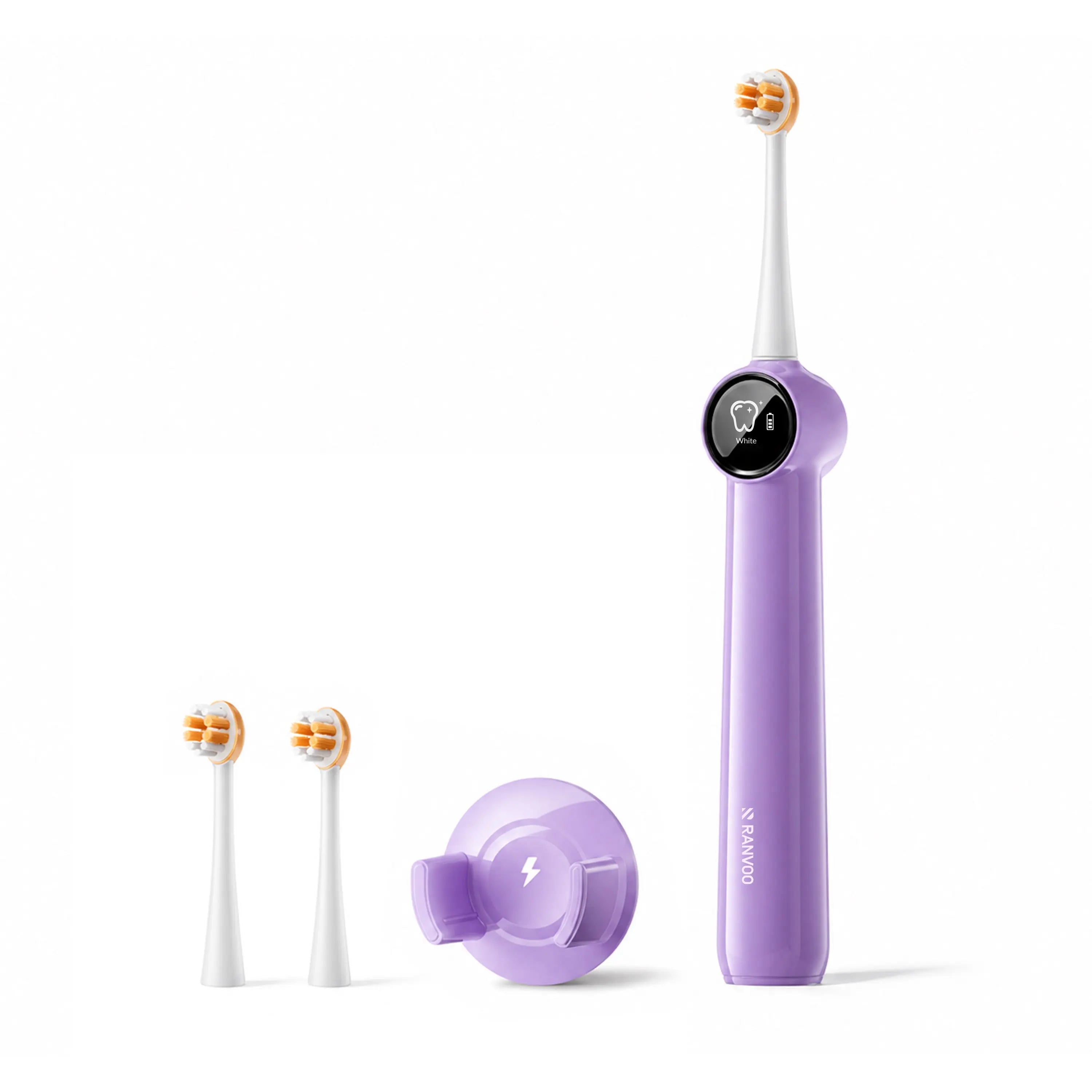
- Clean your tongue gently once a day. Use a soft toothbrush or tongue scraper, moving from back to front. Mechanical tongue cleaning can reduce tongue coating and bad breath.
- Brush and floss daily. Tongue cleaning supports oral hygiene but does not replace brushing and flossing.
- Drink enough water. Dry mouth can increase tongue coating and irritation, according to a review of tongue coating.
- Limit tobacco and heavy alcohol. These habits can irritate oral tissues and raise the risk of serious mouth conditions.
- Manage dry mouth or acid reflux with help from a professional. Reduced saliva or acid backup can bother the tongue.
- See a dentist regularly. Routine dental visits include checking the tongue and other soft tissues.
- Only do tongue exercises if a dentist, doctor, or speech and swallowing specialist recommends them for a specific condition.
Your tongue is a multitasking muscle. Care for it gently, limit tobacco and excess alcohol, and let a professional evaluate any change that sticks around.
This article has been reviewed by an oral health professional for accuracy. It is intended to provide general educational information and should not be used as a substitute for personalized medical advice, diagnosis, or treatment. If you have questions or concerns about your oral health, please consult a dentist, physician, or other qualified healthcare provider.