


















A dental prophylaxis is a preventive cleaning for healthy teeth and gums. During the visit, the hygienist checks your mouth, removes soft plaque and hardened tartar, polishes your teeth, flosses, and often applies fluoride. You may feel pressure, scraping, cold water, and vibration, but sharp pain is not expected—raise your hand if you need a break.
A routine prophylaxis is not a treatment for active gum disease or cavities. If you have deep gum pockets, bone loss, or heavy inflammation, you may need a different type of care.
Why Your Dentist Calls It “Prophylaxis” (Not Just a Cleaning)
Prophylaxis simply means preventive care. In a dental office, it is a cleaning for a mouth that is generally healthy, not a fix for active infection or decay. It removes plaque, the soft sticky bacterial film that builds up on teeth; calculus, also called hardened tartar; and surface stains.
A clinical summary describes a dental prophylaxis for people without periodontitis as usually including an examination, a review of home plaque control, fluoride, and scaling and polishing to remove plaque, calculus, and stains from the crowns of the teeth (ScienceDirect). That is different from treating an active cavity or treating ongoing gum disease.
Before the Cleaning Begins: The Quick Check
The first few minutes are not just a delay. The hygienist needs to know your mouth is ready for a routine cleaning. They may:
- Ask about changes in your health or medications.
- Check your blood pressure if needed.
- Look at your teeth, gums, and other mouth tissues.
- Measure the spaces between your teeth and gums, called gum pockets.
That gum pocket measurement is called periodontal probing. It feels like a light poke along the gumline. In a healthy mouth, most pockets measure 3 mm or less, according to clinical guidance on periodontal diagnosis. Deeper pockets can mean your gums need a different kind of care.
Dental x-rays may be taken if you are due, but the cleaning can go ahead without them. These checks help the hygienist choose the safest and most appropriate level of cleaning for you.
The Cleaning Itself: Scaling, Polishing, and More
Most prophylaxis visits follow a similar path, but the order can change. Here is what usually happens:
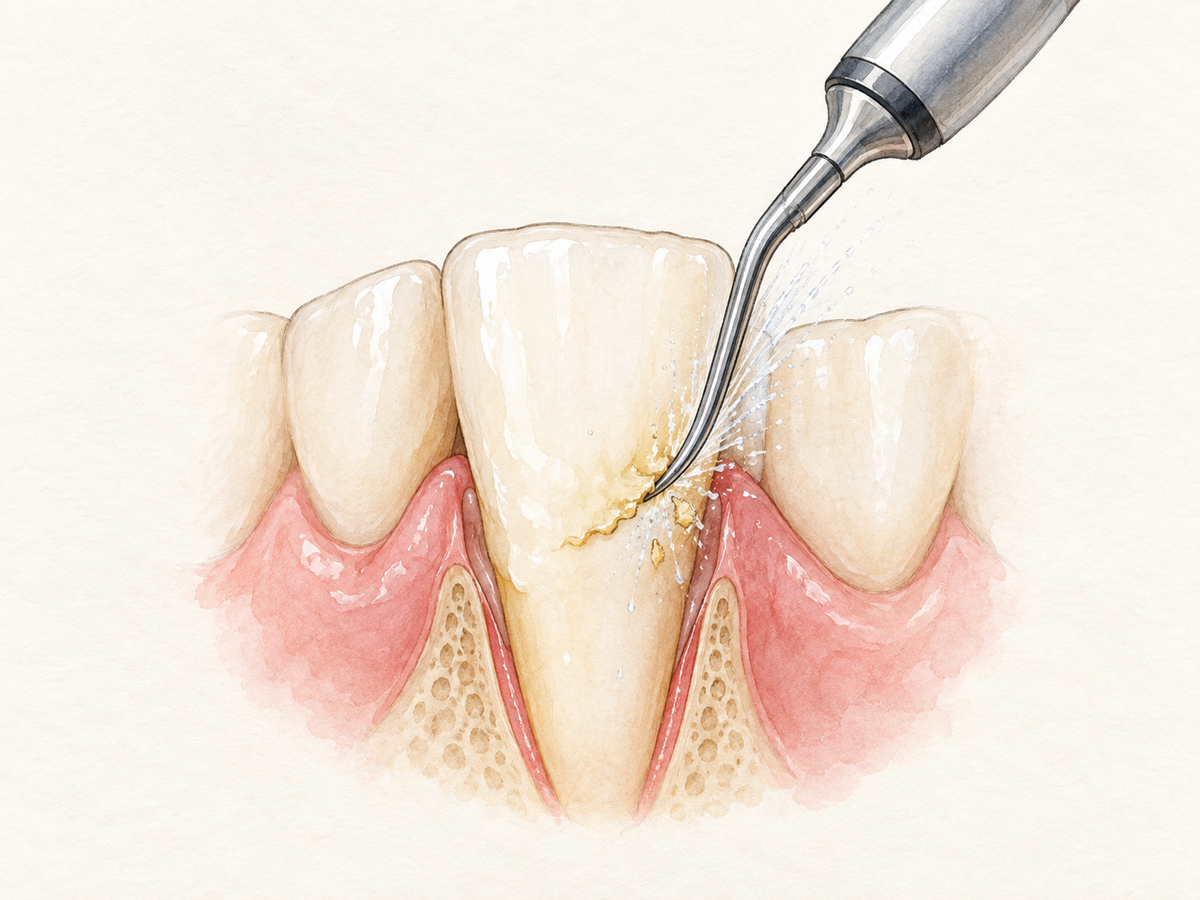
- Scaling removes plaque and tartar above and just below the gumline. The hygienist may use an ultrasonic scaler—a vibrating tool with a water spray—and hand scalers, which feel like a light scraping.
- Polishing uses a gritty paste to smooth and shine the tooth surfaces.
- Flossing cleans between teeth and catches any leftover material.
- Fluoride treatment may be applied as a gel, foam, varnish, or rinse to help strengthen the enamel.
The hygienist may pause between steps to check your comfort. If you need a break, you can ask for one.
What You’ll Feel (and When to Speak Up)
Most people feel some or all of these sensations:
- Pressure from the cleaning tool resting against the tooth.
- Scraping from hand instruments.
- Cold water and vibration from the ultrasonic scaler.
- Mild gum tenderness, especially if your gums are already a little inflamed.
Sharp, sudden pain is not the goal. If something hurts, raise your hand. The hygienist can stop, adjust the pressure, change tools, or discuss ways to make you more comfortable. Speaking up helps the appointment go better.
Why This Appointment Is Preventive, Not Optional
Removing plaque and calculus regularly reduces the chance that buildup will irritate your gums and harden further. Left alone, that buildup can lead to gingivitis, or early gum inflammation, and eventually periodontitis, a more serious gum disease that damages the bone around teeth (EFP clinical practice guideline).
The visit is also a chance for the dentist or hygienist to look for changes in your mouth early. That includes soft-tissue changes that are easier to manage when caught sooner.
Oral health is connected to overall health. Smoking and conditions like diabetes can make gum problems worse, so regular preventive visits are especially important for some people (Nordic periodontal recommendations). The idea is simple: smaller maintenance now avoids bigger treatment later.
How Often You Need Prophylaxis (and Who Needs More)
Many people hear “every six months.” That is a common starting point, but it is not a fixed rule for everyone. Evidence from the INTERVAL dental recall trial found that a risk-based recall schedule was not harmful compared with a fixed six-month schedule, and Cochrane evidence found little to no difference between risk-based and six-month recall for several oral health outcomes.
Your dentist or hygienist may suggest more frequent visits if you:
- Smoke or use tobacco.
- Have dry mouth.
- Have a history of gum disease.
- Take medications that affect your mouth.
- Have trouble keeping plaque under control at home.
For some people, that means visits every three to four months. For others, a longer interval may be reasonable.
A routine prophylaxis is not the same as periodontal maintenance or scaling and root planing. Those are for people with active gum disease or a history of periodontal problems. Check with your dental plan about what is covered, because plans vary.
After the Appointment: Normal vs. Not Normal
Most people feel fine after a prophylaxis. It is common to notice:
| Normal after-effects | Reasons to call the office |
|---|---|
| Temporary tooth sensitivity | Pain that keeps getting worse |
| Slight bleeding when brushing | Bleeding that does not improve |
| A smooth, clean feeling in the mouth | Swelling, pus, or fever |
If fluoride was applied, wait about 30 minutes before eating or drinking. For the rest of the day, it helps to avoid stain-heavy foods and drinks such as coffee, tea, red wine, or dark berries.
Persistent pain, swelling, or bleeding that does not improve is not normal. Call your dental office if you notice those signs.
When Prophylaxis Isn’t the Right Appointment
Sometimes the quick check shows that a routine cleaning is not enough. If your gum measurements are deeper than expected, or if there are signs of bone loss or significant gum inflammation, your dentist may recommend a different appointment.
Scaling and root planing is a deeper cleaning that removes buildup below the gumline to help inflamed gums heal. Clinical guidance supports this type of deep cleaning below the gumline as a key treatment for periodontitis (EFP clinical practice guideline; ADA summary). If you have already been treated for gum disease, you may be placed on periodontal maintenance instead of routine prophylaxis.
This is not upselling. It is matching the procedure to the health of your gums. If your dentist recommends a different plan, ask them to explain your gum pocket measurements and what they mean for you.
Before you leave, confirm your next visit date and any at-home steps that are specific to your mouth. That gives you the best chance of keeping your teeth and gums healthy between visits.
This article has been reviewed by an oral health professional for accuracy. It is intended to provide general educational information and should not be used as a substitute for personalized medical advice, diagnosis, or treatment. If you have questions or concerns about your oral health, please consult a dentist, physician, or other qualified healthcare provider.