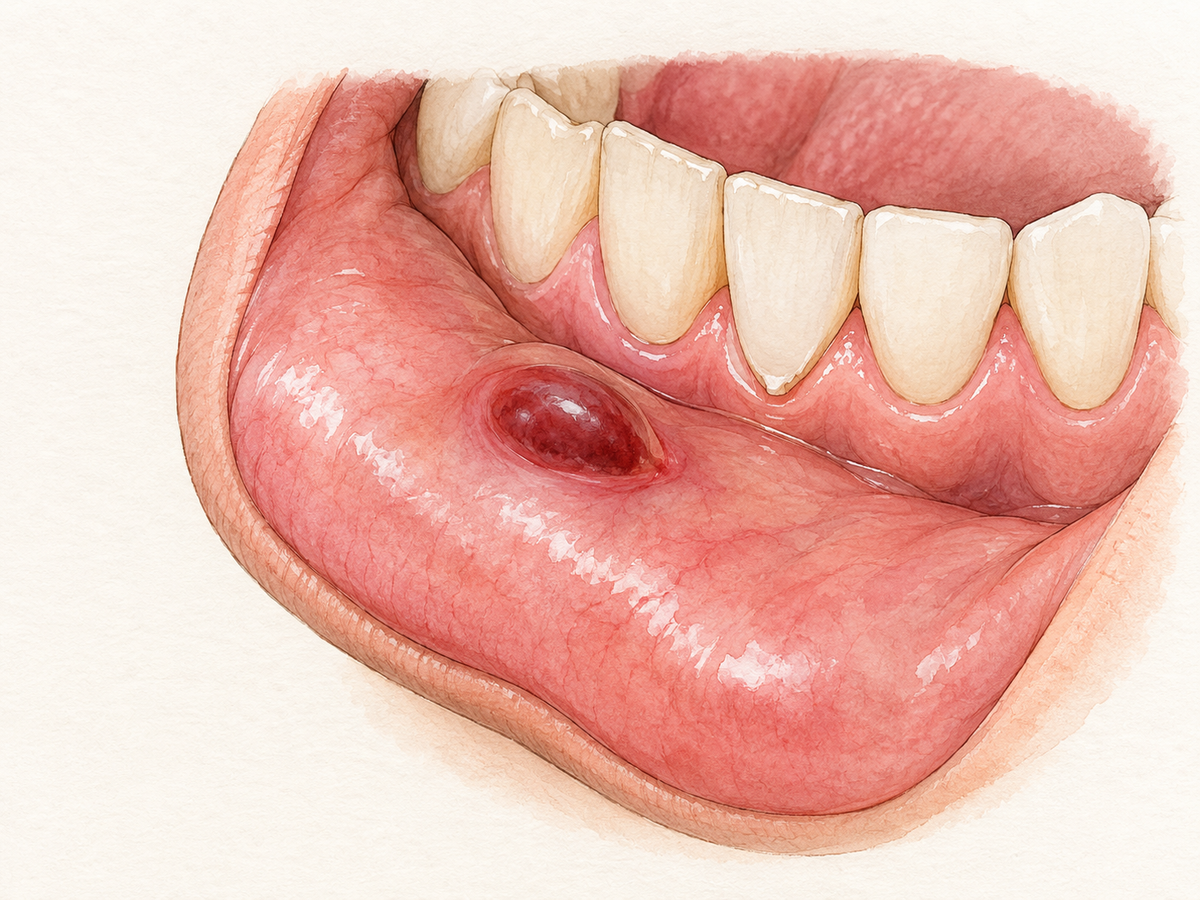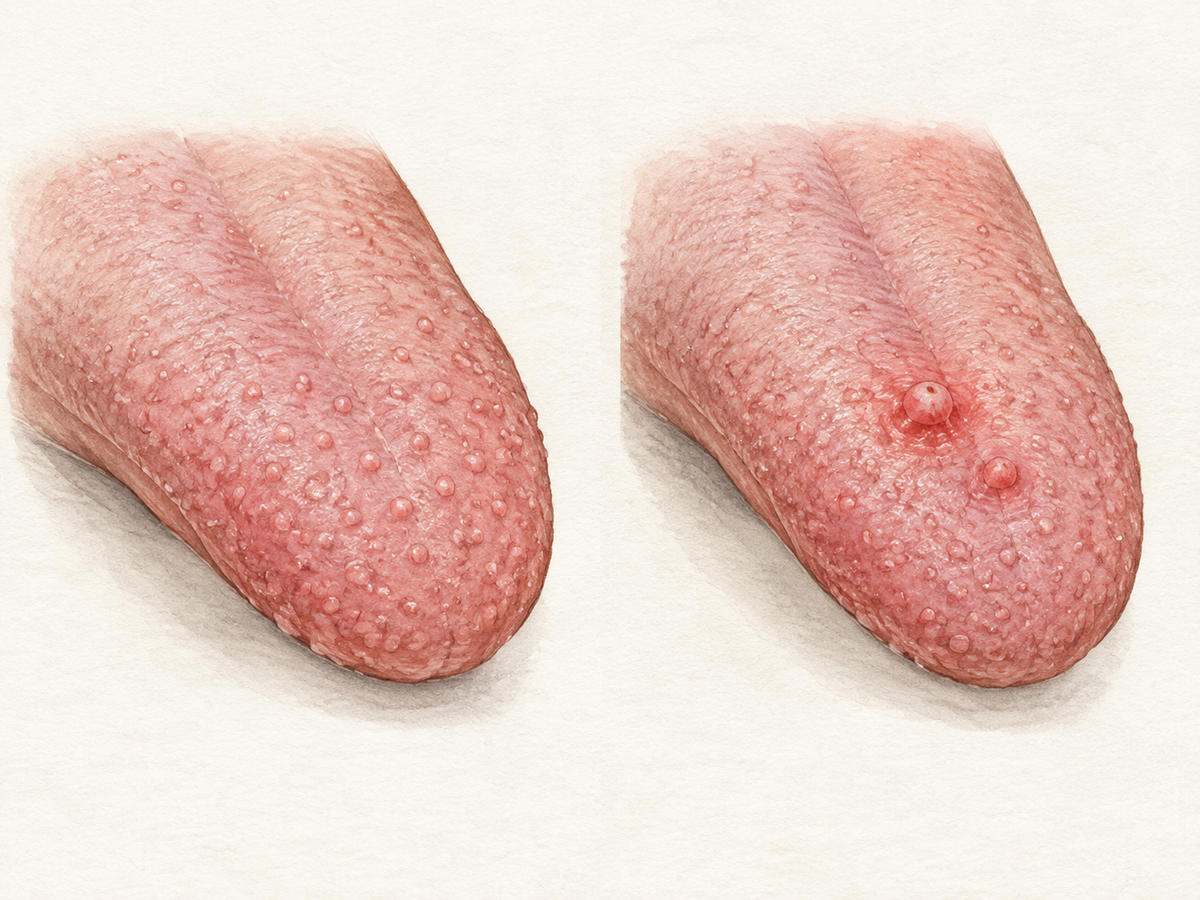
A painful bump on the tip or side of your tongue is often an enlarged normal papilla, one of the tiny tongue bumps that hold taste buds. This is commonly called a lie bump, or transient lingual papillitis. It is usually harmless and fades within days to a couple of weeks. Start with cold liquids, gentle saltwater rinses, and avoid sour, spicy, or rough foods. A bump that lasts more than two weeks, grows, bleeds, or comes with fever or trouble swallowing should be checked by a dentist or doctor.
The main thing to know: most swollen tongue bumps settle on their own with gentle care, but any bump that does not heal within two weeks deserves a professional look.
Start Here: Fast Relief for Painful Bumps
If your tongue is sore right now, these steps can take the edge off while it heals:
- Sip cold water or let a small ice chip melt on the bump. Cold foods and liquids are a simple comfort measure for these tender spots, according to clinical guidance on transient lingual papillitis.
- Rinse with warm salt water. Mix about half a teaspoon of salt into a cup of warm water and swish gently. Saline rinses are a traditional, low-risk way to soothe and clean the area.
- Skip foods that sting or scratch. Citrus, tomatoes, vinegar, hot sauce, chips, and rough toast are common culprits. Avoiding irritating foods is a core part of managing these bumps.
Most enlarged papillae are short-lived and not serious. Comfort measures make sense while you watch for healing.
What Enlarged Papillae Look and Feel Like
Your tongue is naturally covered with small bumps called papillae. The ones that hold taste buds are called fungiform papillae. When one or more become inflamed, they can swell into one or a few small, red or white-tipped bumps, often on the tip or sides of the tongue.
The bumps may feel tender, burn, or sting, especially with hot, spicy, or acidic foods. Some people also notice tingling or itching. In one review of cases, the enlarged papillae varied from normal-colored to red or whitish, and symptoms included pain, burning, and difficulty eating spicy or acidic foods (source).
These are not automatically new growths. In most cases, they are normal tongue structures that are temporarily irritated. It is only when a bump persists, keeps growing, or changes in a concerning way that a clinician needs to take a closer look.
Why Papillae Get Enlarged: Top Causes
Often, no single cause is found. The exact trigger for transient lingual papillitis is not fully known, and it is likely multifactorial (review). The most commonly described triggers include:
- Minor trauma, such as biting, burning, or rubbing from sharp teeth, braces, or dental appliances
- Sour, spicy, or very hot foods
- Stress, lack of sleep, or intense periods like exams
- Hormonal changes during menstruation or menopause
- Allergies or mild inflammatory reactions
This pattern is called transient lingual papillitis, or lie bumps. It is a temporary inflammatory reaction, not something that requires aggressive treatment. Canker sores, viral infections, and nutritional deficiencies can sometimes look similar or overlap, so the cause is not always clear (source).
Because it can be hard to pinpoint one trigger, treatment focuses on calming the irritation and avoiding likely culprits.
Symptoms That Matter and What’s Normal
The usual symptom pattern is:
- Symptoms start quickly, often within a day or two.
- Soreness and burning may feel worst for the first one to two days.
- The bump then improves and often clears within a few days to a week.
Some cases can take up to one to three weeks if the surrounding tongue is also inflamed (source). Tracking how long the bump lasts, how big it is, and how many bumps appear helps you tell a harmless flare from something that needs attention.
Fever, swelling that spreads, or trouble swallowing are not typical for ordinary lie bumps. Those symptoms should prompt a same-day call or visit.
Is It a Lie Bump or Something Else?
Lie bumps are often confused with other mouth conditions. Here is a quick comparison.
| Condition | What you may notice | Key clue |
|---|---|---|
| Lie bumps | Tender red or white-tipped bumps on the tip or sides | Painful, short-lived, often tied to irritation |
| Canker sores | Shallow open sores with a white-yellow center and red rim | Open ulcer, not just a swollen bump |
| Cold sores | Small blisters around the lips or mouth that burst and crust | Blistering and crusting; may tingle first |
| Oral thrush | Creamy white patches that may wipe off | Yeast infection; often covers larger areas |
| HPV wart | Painless, persistent raised bump | Usually not tender; does not go away quickly |
| Oral cancer | A hard, non-healing, growing lump or ulcer | Does not heal, may bleed, may feel firm |
This table is a rough guide, not a self-diagnosis. Transient lingual papillitis stands out because it tends to hurt and then fade quickly, while HPV-related oral lesions are often painless and persistent (source). A non-healing, hard, or growing bump should be evaluated by a clinician rather than watched at home (mouth cancer guidance).
Home Treatment Plan for Enlarged Papillae
Most cases improve within a few days to two weeks. A simple routine can help:
- Rinse two or three times a day. Use warm salt water or a baking soda rinse: about half a teaspoon in a cup of warm water.
- Use cold comfort. Sip cold water, suck on a small ice chip, or press a cold cloth lightly against the area.
- Use over-the-counter pain medicine if needed. Acetaminophen or ibuprofen may help with general discomfort, but some evidence suggests they do not shorten the bump or reliably reduce its intensity (source).
- Avoid tobacco, alcohol, acidic foods, spicy foods, and rough or crunchy foods while the bump heals.
- Leave the bump alone. Do not pick, squeeze, scrape, or cut it. That can cause more injury and infection.
Topical numbing gels or mouthwashes may help. Ask a pharmacist or dentist which product is appropriate. In painful cases, a dentist may recommend a mild corticosteroid rinse or paste to calm inflammation (source).
Professional Treatment Options
If home care is not enough, a dentist or doctor may suggest:
- A topical corticosteroid rinse or paste to reduce inflammation
- A topical anesthetic to temporarily numb the area
- Antifungal, antiviral, or antibiotic medicine only if a specific infection is suspected
- A biopsy or specialist referral for a lesion that is persistent, growing, or looks unusual
Most transient lingual papillitis does not need antibiotics or antivirals because a specific infection is rarely confirmed. A biopsy, or tissue sample test, is reserved for lesions that do not resolve or have suspicious features. Dental guidance notes that reactive bumps should improve within about 10 to 14 days after the irritation is removed; if not, further evaluation may include a biopsy (source). For oral lesions lasting more than two weeks or not responding to treatment, a biopsy should be considered (expert consensus).
When to See a Dentist or Doctor
Call a dentist or doctor if you have:
- A bump lasting more than two weeks
- A bump that is getting bigger
- Bleeding without an obvious cause
- Trouble swallowing or speaking
- Fever alongside the bump
- A hard, painless lump
- A history of smoking, heavy alcohol use, or HPV
Seeking care is not overreacting. It is the fastest way to rule out something serious and get the right treatment. Persistent or changing mouth lesions warrant professional evaluation, especially in people with higher risk from smoking, alcohol, or HPV (source).
Prevention: Avoiding Repeat Bumps
You can lower the chance of repeat bumps by reducing repeated irritation:
- Chew slowly and be careful with very hot food or drinks.
- Manage acid reflux if you have it, since stomach acid can irritate the tongue.
- Manage stress and get decent sleep, especially if flare-ups happen during busy periods.
- Stay hydrated to avoid a dry, irritated mouth.
- Avoid known irritants such as very spicy, acidic, or rough foods, tobacco, and alcohol.
- If bumps keep coming back, keep a simple symptom diary. Note the date, what you ate, stress level, sleep, and where you are in your menstrual cycle if relevant.
Recurrent lie bumps may be linked to hormonal cycles, allergies, or food sensitivities. Some studies suggest food sensitivities and additives can play a role in recurrent mouth irritation, which makes a symptom diary a useful, low-cost tool (source).
Bottom Line
Enlarged papillae are usually a temporary reaction to irritation. Most settle within days to a couple of weeks with gentle rinses, cold comfort, and avoiding harsh foods. The main warning signs are duration and change: a bump that lasts longer than two weeks, grows, bleeds, feels hard, or affects swallowing needs a professional look. Prevention is mostly about reducing repeated irritation. When in doubt, a dental check is a sensible step, not an overreaction.
This article has been reviewed by an oral health professional for accuracy. It is intended to provide general educational information and should not be used as a substitute for personalized medical advice, diagnosis, or treatment. If you have questions or concerns about your oral health, please consult a dentist, physician, or other qualified healthcare provider.