







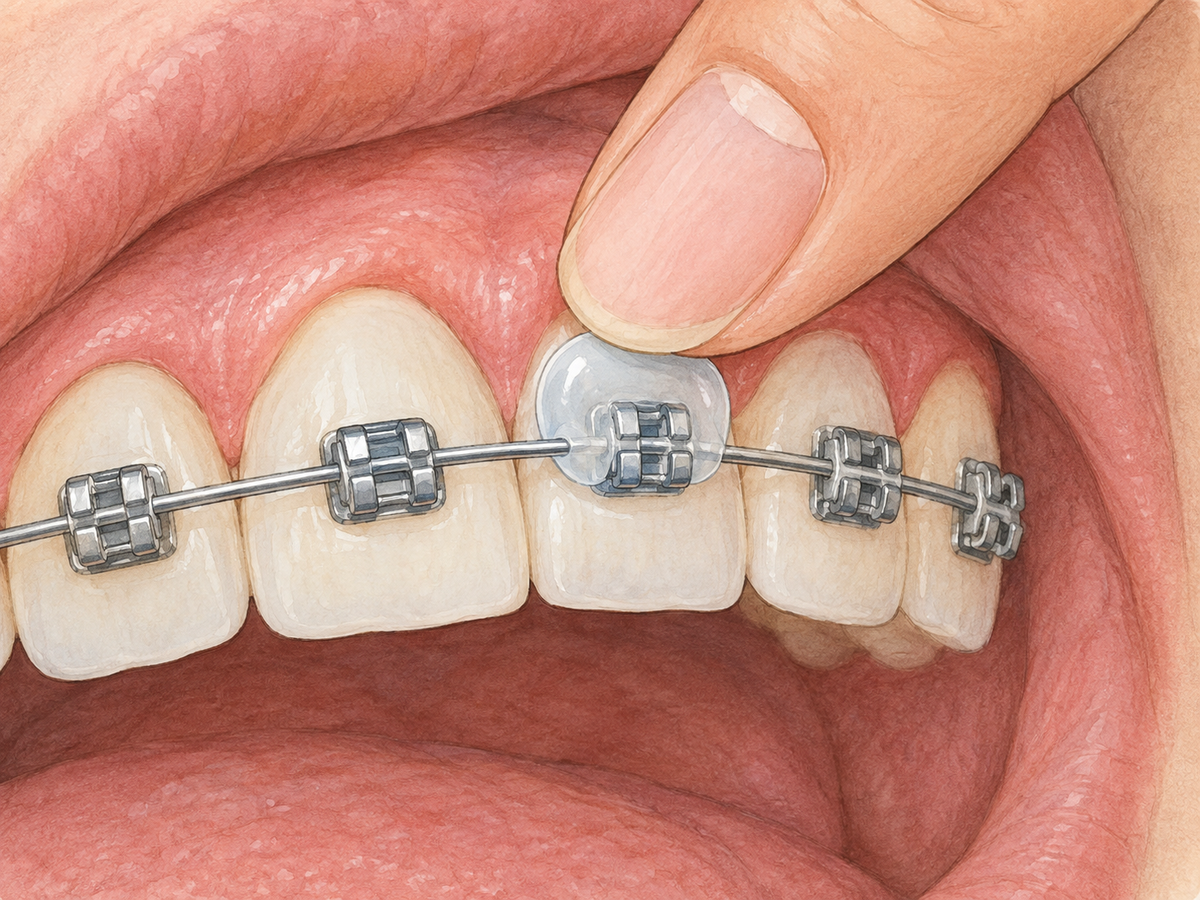
Orthodontic wax (braces wax) is a soft, temporary cover you press over the bracket or wire that is rubbing your cheek, lip, or gum. The basic method is simple: dry the spot, roll a pea-sized piece of wax into a ball, press it firmly over the braces part, and remove it before eating or brushing. Wax gives comfort, but it will not repair a loose bracket, broken wire, or pain that continues for days.
Wax is a temporary cushion, not a repair. If a wire is long, sharp, or causing bleeding, call your orthodontist.
Why Wax Helps (and When It Doesn’t)
Braces create small metal surfaces inside your mouth. The brackets are the square pieces glued to each tooth. The wire is the thin metal line that runs through them. These parts can rub against your cheeks, lips, gums, or tongue, especially during the first weeks of treatment or after an adjustment.
Wax helps by putting a smooth, flexible layer over the rough spot. Most orthodontists recommend using a small amount of wax over brackets to protect the soft tissue and reduce mouth trauma, according to orthodontic guidance on bracket protectors. It shields the area so eating and talking feel less painful.
Wax is not a fix for braces damage. A loose bracket, a broken wire, or pain that lasts more than a few days needs a professional look. Wax may also loosen after eating, brushing, or repeated mouth movement because it has no chemical bond to the metal. If it falls off, you simply dry the spot and apply a fresh piece, as noted in research on orthodontic wax materials.
Prep the Bracket or Wire
Wash your hands before touching your mouth. This is especially important if the area is already sore.
Find the exact bracket or wire end that is causing the irritation. A small mirror helps. If old wax is already there, lift it off gently with a clean finger, toothpick, or tweezers.
Dry the bracket or wire with a clean tissue or cotton swab. A dry surface is the most important step because moisture and saliva make it harder for wax to grip.
Have your wax ready before you start. A pea-sized piece is all you need for one spot.
Apply the Wax So It Stays
Use these steps once the metal is dry:
- Pinch off a piece of wax about the size of a pea.
- Roll it between your fingers into a small ball.
- Press the ball firmly onto the bracket or wire end.
- Mold the wax around the metal with your fingertip until it feels smooth.
Keep the wax on the sore spot. You do not need to cover the entire tooth or nearby brackets. A thin, smooth layer is usually enough.
Do not stretch the wax or keep rolling it over and over. Overworking it can make the surface less sticky, which makes it fall off more easily.
If a Wire Is Poking You
A wire end can poke out as teeth move or if the wire slides. This is common, and wax can protect your cheek until you get an appointment.
Use a slightly larger ball of wax for a poking wire. Press it over the sharp end, then mold it back against the nearest bracket or tooth. That gives the wax support so it stays in place.
Do not cut or bend the wire yourself unless your orthodontist has specifically told you to do so and has shown you how. Guidance for orthodontic emergencies suggests wax and reassurance may be enough for a mildly protruding wire, while a more problematic wire may need professional adjustment, according to clinical guidance on managing orthodontic emergencies.
Call the office if the wire is long, sharp, or has caused bleeding. Wax is helpful, but it is not a substitute for fixing a wire that continues to cut the inside of your mouth.
Eating, Sleeping, and Replacing Wax
Wax can stay on for hours, including overnight. That can help protect your cheek while you sleep.
Remove wax before meals and before brushing. You do not want to swallow it with food, and wax can trap bacteria. One laboratory study of orthodontic wax materials recommended not using the same wax for more than 24 hours to prevent biofilm buildup, as reported in research on wax and bacterial adhesion.
To remove wax, use a clean finger, a toothpick, or a piece of floss. Work the edge gently and pull it away. Throw the used piece out.
Then brush softly around the area. You can apply a fresh piece of wax afterward if the spot still feels sore.
Replace the wax when it feels loose, dirty, or no longer smooth. Do not try to make an old piece work again.
Common Mistakes That Make Wax Fail
Small changes can make wax stay put much longer.
- Applying wax to a wet bracket: Moisture stops wax from gripping. Dry the area first.
- Using too much wax: A bulky piece can stick out and peel off. Pea-sized is enough for one bracket or wire end.
- Reusing old wax: Used wax is dirty and less sticky. Throw it away and use fresh wax.
- Overworking the wax: Too much rolling or stretching can make it less sticky. Shape it once, press it on, and smooth it.
- Ignoring pain that does not improve: If wax is not helping, or the pain is getting worse, the braces may need adjustment. Better wax application will not fix a loose bracket or damaged wire.
When to Call Your Orthodontist
Call your orthodontist if:
- The pain is severe.
- A wire is poking through the skin or causing bleeding.
- A bracket is loose or sliding along the wire.
- Wax does not provide relief after you follow the steps above.
Wax is a comfort tool, not a replacement for an adjustment or repair. A broken fixed appliance can continue to injure the inside of your mouth until it is corrected, according to guidance on orthodontic emergencies.
When you call, describe the problem clearly. Tell the office where it hurts, what the wire or bracket is doing, and whether wax is helping. Ask if you need a same-day or soon appointment. A clear phone photo can help show what is happening.
 Best Overall
 Best Value
 Best for Sensitive Teeth
This article has been reviewed by an oral health professional for accuracy. It is intended to provide general educational information and should not be used as a substitute for personalized medical advice, diagnosis, or treatment. If you have questions or concerns about your oral health, please consult a dentist, physician, or other qualified healthcare provider.