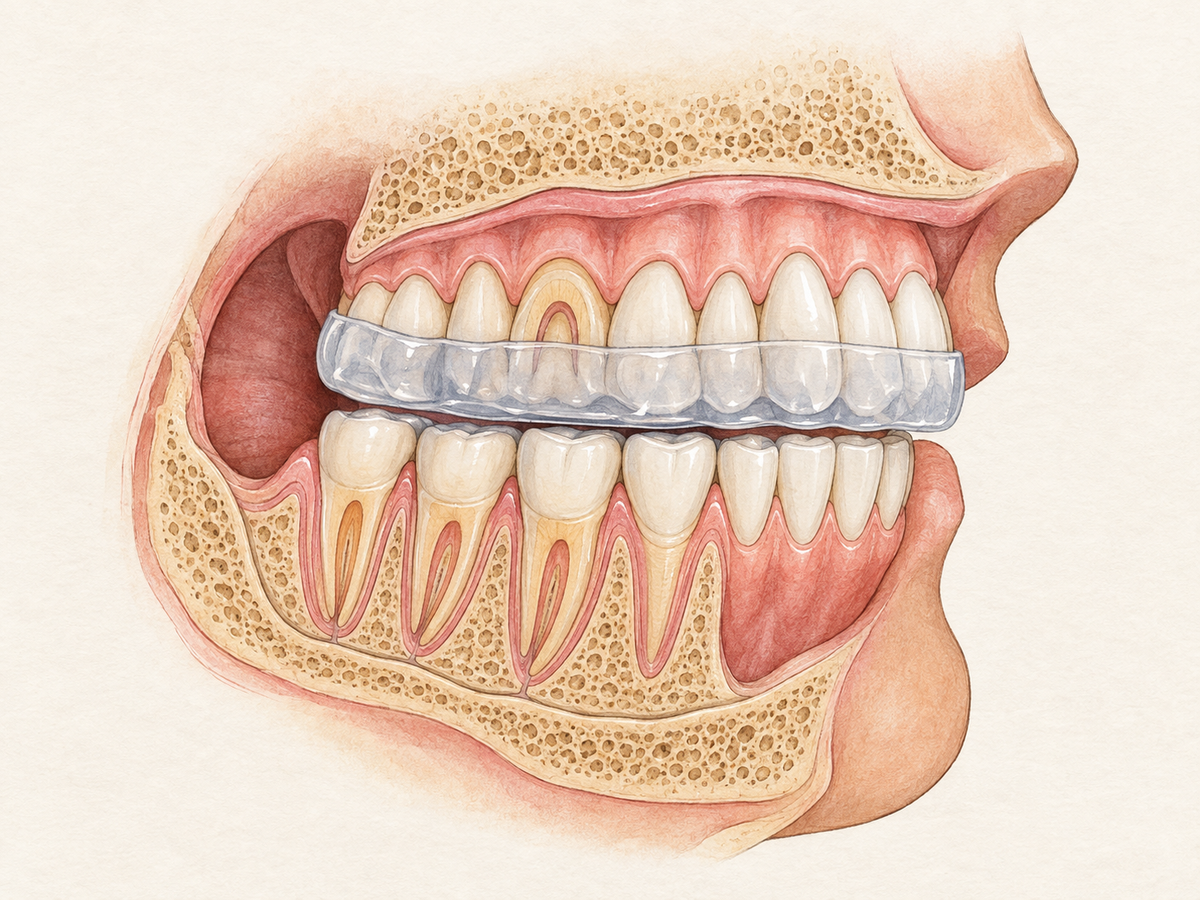
If you grind or clench your teeth at night and you also have worn-down teeth, morning jaw soreness, morning headaches, or a partner who hears grinding, a night guard is likely worth discussing with your dentist. If you have no symptoms and your dentist has not seen damage to your enamel (the hard outer layer of your teeth), you probably do not need one yet. A night guard protects your teeth from wear, but it does not stop the grinding or clenching itself, and it does not cure jaw joint problems.
The main thing to know: A night guard is a tooth-protection tool, not a cure. Symptoms plus a dentist’s confirmation usually mean a guard can help; no symptoms usually mean monitor and reassess.
Signs It Would Help
Some clues point toward overnight grinding or clenching, known as bruxism. They include:
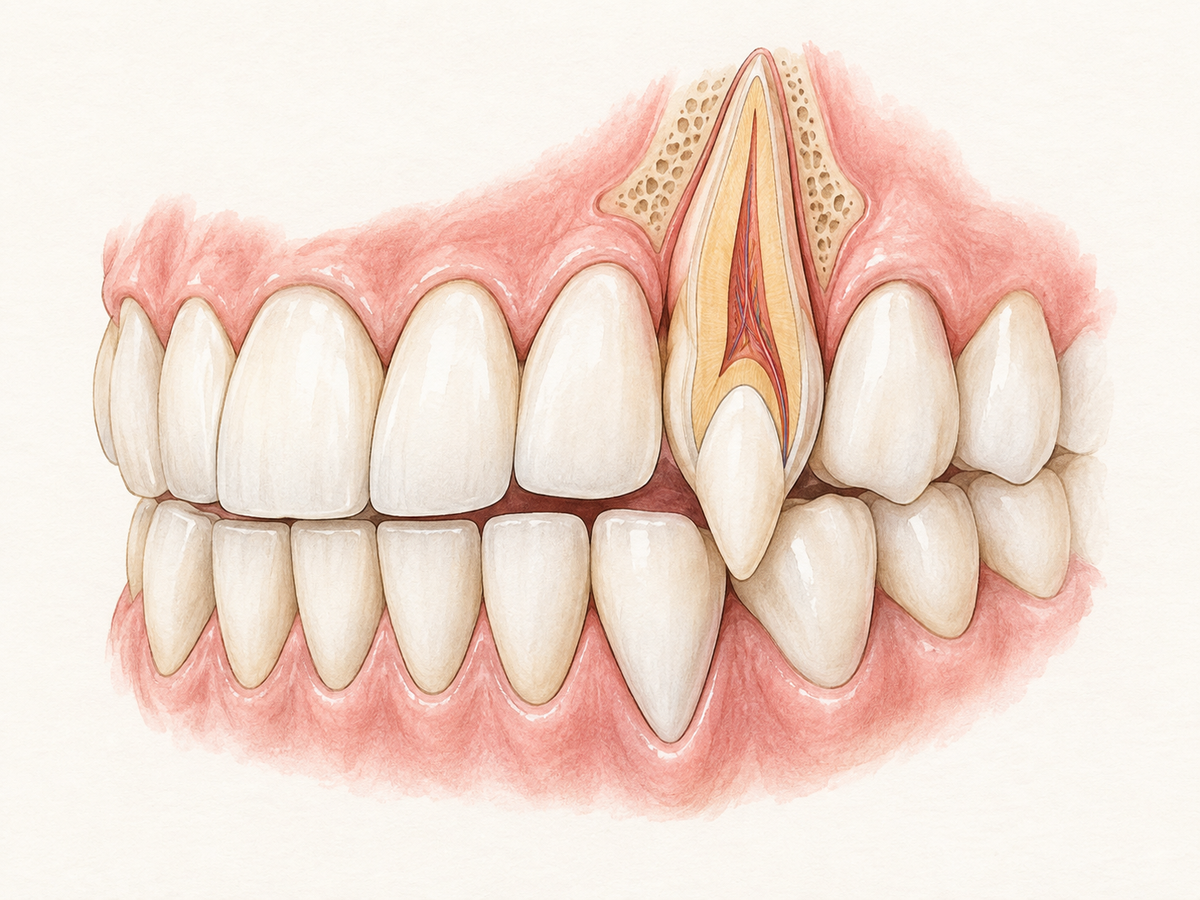
- Flattened or chipped teeth
- New sensitivity to hot, cold, or sweet foods
- Sore jaw muscles, especially when you wake up
- Morning headaches
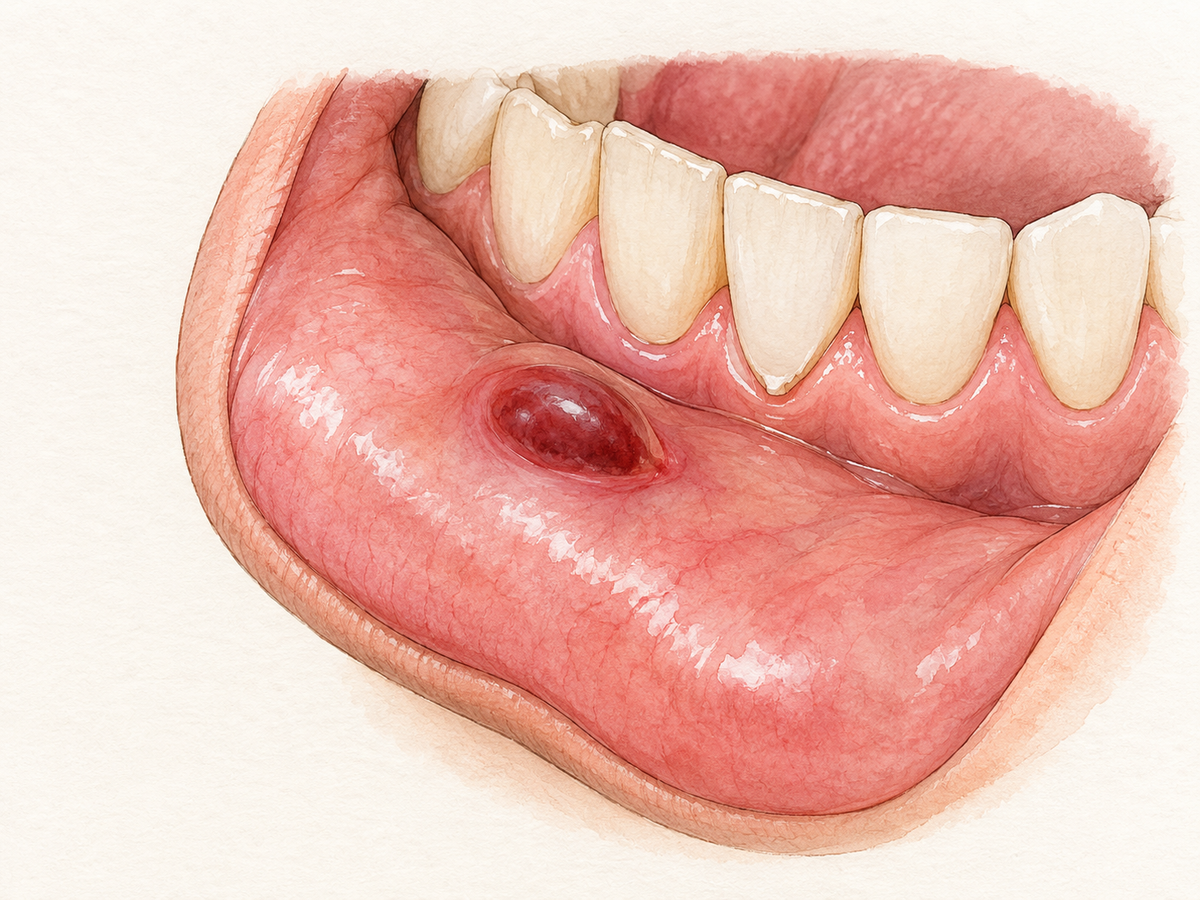
- Small indentations on the edges of your tongue or along your cheeks
- A partner or family member hears grinding sounds at night
Flattened and chipped teeth suggest repeated mechanical wear. Sore muscles and morning headaches suggest your jaw muscles worked hard overnight. Tongue and cheek indentations are another sign of pressure from clenching. These signs are part of the picture dentists look for when assessing possible sleep bruxism, according to clinical guidance on bruxism signs.
A night guard can reduce damage by placing a smooth barrier between your upper and lower teeth. It does not stop the behavior itself. Mild, occasional clenching with no visible damage may only need monitoring. The choice of not treating mild, symptom-free wear is still being studied, but it may be reasonable for some people, according to a review of bruxism treatments.
Jaw Pain or TMJ: See a Dentist First
If your jaw clicks, locks, opens less than usual, or causes persistent pain in your jaw or face, see a dentist before buying any guard. These can be signs of a temporomandibular disorder, often called TMJ or jaw joint trouble.
A store-bought guard may ease muscle tension for some people. But if the guard does not fit your bite, it can irritate your gums, shift teeth, or place pressure in the wrong spots. Professional guidance on TMJ appliance therapy notes that fit and follow-up matter, and side effects like bite changes or discomfort can occur when an appliance is not right for you (TMJ appliance therapy review).
Do not self-treat severe or worsening jaw pain with an over-the-counter guard. Get a dental or TMJ evaluation first.
When Not to Buy One
Sometimes a night guard is not the right next step. Red flags include:
- Loud snoring, gasping, choking sounds, or pauses in breathing at night
- Severe daytime sleepiness even after a full night in bed
- No signs of grinding or clenching
- Ongoing dental work that may change your bite
- Major bite alignment problems
Loud snoring, gasping, and daytime fatigue can point to sleep apnea, a breathing problem. A basic night guard does not treat sleep apnea. In fact, some splints may make breathing worse in people with obstructive sleep apnea, as noted in a review of bruxism treatment approaches. If these symptoms are present, a dentist or sleep specialist should evaluate you first. For sleep apnea treatment, official guidance recommends a custom, adjustable oral appliance fitted by a qualified dentist after a physician makes the diagnosis, rather than an over-the-counter device (clinical practice guideline on oral appliances).
An ill-fitting guard can also irritate gums, shift teeth, or interfere with breathing. If you have no signs of grinding, or if you are in the middle of dental work, guessing with a store guard may do more harm than good.
Which Type Is Worth It?
There are three main types of night guards:
| Type | Fit and comfort | Durability | Cost | Best for |
|---|---|---|---|---|
| Dentist-made custom guard | Made from a model of your teeth and adjusted by your dentist. Best fit. | Usually lasts longest | Highest | Heavy grinding, jaw pain, or long-term wear |
| Boil-and-bite OTC guard | You soften and mold it at home. Fit varies and often feels bulky. | Shorter | Lowest | Mild, short-term protection when a dentist has confirmed the need |
| Online custom guard | Made from an at-home impression. May fit better than boil-and-bite, but no dentist checks your bite. | Varies | Middle | Mild to moderate grinding if a dentist has confirmed the need |
Custom mouthguards tend to be rated as more comfortable and less disruptive to speaking and breathing than boil-and-bite versions, based on comparative studies of mouthguard comfort and usability. That fit advantage matters if you will wear the guard every night for a long time.
“Worth it” depends on your severity, not just price. If you grind heavily, have jaw pain, or need long-term protection, a custom guard is usually the better choice. For mild, short-term protection, a boil-and-bite or online custom guard may be acceptable after your dentist confirms you actually need one. But a cheap guard that does not fit well is not a bargain if it irritates your gums or changes your bite.
How to Decide
You can usually settle this in one dental visit. Here is a simple plan:
- Ask your dentist to check for tooth wear, bite problems, jaw joint tenderness, and sleep apnea warning signs.
- If your dentist confirms grinding or clenching, ask which type of guard fits your situation.
- If your dentist does not confirm grinding, track your symptoms for a few weeks. Note when jaw soreness or headaches happen. Try improving stress management, sleep habits, and avoiding excess caffeine or alcohol near bedtime.
- Reassess if symptoms or tooth wear get worse.
A dental exam is more reliable than a questionnaire alone. Reviews of bruxism diagnosis note that symptoms and clinical findings are not enough to confirm sleep bruxism on their own, and combining clinical signs with objective tools can improve accuracy (systematic review of bruxism diagnosis). Your dentist can help you decide whether the signs you see are meaningful.
The simple rule: symptoms plus dentist confirmation means get a guard. No symptoms means monitor and reassess.
This article has been reviewed by an oral health professional for accuracy. It is intended to provide general educational information and should not be used as a substitute for personalized medical advice, diagnosis, or treatment. If you have questions or concerns about your oral health, please consult a dentist, physician, or other qualified healthcare provider.