






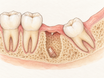



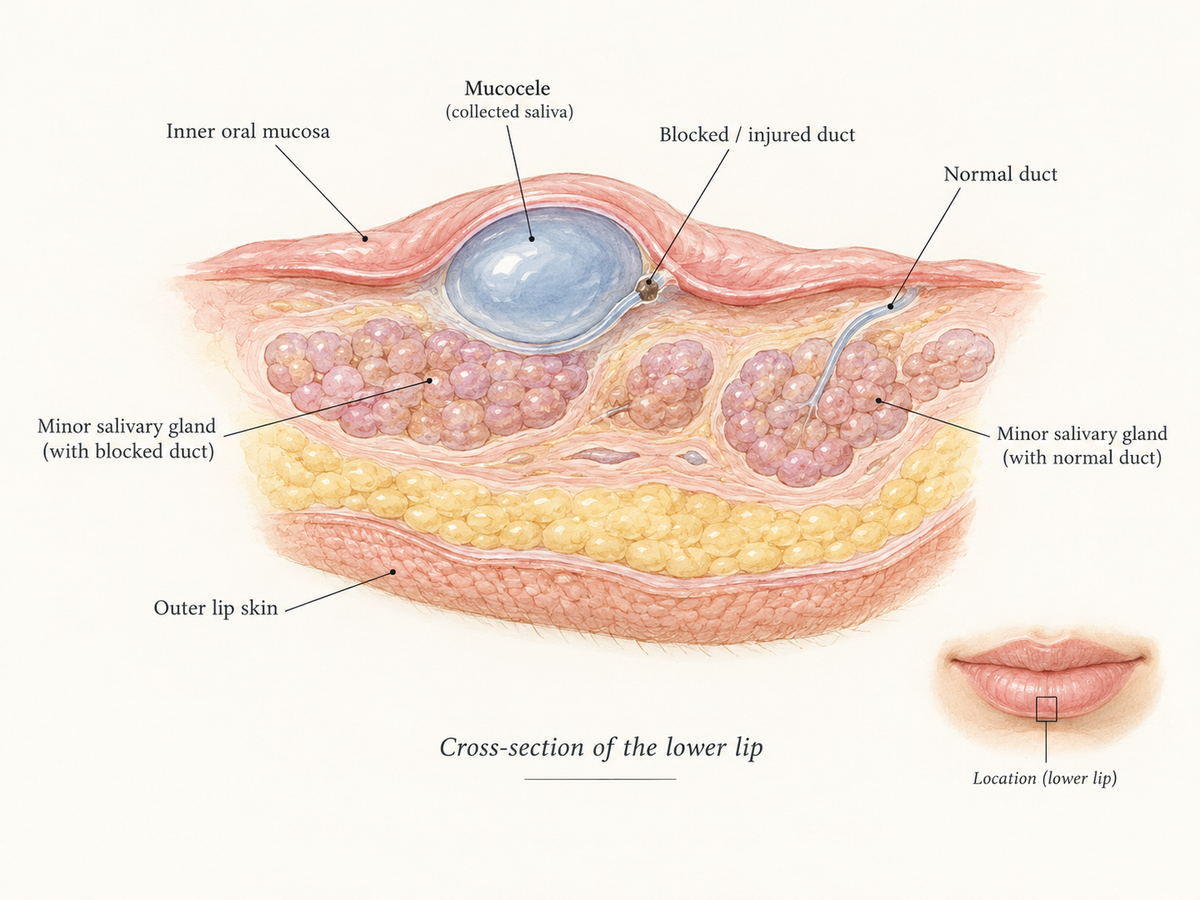
A mouth cyst is usually an oral mucous cyst, also called a mucocele. It is a soft, fluid-filled bump that forms when a tiny saliva gland duct is blocked or injured, often from lip biting, chewing the inside of your cheek, or another minor mouth injury. Most are benign, meaning they are not cancer, and small ones may go away on their own. If a bump lasts longer than two weeks, keeps returning, or grows quickly, have a dentist or oral surgeon check it.
Do not squeeze, bite, or pop a mouth cyst. That can cause bleeding, infection, and a higher chance the bump will come back.
Why Mouth Cysts Form
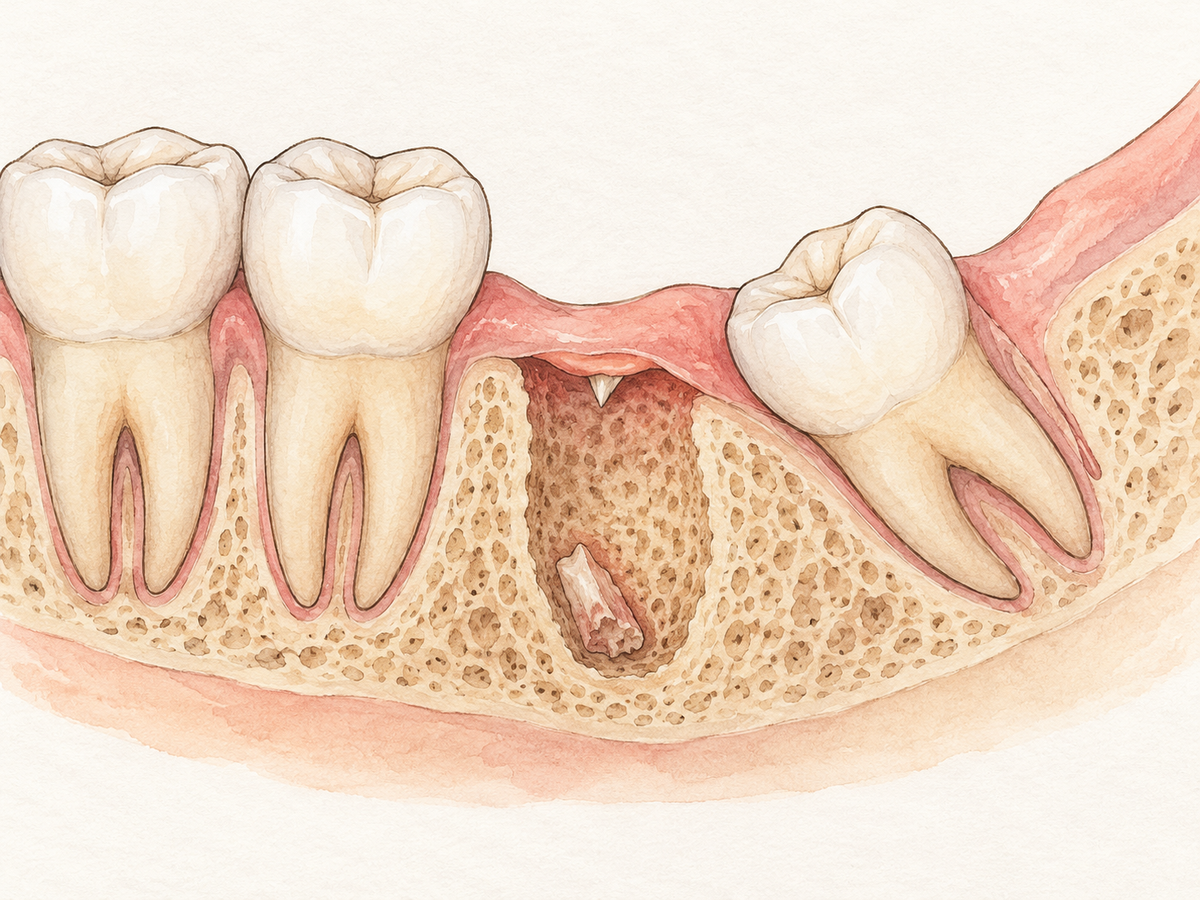
Your mouth has many small saliva glands, especially in the lips, inner cheeks, and floor of the mouth. Each gland has a tiny tube, called a salivary gland duct, that carries saliva to the surface.
A mouth cyst usually starts when that tiny tube is injured or blocked. Common triggers include:
- Biting your lower lip
- Chewing the inside of your cheek
- Nail biting or pencil chewing
- A bump or hit to the mouth
- Dental work that irritates a gland
When the duct is damaged, saliva can leak into the surrounding tissue. Or saliva can back up behind a blocked duct. The body walls off that fluid, forming a small bubble under the surface. This is the main reason most mouth cysts form, according to a review of oral mucoceles.
Most involve the minor salivary glands, which are the small saliva glands just under the mouth lining. In a study of 173 cases, the lower lip was the most common site, involved in about 78% of the cases, all with a history of trauma (study of mucus extravasation and retention).
What It Looks and Feels Like
A typical mucocele may:
- Feel soft, round, and smooth
- Be painless or only slightly tender
- Look clear, bluish, pearly, or the same color as the inside of the mouth
- Appear on the lower lip, inner cheek, or floor of the mouth
- Shrink, swell, rupture, drain clear or blood-tinged fluid, and then come back
This cycle is common. A mucocele can break open, flatten out, and then refill days or weeks later. A clinical review describes these bumps as soft, bluish, and transparent cystic swellings, though the color can vary depending on depth and surrounding tissue (review of oral mucocele).
If the bump becomes red, warm, tender, or drains pus, it may be irritated or infected. That is a reason to see a dentist.
Is It Cancer or Something Else?
Most mouth cysts are benign mucoceles, not cancer. In fact, many mucoceles are not true cysts because they do not have a sac wall. They are pockets of escaped saliva.
A mucocele is one of the most common nonmalignant masses of the oral cavity (case series and literature review). Even so, other lumps can look similar. These include:
- Fibroma — a benign, firm fibrous lump often caused by irritation or biting
- Salivary gland tumor — a growth in a saliva gland
- Oral wart — a wart in the mouth
- Oral cancer — a serious growth that needs early evaluation
You cannot reliably tell these apart by look or feel at home. A minor salivary gland tumor can occasionally look like a mucocele, which is why persistent bumps need a professional look (common causes of oral swelling).
Signs that need prompt evaluation include a lump that is:
- Hard or fixed in place
- Bleeding on its own
- Growing quickly
- Causing numbness or pain that does not go away
- Lasting more than two to three weeks
These signs do not mean you have cancer. They simply mean the bump should be checked.
When to See a Dentist or Doctor
Have a dentist or oral surgeon check the bump if it:
- Lasts longer than two weeks
- Keeps coming back after rupturing or draining
- Grows quickly
- Becomes painful, red, or starts bleeding
- Makes it hard to speak, swallow, or breathe
- Appears on the floor of the mouth or under the tongue
Floor-of-mouth cysts need special attention because that area sits close to the airway and major saliva glands. A cyst in this area is often called a ranula. Large ranulas can sometimes interfere with swallowing or, rarely, breathing (ranula and airway obstruction). If a floor-of-mouth swelling grows quickly or affects breathing, seek urgent care.
Do not repeatedly pop or drain the cyst yourself. A dentist or oral surgeon can judge whether it is a simple mucocele or something that needs a biopsy. Any removed tissue should be sent for examination to confirm the diagnosis (common causes of oral swelling).
Treatment Options
The right treatment depends on size, location, and symptoms.
Watchful waiting
Small, painless mucoceles sometimes go away on their own. If the bump is small and not causing problems, a dentist may suggest watching it for a short time. If it does not clear within two to three weeks, it should be checked (common causes of oral swelling).
Removal
If the cyst is large, returning, or causing symptoms, removal is usually effective. The most common approach is surgical removal. The dentist or oral surgeon may remove the cyst and the nearby small saliva glands to lower the chance it returns (Brazilian multicenter study).
Removal methods may include:
- Scalpel surgery — cutting the cyst out
- Laser removal — using focused light to remove the tissue, often with less bleeding
- Cryotherapy — freezing the cyst
Other options
Some cysts can be treated with:
- Marsupialization — making a small opening so the cyst can drain and heal
- Steroid injection — a shot that may help shrink the cyst
Surgical removal is frequently used, while laser, cryosurgery, steroid injections, and marsupialization are also described (review of oral mucocele treatment). A dentist or oral surgeon can recommend the best option for your situation.
Home Care and What Not to Do
Home care can keep the area comfortable, but it will not remove a blocked gland.
What helps
- Keep your mouth clean with gentle brushing and flossing
- Rinse with a warm saltwater rinse if the area feels irritated: dissolve 1/2 teaspoon salt in a cup of warm water and swish gently
- Avoid spicy, salty, acidic, sharp, or crunchy foods that can irritate the bump
- Stay hydrated, which helps keep the mouth moist
What to avoid
- Do not squeeze, bite, or pop the cyst
- Do not cut it with a needle or pin
- Do not keep touching it with your tongue or fingers
- Do not rely on home remedies to get rid of a persistent lump
Popping or squeezing can cause bleeding, infection, and more irritation. It also does not remove the clogged salivary gland, so the cyst may come back.
Recovery, Recurrence, and Prevention
Recovery after removal
After removal, you may have mild soreness, swelling, and a small scar. The area may be tender for a few days. Most people heal within one to two weeks, though larger or deeper cysts can take longer.
Recurrence
A mouth cyst can come back. This is more likely if the nearby saliva gland was not fully removed or if the habit that caused the injury continues. In a large study of 1,901 cases, about 6% were recurrent cysts (Brazilian multicenter study). Recurrence was more common in younger patients and in cysts on the underside of the tongue.
Prevention
You can lower your risk of new cysts and recurrence by:
- Stopping lip biting and cheek chewing
- Stopping nail biting or pencil chewing
- Having a dentist smooth a sharp tooth edge or filling that catches your lip or cheek
- Going to follow-up appointments if a cyst returns or does not heal as expected
If a bump returns after treatment, do not assume it is the same harmless cyst. Have it looked at again.
 Best Overall
 Best Value
 Best for Sensitive Teeth
This article has been reviewed by an oral health professional for accuracy. It is intended to provide general educational information and should not be used as a substitute for personalized medical advice, diagnosis, or treatment. If you have questions or concerns about your oral health, please consult a dentist, physician, or other qualified healthcare provider.