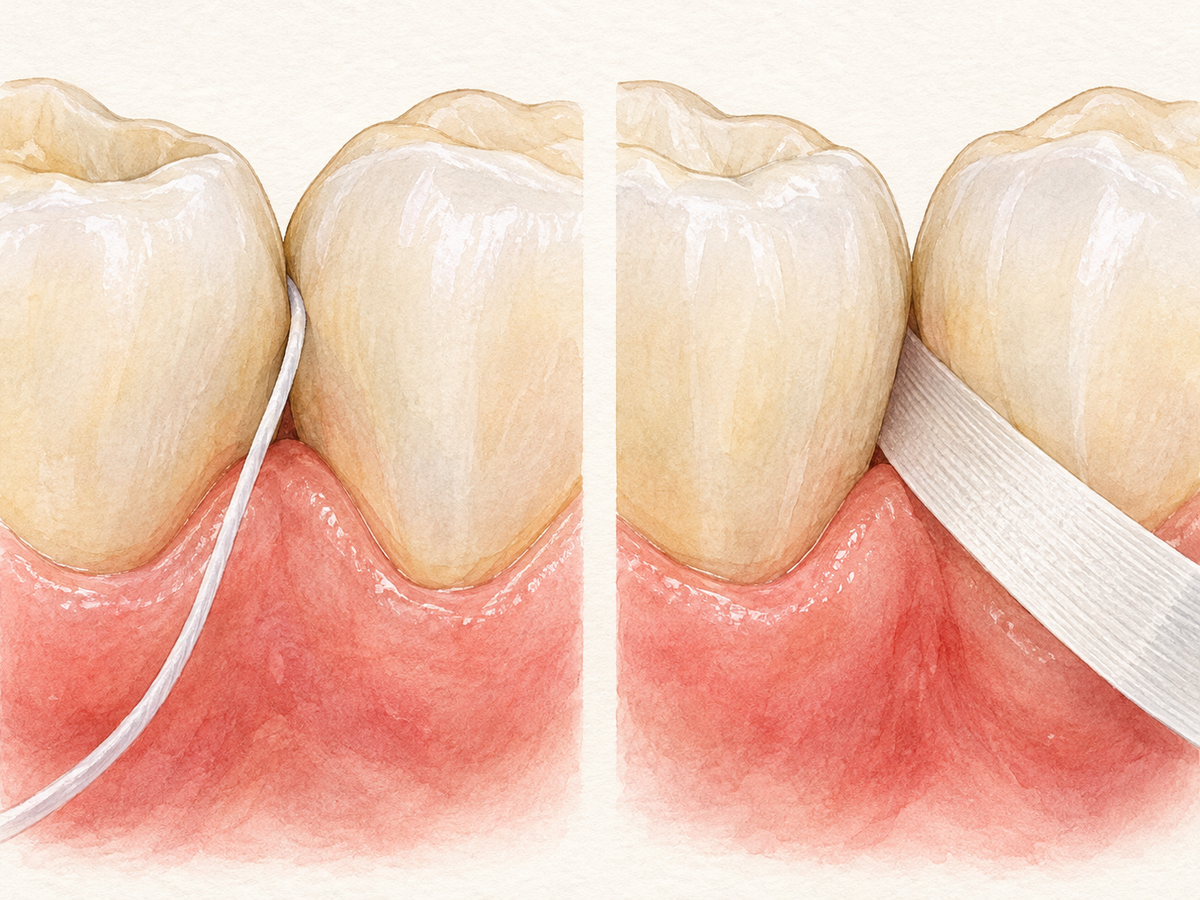









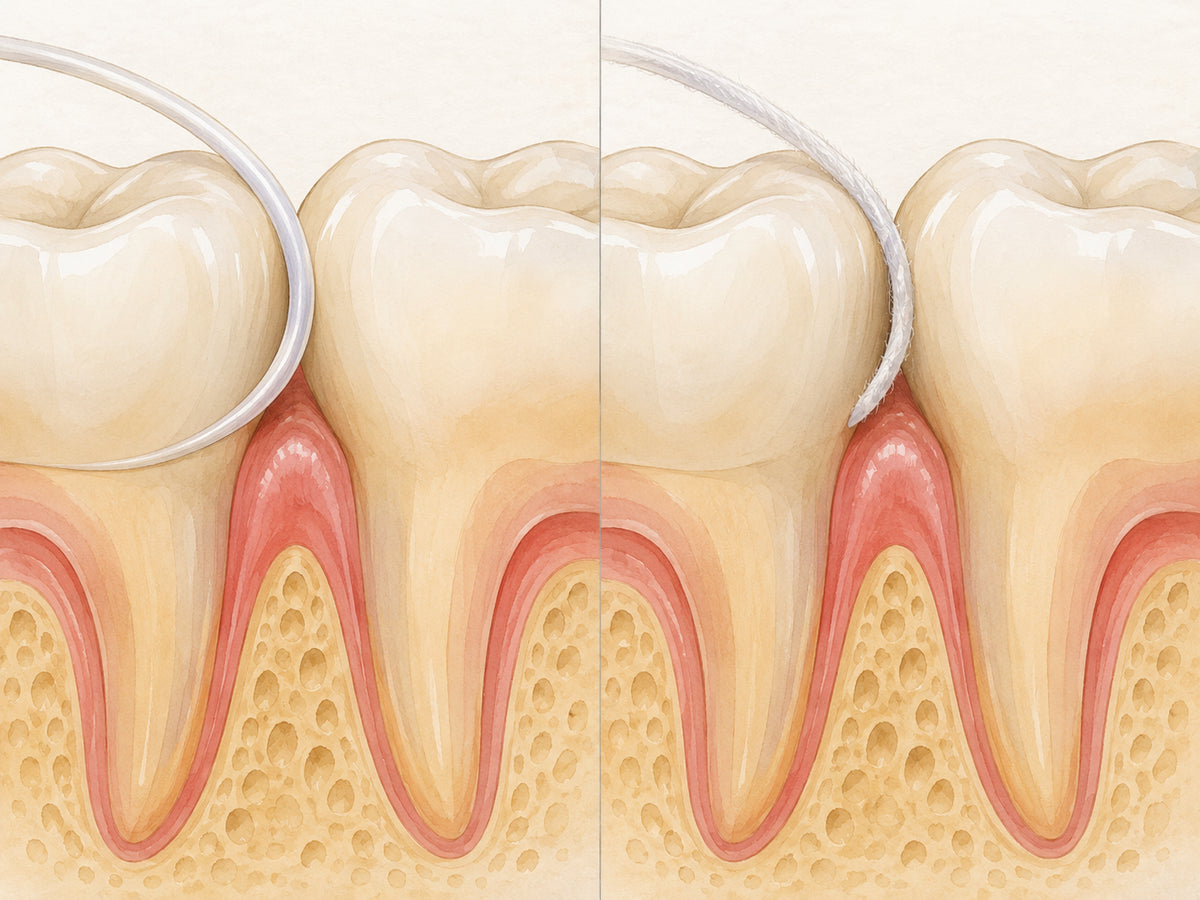
Here is the short answer: wax does not make floss clean better. Waxed and unwaxed floss remove plaque about the same, according to a clinical study on waxed and unwaxed floss. Waxed floss is mainly about easier gliding, less shredding, and comfort. If your teeth are tight or you have crowns, braces, or fillings that catch floss, start with waxed. If you have wider spaces and want more friction, unwaxed can work well. Choose the one that feels right and that you will use every day.
If your floss keeps shredding, snapping, or hurting, that is a fit problem — not a reason to push harder. Switch to a type that slides comfortably.
How Wax Changes the Floss
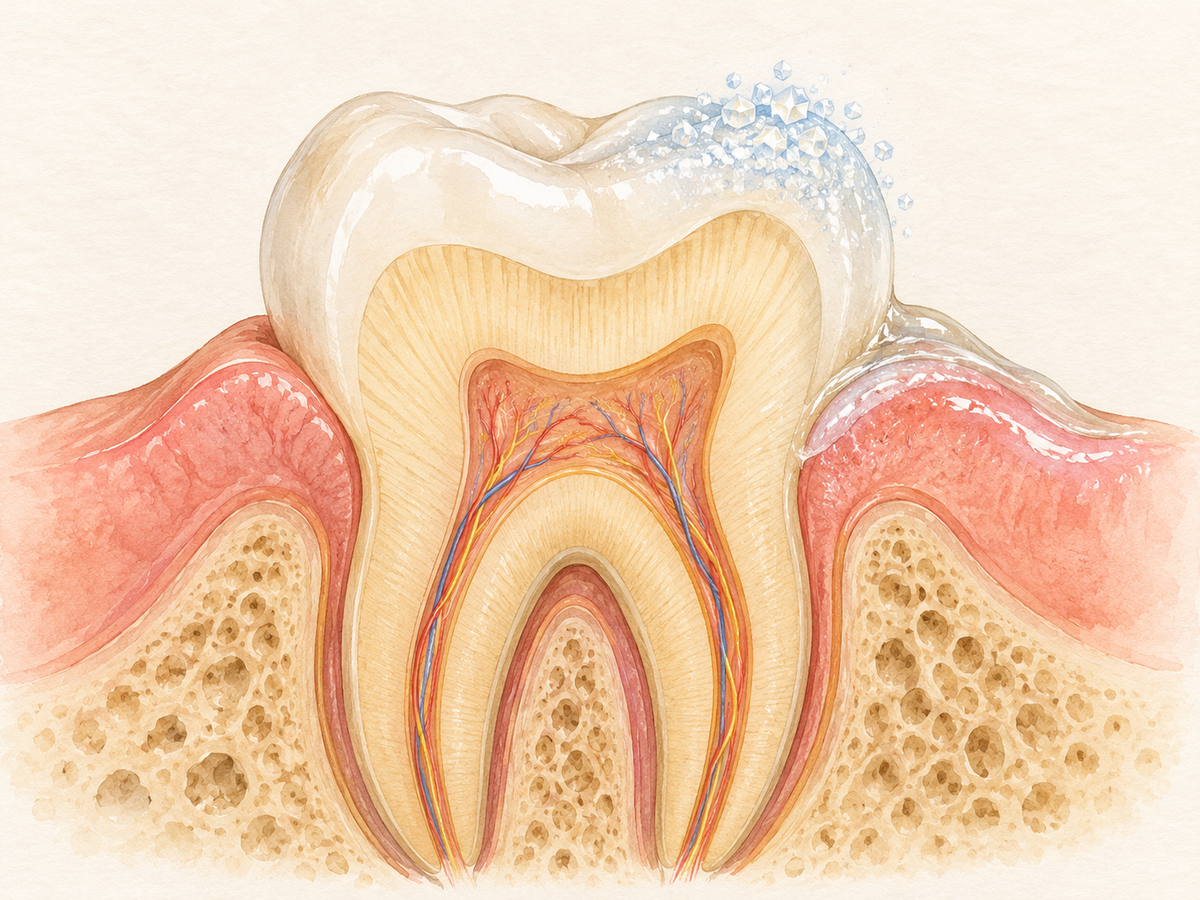
Floss is a thin cord that removes the soft sticky film called plaque from between teeth. Plaque is the bacteria and food residue that builds up on teeth every day. Waxed floss has a thin wax coating. That coating reduces friction, or drag, so the floss slides more smoothly against the tooth. It also can make the floss feel more shred-resistant, meaning less likely to fray or break.
Wax is not a cleaning chemical. It does not dissolve plaque.
A 56-day clinical study compared waxed and unwaxed floss from two brands. It found no significant difference in plaque removal or gum-health improvement between the types, according to the published trial. Another study that tested waxed, unwaxed, woven, and shred-resistant floss also found no significant differences in plaque removal.
In short, waxed vs. unwaxed is mostly about fit, glide, and comfort — not a dramatic cleaning advantage.
Side-by-Side Pros and Cons
Here is how the two types compare in daily use. Cleaning power is not the main difference.
| Practical factor | Waxed floss | Unwaxed floss |
|---|---|---|
| Glide through tight contacts | Usually slides through more smoothly | May catch or feel sticky |
| Shredding around rough crowns or fillings | Often resists fraying better | May shred or tear more easily |
| Feel | Smooth and low-drag | More friction; some people like the “squeaky clean” feel |
| Comfort | Often gentler on tender gums | Can feel harsher, though fine for some people |
| Braces or dental work | Usually easier to thread around hardware | More likely to snag or shred |
These are general patterns, not guarantees. In one small trial, unwaxed floss rated least comfortable among the floss types tested. Your own contact tightness and dental work matter more.
Match It to Your Teeth
Think about how floss feels in your mouth right now.
- If your teeth feel tight or floss is hard to pass through, try waxed floss. It usually slides through tight spaces more easily.
- If your contacts are wider or you want more drag and feedback, unwaxed floss may suit you.
- If you have crowns, braces, or rough fillings, waxed floss is often less likely to catch or shred.
- If your floss shreds, snaps, or feels painful, stop and switch. That is a fit problem, not a cleaning problem.
There is no universal “better.” Better means the floss you can use daily without pain or frustration.
Special Situations
Braces and bridges: Waxed floss tends to glide more easily around brackets, wires, and bridgework. A floss threader can help you reach under wires or beneath a bridge. Around fixed braces, interdental brushes are often easier and effective for many people, according to research on plaque control with fixed appliances.
Dental implants: Implant care is not identical to natural-tooth care. Some evidence suggests interdental brushes are a common first choice. Floss may not be recommended if the rough surface of an implant is exposed, because fibers can shred and get trapped. A review of implant hygiene tools notes that interdental brushes or water flossers may be safer in those cases. Ask your dentist or hygienist what is best for your specific implant.
Crowns and rough fillings: Waxed floss often glides over rough edges more easily.
Sensitive or bleeding gums: Do not assume you need to floss harder. Use a gentle sawing motion and wrap the floss around each tooth. Bleeding may come from plaque buildup that is irritating the gums. If it does not settle down after a week or so of daily cleaning, see a dentist or hygienist. Some research suggests that flossing technique matters as much as the tool itself.
Common Mistakes
Common mistakes to avoid:
- Forcing the floss straight down into a tight contact.
- Snapping the floss through the gap.
- Skipping the back teeth, especially behind the last molars.
- Choosing floss by habit even when it tears or hurts.
Quick fixes:
- Use a gentle sawing motion to work through the contact. Snapping can injure the gum, as noted in guidance on interdental aids.
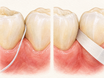
- Once the floss is past the contact, wrap it into a C shape around one tooth and slide it up and down. Then clean the adjacent tooth the same way.
- Floss behind the last molars too.
- Try small samples before buying a large pack. Pick what actually fits your mouth.
Try-Both Test
A simple one-week test can answer the question better than any label.
- Use waxed floss for one week.
- Use unwaxed floss for one week.
- After each week, ask: Did it shred? Did it hurt? Was it easy in tight spots? Did I actually floss every day?
- Keep the one that passed the most comfortably.
The best floss is not the one that sounds “cleaner.” It is the one that fits your mouth and that you will use every day.
 Best Overall
 Best Value
 Best for Sensitive Teeth
This article has been reviewed by an oral health professional for accuracy. It is intended to provide general educational information and should not be used as a substitute for personalized medical advice, diagnosis, or treatment. If you have questions or concerns about your oral health, please consult a dentist, physician, or other qualified healthcare provider.