












Mild sensitivity after a filling is common, especially with cold, sweets, pressure, or biting. It usually fades within a few days to two weeks. But throbbing pain, pain that starts on its own, pain that wakes you at night, or pain with swelling, fever, or a bad taste is not normal and should be checked by a dentist.
Rule of thumb: pain that improves each day is usually part of healing. Pain that gets worse, wakes you up, or comes with swelling is a reason to call.
Why Fillings Can Leave Pain Behind
Getting a filling is not just filling a hole. The dentist removes decay with a drill, cleans and prepares the area, then bonds the filling material to the tooth. Each step can briefly upset the tissues around the tooth.
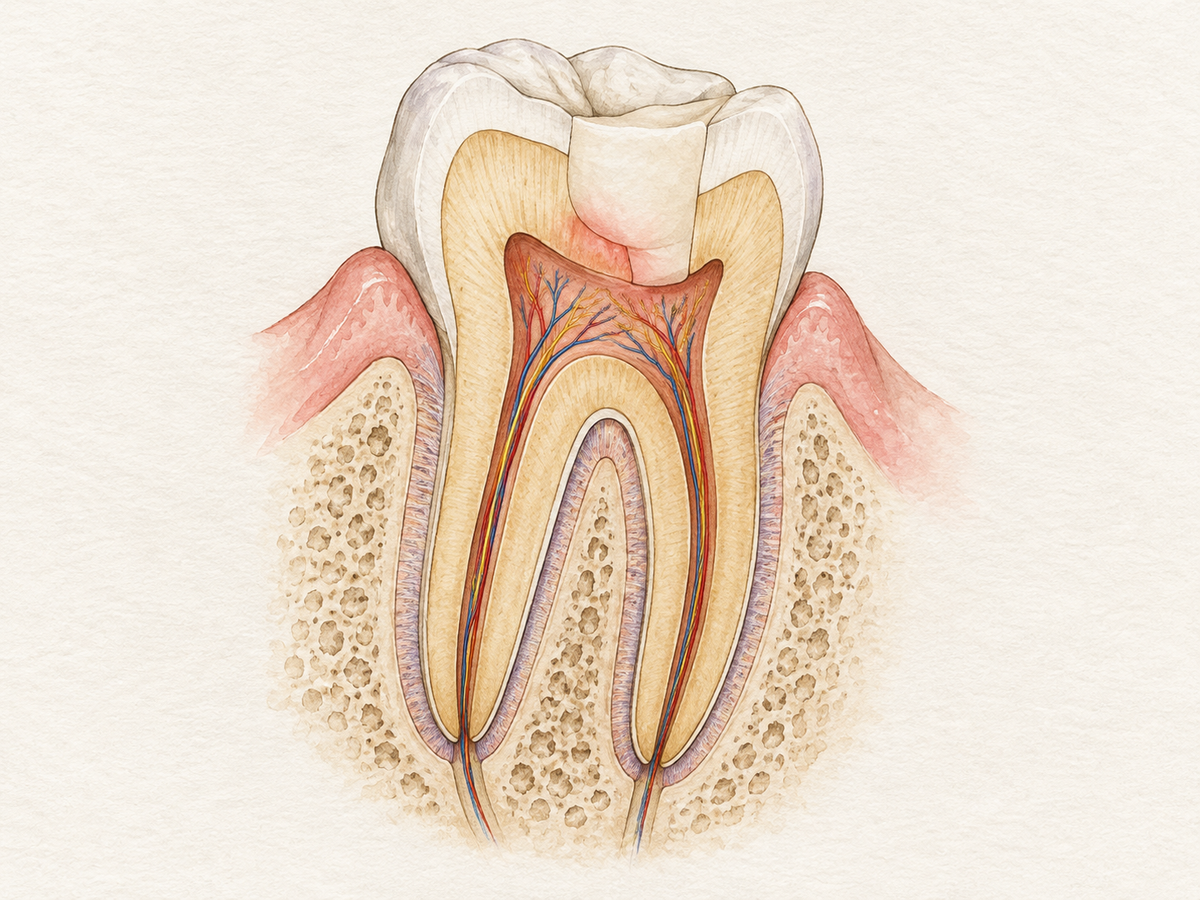
Inside each tooth is a soft bundle of nerves and blood vessels called the dental pulp. Around the root is a thin layer called the periodontal ligament. Drilling, pressure, and the bonding steps can irritate both. Some research notes that cavity preparation, heat, and acid-etching steps can make a tooth more sensitive in the first days after treatment, even though sensitivity often drops with time [PMC9287591].
With tooth-colored composite fillings, the material shrinks slightly as it hardens. That shrinkage can create tiny internal stress and small gaps between the filling and tooth, which may make the nerve feel sensitive. A clinical study on composite restorations reported that deeper cavities were the strongest factor linked to post-filling sensitivity. The deeper the filling, the closer the work is to the nerve.
How Long Normal Pain Usually Lasts
Normal post-filling sensitivity is usually strongest early and then improves. A quick twinge with cold or when you bite down often settles within a few days to two weeks.
If the filling was deep, the nerve may need longer to calm down. It can take several weeks, and sometimes a few months, for a deep filling to feel normal again. The key is that the pain should become less frequent and less intense over time. One clinical trial notes that sensitivity after composite fillings may last from a few days to several months before fully settling [PMC9287591].
Track how the tooth feels. Ask yourself:
- Is the pain better than yesterday?
- Is it triggered only by cold or pressure, not by nothing at all?
- Does it ease quickly when the trigger goes away?
If the answer is yes, that is a more typical healing pattern.
When the Pain Is a Warning Sign
Normal sensitivity has a clear trigger and then fades. Warning-sign pain behaves differently. It may throb on its own, wake you from sleep, or linger long after a cold drink is gone. Swelling, fever, or a bad taste can be signs of infection.
| Typical, usually OK | Warning sign: call your dentist |
|---|---|
| Quick twinge with cold, sweets, or biting | Throbbing or constant ache |
| Pain fades shortly after the trigger | Pain wakes you at night or starts on its own |
| Mild soreness that improves day by day | Swelling, fever, or a bad taste |
| Getting better within a few days to two weeks | Getting worse after 2–3 days, or lasting beyond 2–4 weeks |
Dental guidelines use the pattern of pain as a clue. Spontaneous pain, pain that lingers after a trigger, and pain on heat can suggest the nerve is more seriously involved [PMC11991915]. These symptoms are reasons to be seen, not a reason to panic.
Common Causes of Prolonged Pain
Not all post-filling pain has the same fix. Common causes include:
- High filling: If the filling sits too tall, you hit it first when you bite. A quick bite adjustment often fixes this.
- Pulpitis: This means the tooth nerve is inflamed. Some nerve irritation settles down on its own. If it does not, the dentist may evaluate whether a root canal is needed.
- Cracked tooth: A crack can cause sharp pain with biting or cold. It may need a crown or other treatment.
- New decay around the filling: If the filling leaks or does not seal well, decay can start again underneath or around it.
- Sinus pressure: Upper back teeth sit close to the sinuses. Sinus congestion can make those teeth ache even when the tooth itself is fine.
- Bonding sensitivity: Some sensitivity comes from the bonding material or technique. It may improve on its own with time.
These causes matter because they lead to different next steps. A high filling may need a simple adjustment. A cracked tooth may need a crown. Nerve inflammation may need monitoring or a root canal evaluation.
What to Do for Relief Tonight
While you are waiting for the tooth to settle, you can reduce irritation:
- Avoid very hot, cold, or sugary foods and drinks.
- Chew on the other side of your mouth.
- Eat soft foods for a few days.
- Rinse gently with warm saltwater after meals. Mix about half a teaspoon of salt in 8 ounces of warm water.
- If you use over-the-counter pain medicine, take it as directed and check that it is safe for you.
Do not place aspirin or any pain reliever directly on the gums. This can burn the gum tissue and make the area worse.
When to Call Your Dentist
Call your dentist if you notice any of these:
- Pain that gets worse after 2–3 days instead of improving.
- Severe throbbing or pounding pain.
- Swelling in your face or gums, fever, or a bad taste.
- Pain that wakes you at night or makes it hard to eat.
- A filling that clearly feels too high when you bite.
Call sooner if symptoms interfere with sleep, eating, or daily life. Early checks often prevent a small problem from becoming a bigger one.
What Your Dentist May Do
Most post-filling pain has a straightforward fix. Your dentist may:
- Check and adjust your bite. If the filling is high, polishing down the high spot can bring quick relief.
- Take an X-ray. This lets the dentist look at the tooth root, surrounding bone, and the shape of the filling.
- Test the tooth nerve. Cold testing or a small electric current helps the dentist see how the nerve is responding [PMC11991915].
- Replace the filling. If the filling is cracked, leaking, or not sealed well, a replacement may help.
- Discuss root canal treatment. If the nerve is inflamed beyond recovery, root canal treatment can remove the damaged nerve tissue and relieve the pain. Current guidance suggests root canal treatment or a related nerve treatment may be effective when spontaneous nerve pain is present [PMC11991915].
Root canal treatment can sound intimidating, but its goal is to remove the source of pain and save the tooth.
Questions to Ask at Your Appointment
A short set of questions can help you understand what is going on:
- “Does my bite feel high, and can you adjust it if so?”
- “Is my tooth nerve likely just irritated, or does it look like a deeper nerve problem?”
- “How long should I wait to see if the pain improves before coming back?”
- “What warning signs would mean I might need a root canal?”
Most post-filling sensitivity settles with time and simple care. If your pain is improving, keep up the gentle habits. If it is not improving or any red flags appear, call your dentist. Early checks often prevent a small irritation from becoming a larger problem.
This article has been reviewed by an oral health professional for accuracy. It is intended to provide general educational information and should not be used as a substitute for personalized medical advice, diagnosis, or treatment. If you have questions or concerns about your oral health, please consult a dentist, physician, or other qualified healthcare provider.