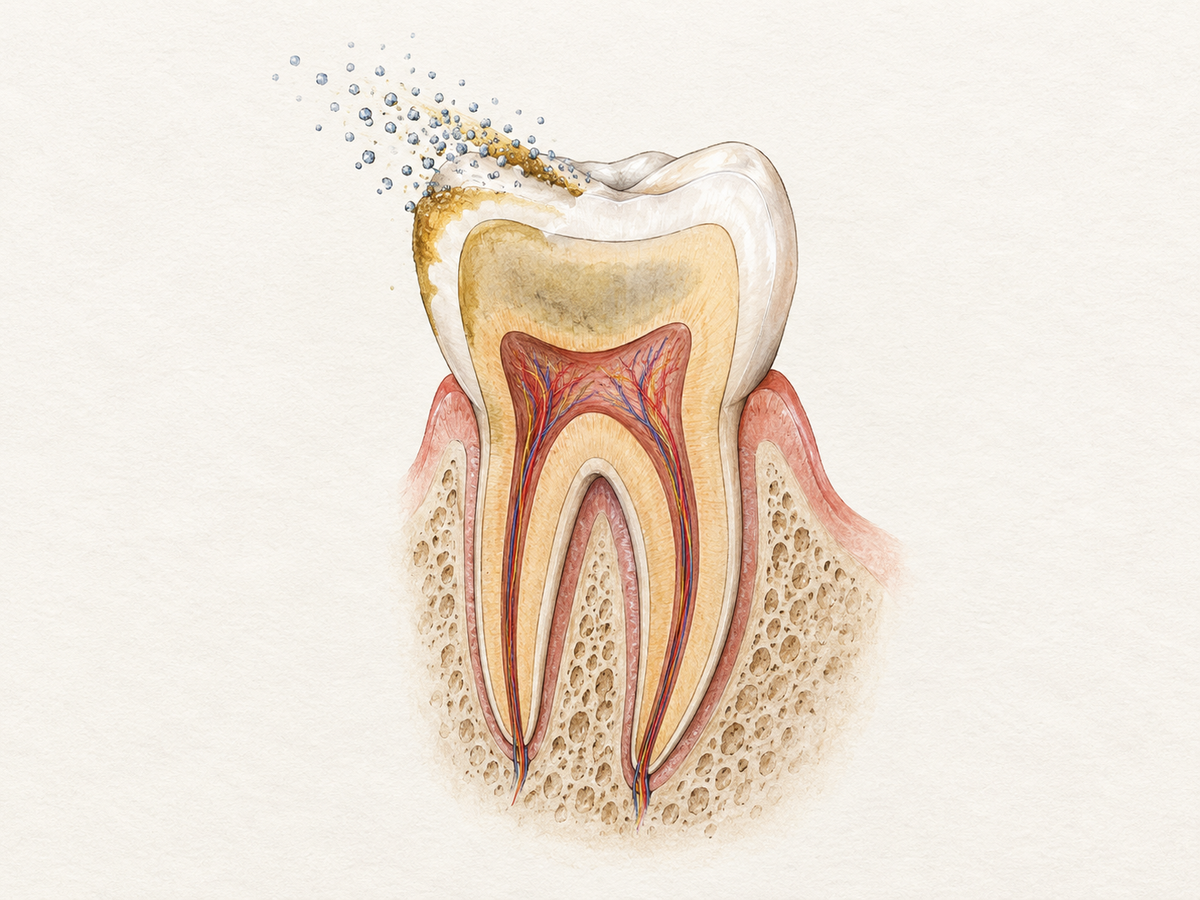


















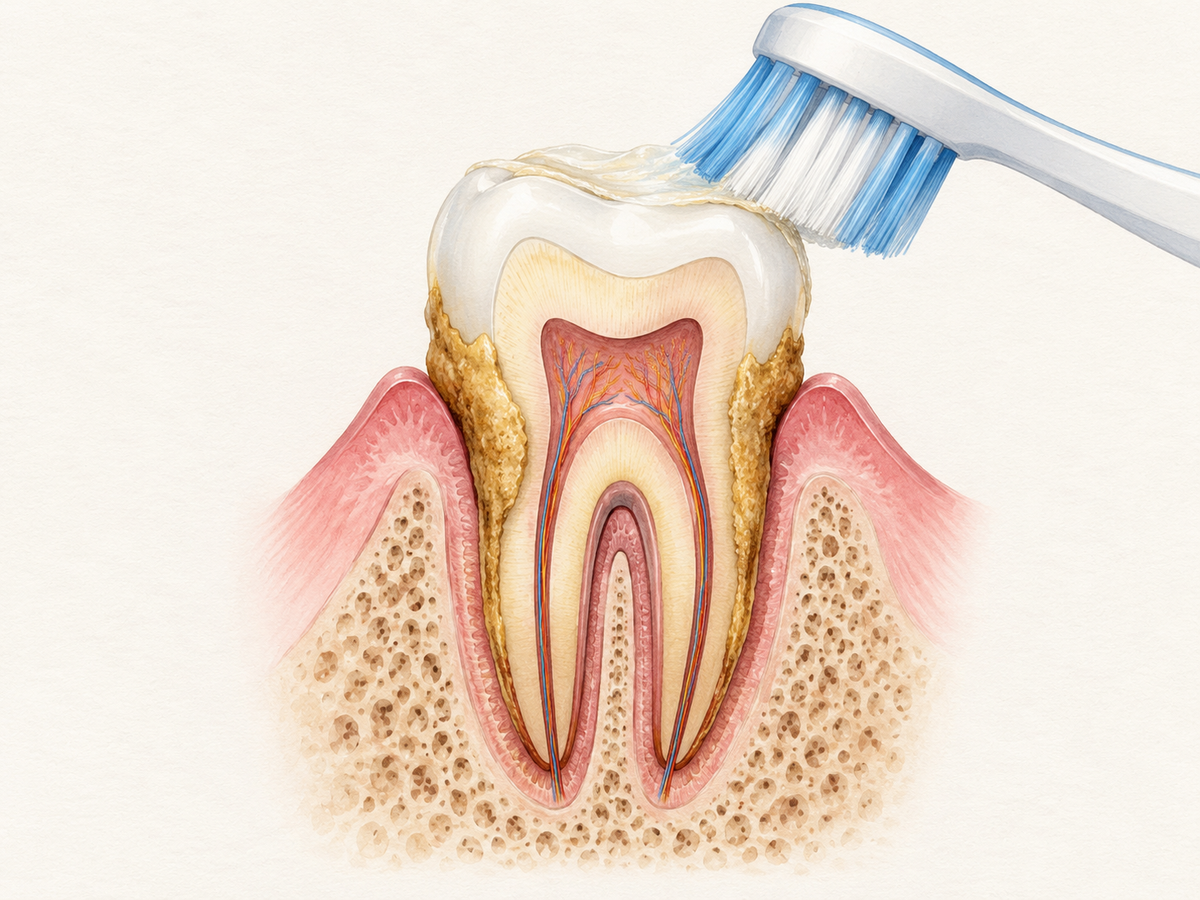
No, you cannot safely remove tartar at home once it has formed. Tartar is hardened plaque that bonds tightly to the tooth surface, so brushing and flossing cannot remove it. Trying to scrape it off yourself is more likely to scratch the enamel or injure your gums than to solve the problem. The only safe way to remove existing tartar is a professional dental cleaning.
If you see hard yellow or brown buildup that won’t brush away, book a dental cleaning instead of reaching for a scraper or acidic paste.
Why Tartar Won’t Budge at Home
Tartar, also called calculus, starts as plaque, the soft, sticky film of bacteria that forms on teeth every day. If plaque stays too long, minerals from your saliva harden it into a crust. That crust attaches firmly to the tooth surface.
Dental calculus is a hardened, mineralized plaque biofilm. Because of its hardness and strong attachment to the teeth, removing it requires professional scaling, according to clinical research on dental calculus.
Your toothbrush and floss can remove soft plaque before it hardens. Once tartar has formed, they cannot break the bond. Trying to scrape it off yourself usually means injuring the enamel, the hard outer layer of the tooth, or the gums. You can scratch the enamel or make your gums sore while the tartar stays put.
Safe Home Care: What You Can Actually Do
At home, your real goal is plaque control—keeping the soft film from sitting on your teeth long enough to harden.
These habits help:
- Brush twice a day with a fluoride toothpaste.
- Clean between the teeth once a day with floss or interdental brushes, small brushes that fit between the teeth.
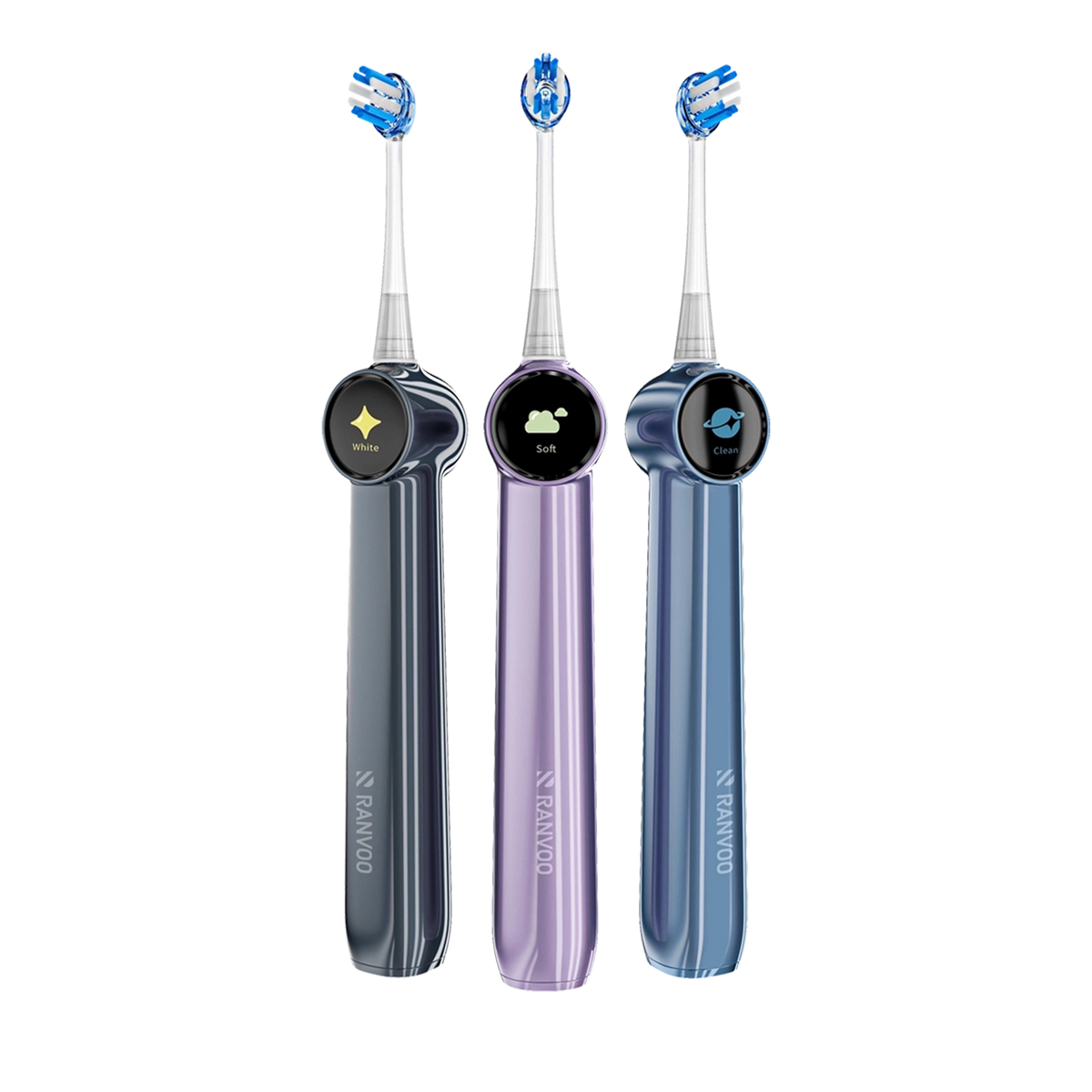
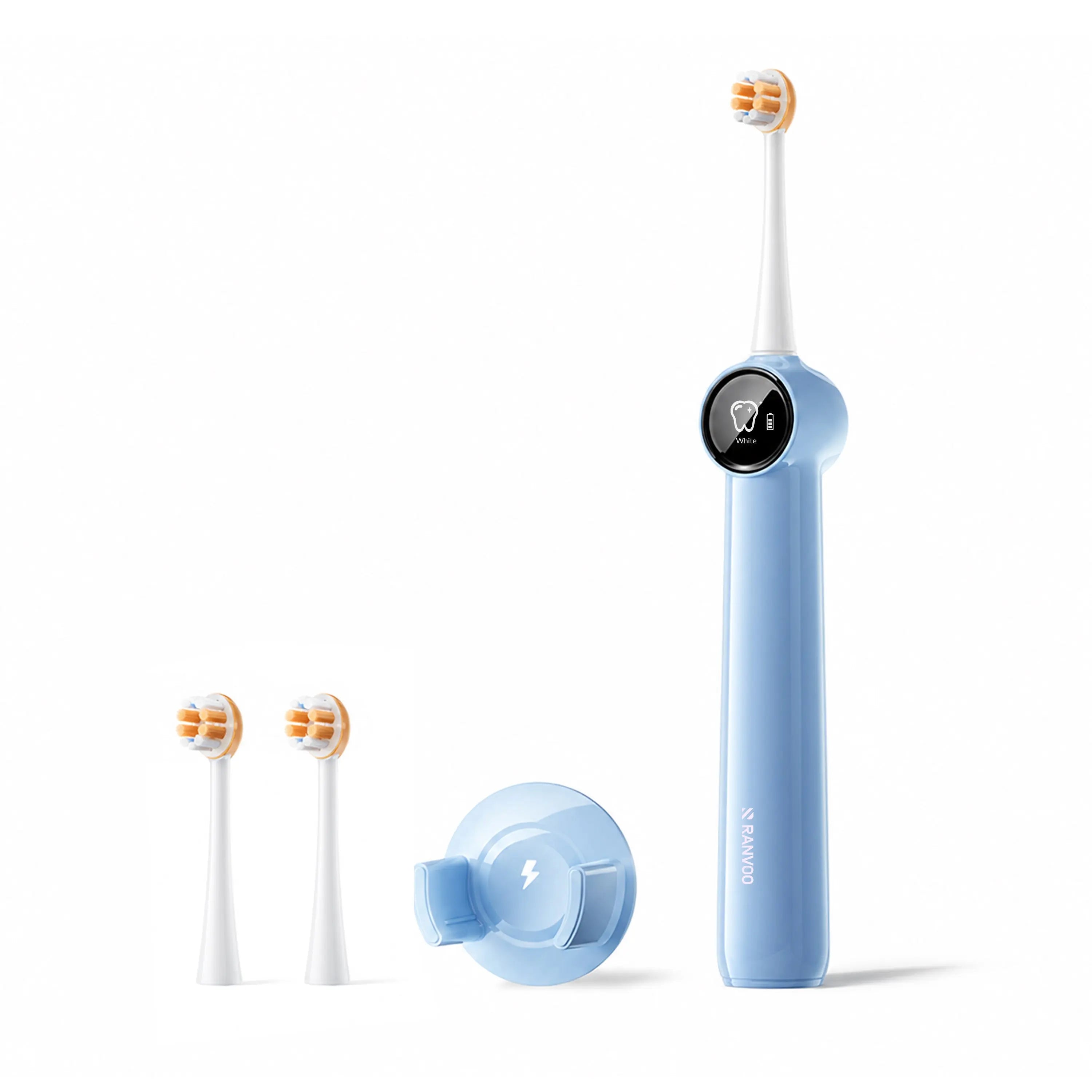
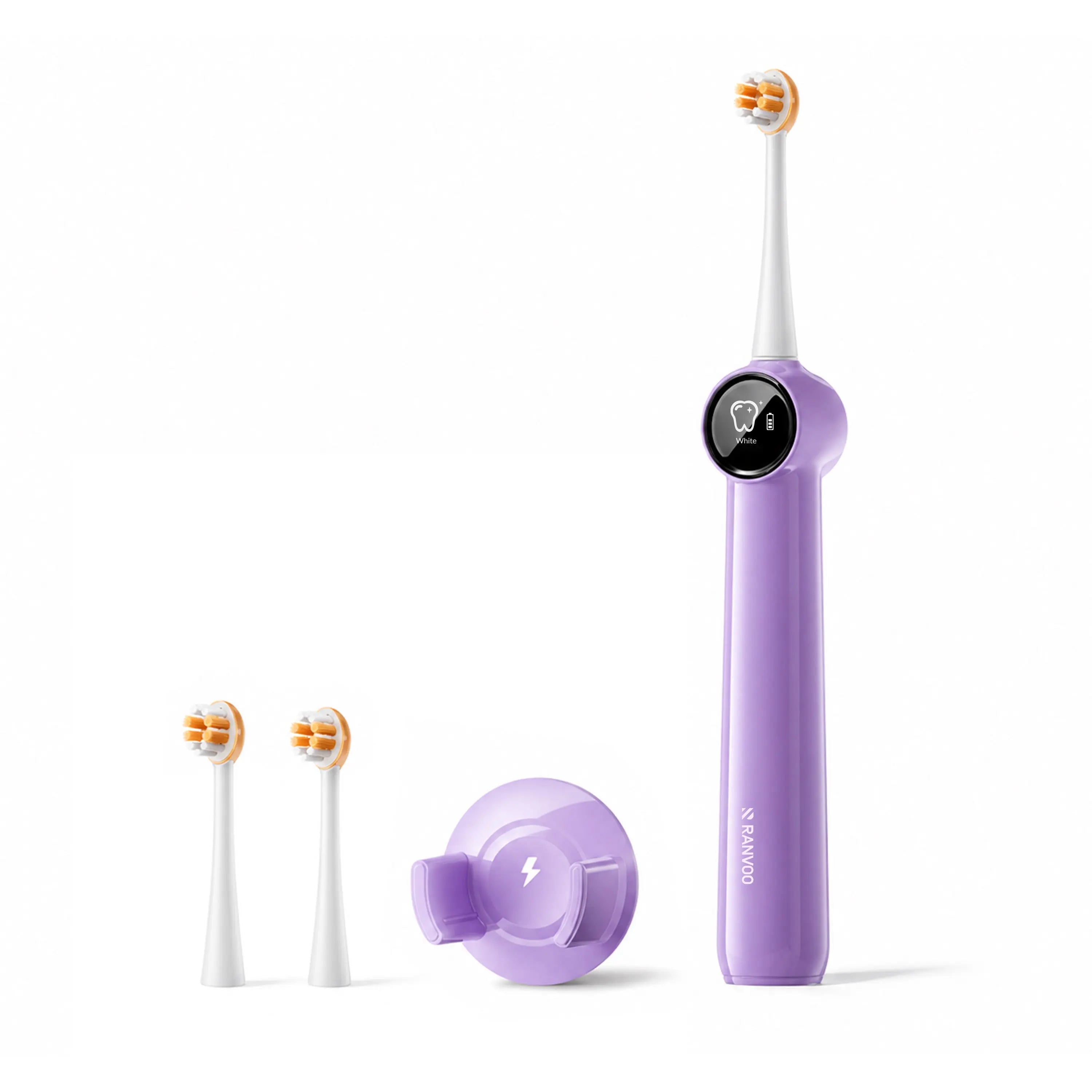
- Consider an electric toothbrush. Powered brushes tend to reduce plaque and gum inflammation more than manual brushing, according to a review of homecare brushing regimens.
- Ask your dentist whether a tartar-control toothpaste may be useful for you.
Brushing and cleaning between the teeth are the core daily steps for preventing plaque buildup and gum inflammation. Evidence on mechanical oral hygiene shows that fluoride toothpaste also helps protect the enamel while you clean.
Tartar-control toothpaste may make it harder for new tartar to form, but it does not remove tartar that is already there. Research on calculus formation describes tartar-control action as helping slow plaque from hardening, not as a treatment for established buildup. The same is true for all home care: it helps prevent new tartar, but existing tartar still needs professional removal.
DIY Methods That Can Backfire
It’s understandable to want a lower-cost or faster at-home fix. But common DIY tartar-removal ideas can create bigger problems.
Things to avoid:
- Metal scrapers and dental picks. They can slip and cut your gums. They can also scratch the enamel, leaving rough spots where more plaque collects.
- Baking soda and vinegar, or lemon juice. Acidic and abrasive homemade mixes can wear away enamel. Long or repeated use of lemon or baking soda is a known risk for enamel erosion, according to research on DIY oral hygiene practices.
- Hydrogen peroxide as a tartar dissolver. It does not reliably break down hard tartar and can irritate gum tissue.
- Brushing harder. Tartar will not brush away with extra force, but hard brushing can injure gums and wear down tooth surfaces. Soft, rounded bristles are gentler on gum tissue, based on research on gingival trauma.
Enamel erosion can leave teeth sensitive and more vulnerable to stains and decay. Gum injuries can become sore, infected, or cause gums to pull back.
Signs You Need a Dentist
Book a dental cleaning if you notice:
- Yellow or brown hard buildup, especially near the gumline.
- Gums that bleed when you brush or floss.
- Swollen, red, or tender gums.
- Persistent bad breath.
- Gums that seem to be receding or pulling away from the teeth.
- Loose teeth or a change in how your bite feels.
These signs can point to gingivitis, early gum inflammation, or periodontitis, a more serious gum disease that can damage the bone supporting the teeth. Hard tartar below the gumline can keep the gums inflamed even if the visible part of the tooth looks fairly clean, according to a review on subgingival calculus.
Getting help early is simpler and usually less expensive than waiting for gum disease to worsen. A professional cleaning can remove the buildup before it causes deeper damage.
What Professional Removal Involves
A dentist or dental hygienist removes tartar with an ultrasonic scaler, a powered tool that uses vibration and water, along with hand instruments designed for this task. They clear tartar from above the gumline (supragingival) and below it (subgingival), where home care cannot safely reach.
After the tartar is removed, the teeth are usually polished to smooth the surface and remove some stains. The visit may cause mild bleeding or sensitivity for a short time, especially if your gums are already inflamed.
Both powered and hand instruments are effective for this kind of care, according to a review of ultrasonic and manual instrumentation. Professional scaling and polishing reduce calculus levels that home cleaning cannot remove, according to a Cochrane review on routine scale and polish. That is why a dental appointment is the only safe way to remove established tartar.
Keeping Tartar From Coming Back
Tartar removal is not permanent. Plaque begins forming again quickly, so prevention must be ongoing.
What helps:
- Keep the cleaning schedule your dentist recommends. For many people, that is about every six months. If you have gum disease, your dentist may recommend cleanings every three to four months, according to a rapid review on dental scaling.
- Brush twice a day and clean between your teeth once a day.
- Eat less added sugar.
- If you smoke, ask for help to quit. Smoking worsens gum problems, and smoking cessation is part of gum disease risk control in periodontal treatment guidelines.
- If you have dry mouth, talk with your dentist or doctor. Saliva helps wash away plaque.
For someone with periodontitis, supportive cleanings every three months appear reasonable, while lower-risk people may remain stable with cleanings every six to twelve months, according to evidence on periodontal recall intervals. The exact interval should match your risk factors and gum health.
You can prevent most tartar by keeping soft plaque in check every day. Leave hard buildup to a dental professional.
This article has been reviewed by an oral health professional for accuracy. It is intended to provide general educational information and should not be used as a substitute for personalized medical advice, diagnosis, or treatment. If you have questions or concerns about your oral health, please consult a dentist, physician, or other qualified healthcare provider.