
















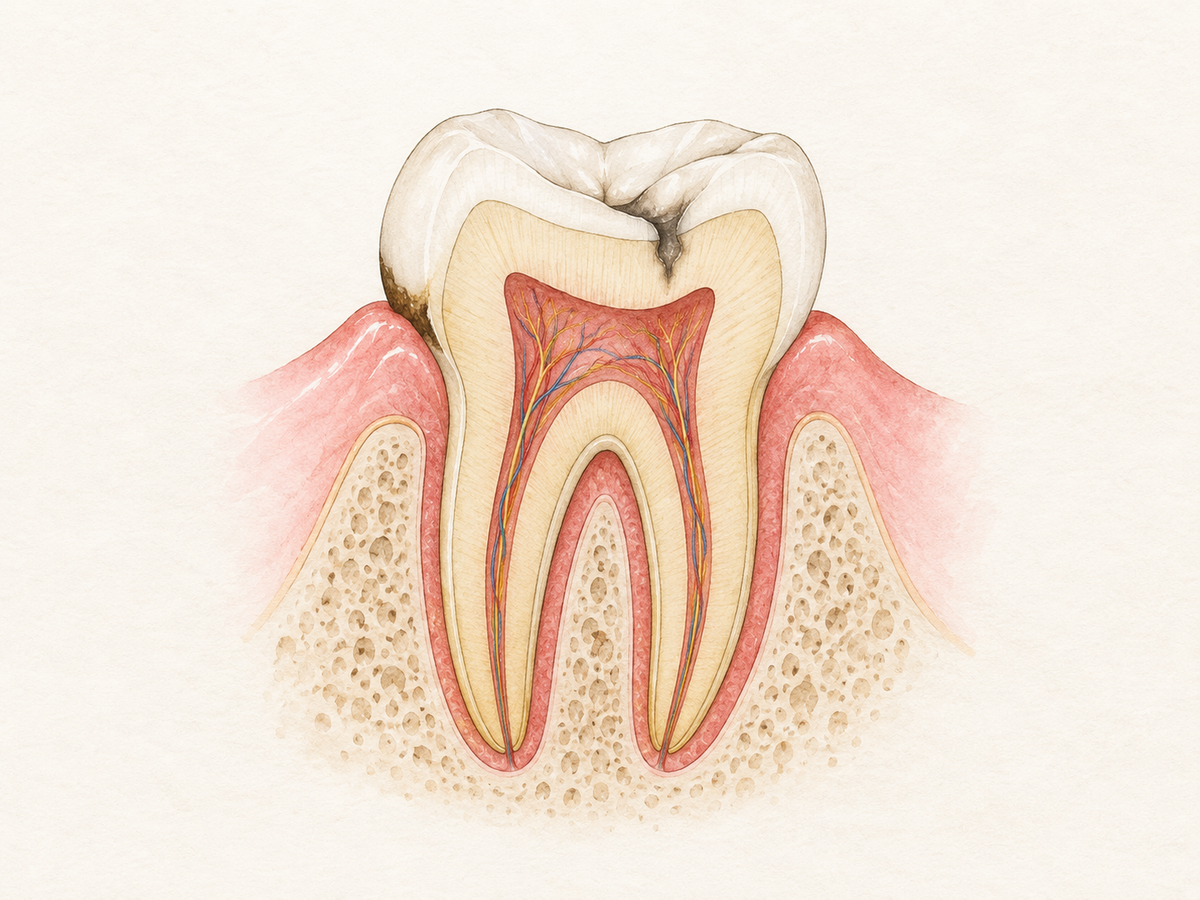
A black spot on a tooth is often a surface stain, tartar, or a small cavity. You cannot safely tell which one it is by looking alone. The best next step is to have a dentist examine the spot, especially if it is new, changing, or painful.
If the spot hurts, is growing, or comes with swelling or fever, call a dentist. Do not scrape or bleach it.
Clues: Cavity, Stain, or Something Else
A dark spot can have more than one cause. These general clues can help you describe what you see, but they are not a self-diagnosis.
| Possible cause | What it often looks or feels like |
|---|---|
| Stain | Smooth, flat, dark area in grooves or near the gumline; usually no pain |
| Cavity | Dark pit, hole, rough patch, or shadow under the enamel; may feel rough or sticky |
| Tartar | Hard, raised dark buildup near the gumline; cannot be brushed off |
| Old filling or crown leak | Dark line around a filling or crown |
| Tooth injury or medication | Darker tooth after a bump, or dark staining from certain medicines or supplements |
A cavity is tooth decay that damages the enamel, the hard outer layer of the tooth. It may look like a hole, a rough patch, or a dark shadow under the surface. A stain often sits in grooves or near the gumline and feels smooth.
One special type is called black stain. It appears as a dark line or small dots near the gumline, usually along the back of lower front teeth. It is a deposit on the outside of the tooth, not a hole. It is common in children and can come back after removal, according to clinical guidance on black staining and a review of black stain and tooth decay.
A dentist uses a visual exam, gentle probing, and X-rays to tell these causes apart. Color alone is not enough, and a dental probe can stick in any normal groove, so a “catch” does not prove decay by itself, as explained in guidance on visual examination for decay and clinical discussion on stain versus decay.
When to See a Dentist Urgently
Most black spots are not an emergency. But call a dentist promptly if you also have:
- Throbbing toothache or pain that wakes you up
- Swelling in the face, jaw, or gum
- Bleeding that does not stop
- Fever
- A cracked, broken, or loose tooth
- A black area that is growing quickly
These signs can point to an infection or deep decay. Early treatment is usually simpler, more comfortable, and less expensive than waiting until pain or swelling is severe. Getting a new or changing spot checked is a reasonable next step, not an overreaction.
Treatment Options by Cause
The right fix depends on what is causing the spot.
- Stain or tartar: A professional cleaning or polish removes surface deposits. Black stain often responds well to scaling and polishing, but it can return over time. Clinical guidance on black staining
- Small cavity: The dentist removes only the damaged tooth structure needed and places a filling. Conservative treatment helps preserve healthy tooth structure, according to clinical practice guidance on restorative treatment.
- Deep decay or infection: If decay reaches the pulp, the soft tissue and nerve inside the tooth, you may need a root canal and a crown to protect the tooth. Some less invasive pulp-preserving options may be possible in certain cases, as described in deep cavity management guidance and consensus recommendations on pulp therapies.
- Leaking filling or crown: The dentist may remove the old restoration, clean underneath, and replace it with a new filling or crown.
Before recommending treatment, the dentist will confirm the cause with a visual exam, probing, and X-rays. The depth and texture of the spot matter more than its color.
Home Removal: What Works and What Backfires
Surface staining may improve with regular brushing and flossing, but true stain buildup usually requires a professional cleaning. A cavity or discoloration inside the tooth cannot be removed at home.
Avoid these do-it-yourself methods:
- Scraping the spot with a pin, knife, or dental pick
- Harsh scrubbing with abrasive powders or pastes
- Applying whitening gel or strips over a suspected cavity
- Over-scrubbing to try to rub dark staining away
These can scratch enamel, irritate gums, and increase sensitivity. They also do not stop decay underneath. Clinical guidance on black stain specifically warns that over-scrubbing is unlikely to remove the stain and may cause abrasion damage. Black staining overview
Safe home care includes brushing twice a day with fluoride toothpaste, flossing daily, and seeing a dentist for regular cleanings. Home care is important, but it is not a substitute for a dental diagnosis.
How to Prevent New Black Spots
Prevention is the easiest way to avoid new spots and more expensive dental work later.
- Use fluoride toothpaste. Fluoride helps strengthen enamel and can stop early weak spots from turning into cavities. European Academy of Paediatric Dentistry fluoride guidance
- Limit sugary and acidic drinks. Frequent sugar feeds decay-causing bacteria, and acid can soften enamel.
- Keep regular dental cleanings. These remove tartar and surface stain before they build up.
- Treat dry mouth or acid reflux. Low saliva or stomach acid on teeth can raise cavity risk. Talk with your dentist or doctor.
- Ask about sealants or fluoride varnish. Sealants are thin protective coatings placed in the deep grooves of back teeth. Fluoride varnish is a concentrated fluoride treatment. Both can help prevent or stop early decay, especially in children and higher-risk adults, according to sealant guidance and ADA fluoride recommendations.
What to Expect at the Dentist
A visit for a black spot is usually straightforward.
- The dentist cleans the tooth and looks at it under good light.
- They gently probe the area to check the texture.
- They may take X-rays to see what is happening beneath the enamel.
- They may take a photo to show you the spot and track changes over time.
Based on those findings, the dentist may polish the spot, apply fluoride, place a filling, or refer you for more advanced care. You should leave with a clear plan.
If the spot is new, changing, or painful, call a dental office and describe what you see. If it is not bothering you, still point it out at your next checkup.
This article has been reviewed by an oral health professional for accuracy. It is intended to provide general educational information and should not be used as a substitute for personalized medical advice, diagnosis, or treatment. If you have questions or concerns about your oral health, please consult a dentist, physician, or other qualified healthcare provider.