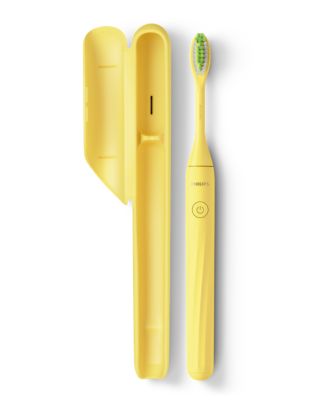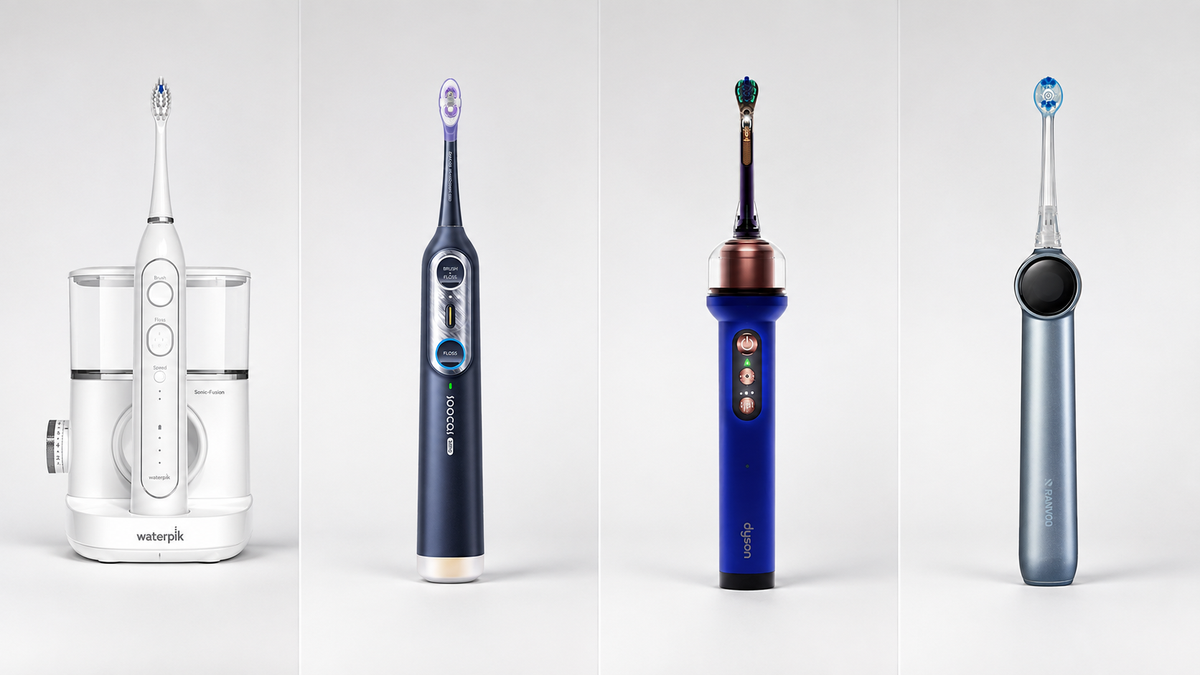
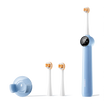

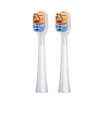
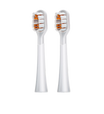





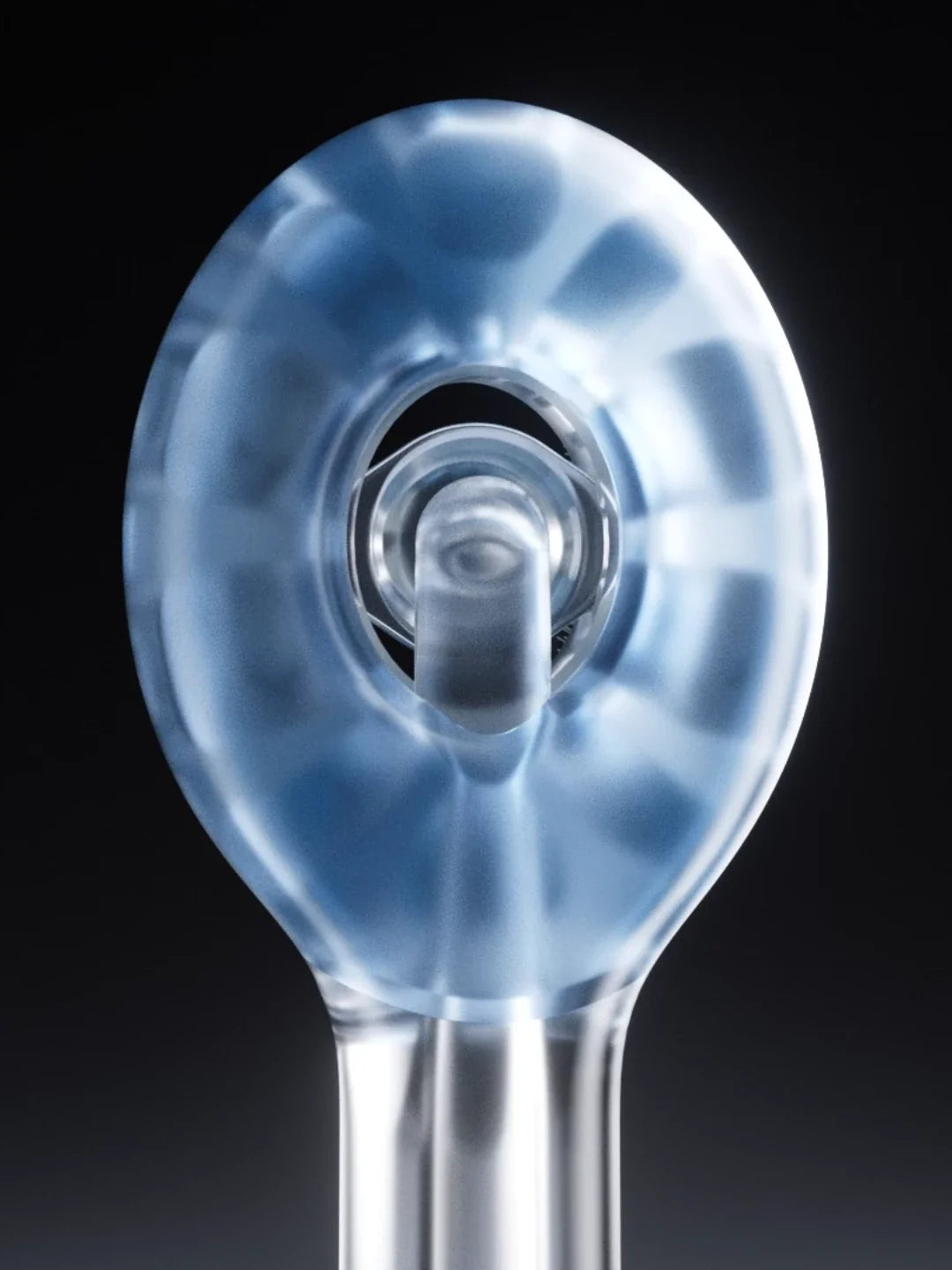
You’re looking at two electric toothbrushes. One has a small, round head. The other has a longer, oval head that looks more like your regular toothbrush. Does that difference actually matter?
Both can be sensible choices. A round head offers a tooth-by-tooth approach, while an oblong head gives you a more familiar shape. But shape alone doesn’t tell you how well a brush cleans: the way it moves matters, too. Here’s how to make sense of the differences without getting lost in toothbrush jargon.
What’s the difference between round and oblong heads?
“Oblong” simply means longer than it is wide. On a toothbrush, that usually means an oval or rounded rectangular head.
Many round-headed electric toothbrushes use oscillating-rotating movement: the head turns back and forth. Many oblong-headed models use sonic movement, with bristles moving rapidly from side to side. These are common combinations, rather than definitions of the shapes. Study 1.
| What you’re comparing | Round head | Oblong head |
|---|---|---|
| Basic outline | Circular | Elongated oval or rounded rectangle |
| Familiar example | Oral-B’s round replacement heads | Philips Sonicare’s elongated heads |
| Typical brushing approach | Guide the head from tooth to tooth | Move the head slowly along the teeth |
| What to check before buying | Head dimensions, bristle softness and handle compatibility | Head dimensions, bristle softness and handle compatibility |
Oral-B describes its round heads as designed for tooth-by-tooth cleaning. Philips instructs Sonicare users to guide the brush slowly with light pressure. These manufacturer instructions explain how to use the products; they are not independent proof that one shape is better. Oral-B design information; Philips instructions.
Which one cleans better? Here’s what the research says
A systematic review published online in 2022 and in a 2023 journal issue combined 32 publications involving 2,805 participants. It found a small, statistically significant advantage for oscillating-rotating brushes over high-frequency sonic brushes in plaque control and gum health. The authors considered the difference potentially clinically relevant. Study 1.
That deserves some context. The studies lasted 30 days to six months, and some had industry involvement. They compared complete toothbrush systems, so the results do not isolate the effect of a circular outline versus an oval one. Study 1.
For shoppers, that supports considering oscillating-rotating technology; it doesn’t make head shape a reliable shortcut.
You may also see the claim that electric brushes reduce plaque by 21%. That figure comes from a 2014 Cochrane review comparing powered brushes with manual brushes, at follow-up beyond three months. It describes a relative reduction on a plaque-scoring scale, not a 21% reduction in cavities, and it is not a round-versus-oblong comparison. The review included 56 studies and rated the plaque and gingivitis evidence as moderate quality. Cochrane review.
Which shape makes sense for you?

Think of the following as a shopping checklist, rather than a ranking.
Consider a round head if you like a tooth-by-tooth routine. You may find it easier to keep track of where you’ve brushed by moving around one tooth at a time. That’s a preference worth considering, not a guarantee of better results.
Consider an oblong head if you prefer a familiar outline. If you like the shape of your manual brush, an elongated electric head may feel like a natural starting point. Just remember that a familiar shape doesn’t mean you should scrub it like a manual toothbrush.
If space feels tight, compare actual dimensions. “Round” doesn’t automatically mean smaller. Look at head width, length and thickness, especially if you find the back of your mouth awkward to reach. The NHS says a small head is suitable for most adults and stresses cleaning every tooth surface. NHS guidance.
Check replacement heads before committing. Look at their price, availability and compatibility with the exact handle. Even heads from the same brand may not fit every range: for example, Oral-B iO handles require iO heads. Oral-B compatibility guide.
Good technique still matters

Whichever shape you choose, follow the instructions for that particular brush.
For example, Philips advises Sonicare users to angle the bristles toward the gumline at about 45 degrees, apply light pressure and move slowly across the teeth with a small back-and-forth motion. Let the brush do the work. Philips instructions.
The American Dental Association recommends soft bristles, gentle pressure and cleaning the inner, outer and chewing surfaces. A head shape you like is useful only if you guide it to all those places. ADA guidance.
Keep the daily routine straightforward:
- Brush for about two minutes, twice a day, using fluoride toothpaste.
- Include brushing before bed.
- Spit out the toothpaste afterward rather than rinsing immediately with water.
- Clean between your teeth daily with floss or an appropriate interdental brush. NHS guidance.
An electric toothbrush is a tool for carrying out that routine, not a reason to shorten it.
References
- van der Sluijs E, et al. The efficacy of an oscillating-rotating power toothbrush compared to a high-frequency sonic power toothbrush on parameters of dental plaque and gingival inflammation: A systematic review and meta-analysis. International Journal of Dental Hygiene. 2023;21(1):77–94. Published online 2022. Read the full study. doi:10.1111/idh.12597.
- Yaacob M, et al. Powered versus manual toothbrushing for oral health. Cochrane Database of Systematic Reviews. 2014;(6):CD002281. Read the evidence summary. doi:10.1002/14651858.CD002281.pub3.
- American Dental Association. Toothbrushes. Read the guidance.
- Oral-B. 3D White Electric Toothbrush Replacement Brush Heads. Used for the manufacturer’s description of head design, not comparative clinical claims. View product information.
- Philips. How do I use my Sonicare toothbrush? Manufacturer’s brushing instructions. Read the instructions.
- NHS. How to keep your teeth clean. Read the guidance.
- Oral-B. Replacement Toothbrush Heads & Refills. Manufacturer’s compatibility information. Check brush-head compatibility.
 Best Overall
 Best Value
 Best for Sensitive Teeth