












خلاصة سريعة
بالنسبة لمعظم الناس، الاستخدام المتقطع لغسول فم معتدل وخالٍ من الكحول آمن. لكن الاستخدام اليومي طويل الأمد لغرغرة مطهرة قوية — خاصة تلك التي تحتوي على كلورهيكسيدين أو نسبة عالية من الكحول — يمكن أن يخل بالميكروبيوم الفموي، ويرفع ضغط الدم، ويهيج الأنسجة الرخوة. الخطر الحقيقي يعتمد على نوع غسول الفم، وحالتك الصحية، وكيفية استخدامه.
ما هو غسول الفم ولماذا يستخدمه الناس؟
غسول الفم ليس منتجًا واحدًا. معظمها يقع في فئتين: غسولات تجميلية تنعش النفس مؤقتًا، و غسولات علاجية تحتوي على مكونات نشطة تحارب البلاك والتهاب اللثة أو التسوس. معرفة الفرق هو الخطوة الأولى لفهم ما إذا كان غسول الفم قد يكون ضارًا لك.
غسول الفم التجميلي مقابل العلاجي: ما الفرق؟
| الميزة | غسول الفم التجميلي | غسول الفم العلاجي |
|---|---|---|
| الغرض | يخفي رائحة الفم الكريهة، ويمنح إحساسًا بالنظافة | يمنع أو يعالج أمراض الفم (التسوس، التهاب اللثة) |
| المكونات النشطة | غالبًا مجرد عوامل نكهة، بعضها يحتوي على الكحول | الفلورايد، الزيوت الأساسية، الكلورهيكسيدين، وسيتيلبيريدينيوم كلوريد (CPC) |
| الرقابة التنظيمية | الحد الأدنى؛ غير مطلوب إثبات فائدة طويلة الأمد | قد يحمل ختم قبول ADA، مما يشير إلى سلامته وفعاليته المثبتة |
لماذا قد يكون غسول الفم ضارًا لك: المخاطر والآثار الجانبية الرئيسية
نهج حوض المطبخ في قتل الجراثيم يمكن أن يأتي بنتائج عكسية. فمك يستضيف نظامًا بيئيًا معقدًا من البكتيريا — الكثير منها مفيد. العوامل المضادة للميكروبات واسعة النطاق تخل بهذا التوازن، وتمتد آثاره إلى ما هو أبعد من اللثة.
اضطراب الميكروبيوم الفموي وإنتاج أكسيد النيتريك
لسانك وخديك موطن للبكتيريا المختزلة للنترات التي تحول النترات الغذائية (من الخضروات) إلى نتريت. عند البلع، يتحول هذا النتريت إلى أكسيد النيتريك (NO) — جزيء يريح الأوعية الدموية ويساعد على تنظيم ضغط الدم.
غسولات الفم المطهرة لا تميز. إنها تقضي على هذه البكتيريا "الجيدة" مع السيئة، مما يخنق إنتاج أكسيد النيتريك. وجدت دراسة شملت أكثر من 1200 بالغ أن الأشخاص الذين استخدموا غسول الفم الذي لا يستلزم وصفة طبية مرتين يوميًا أو أكثر كان لديهم خطر أعلى بنسبة 85% للإصابة بارتفاع ضغط الدم على مدى ثلاث سنوات مقارنة بالمستخدمين الأقل تكرارًا، وأكثر من ضعف خطر غير المستخدمين المصدر.

غسول الفم المحتوي على الكحول ومخاوف سرطان الفم
العلاقة بين غسولات الفم عالية الكحول و سرطان الفم لا تزال نقاشًا طويل الأمد. الكحول في حد ذاته ليس مادة مسرطنة مباشرة، لكنه يمكن أن يعمل كمذيب، مما يسهل على المواد المسرطنة الأخرى (مثل تلك الموجودة في التبغ) اختراق أنسجة الفم. أشارت بعض التحليلات التلوية إلى زيادة طفيفة في المخاطر مع الاستخدام طويل الأمد لغسولات الكحول عالية التركيز، خاصة لدى المدخنين المصدر. ومع ذلك، فإن الأدلة ليست قوية بما يكفي لحظر الكحول في غسول الفم من قبل الهيئات التنظيمية. الخلاصة الحقيقية: إذا كنت لا تدخن أو تشرب بكثرة، فمن غير المرجح أن يكون الاستخدام العرضي لغسول يحتوي على الكحول سببًا للسرطان، ولكن الحذر أمر حكيم.
غسول الفم وارتفاع ضغط الدم: علاقة القلب
أظهرت التجارب السريرية قصيرة المدى أن المضمضة بـ الكلورهيكسيدين مرتين يوميًا لمدة أسبوع واحد فقط يمكن أن ترفع ضغط الدم الانقباضي لدى البالغين الأصحاء المصدر. في الأشخاص المصابين بارتفاع ضغط الدم المعالج، أدى الاستخدام لمدة ثلاثة أيام إلى رفع الضغط إلى مستويات أعلى.
ما يقوله البحث: - وجدت العديد من الدراسات الصغيرة ارتفاعًا بمقدار 2-5 ملم زئبقي في ضغط الدم الانقباضي بعد الكلورهيكسيدين استخدام. - ربطت دراسة رصدية كبيرة الاستخدام المتكرر لغسول الفم الذي لا يستلزم وصفة طبية بارتفاع معدل الإصابة بارتفاع ضغط الدم بشكل ملحوظ. - ومع ذلك، خلص تحليل تلوي حديث إلى أنه في المستخدمين الأصحاء على المدى القصير، قد يكون تأثير ضغط الدم صغيرًا جدًا ليكون ذا أهمية سريرية - لكن يقين هذا الدليل منخفض لأن البيانات طويلة الأجل محدودة.
حتى لو كان متوسط التأثير صغيرًا، فإن مسار النترات-النتريت-NO مهم. بالنسبة لشخص يعاني من ارتفاع ضغط الدم الحدي أو أمراض القلب، يمكن أن يؤدي الاضطراب إلى كسر التوازن.
تهيج الغشاء المخاطي، الإحساس بالحرقان، وتقرحات الفم
المكونات القوية يمكن أن تحرق حرفيًا. تشمل الشكاوى الشائعة: - حرقان ووخز، خاصة مع غسولات الكحول عالية التركيز - تقشر (تقشر الغشاء المخاطي للفم) - تقرحات الفم وتفاقم القرح الموجودة - التهاب الفم التماسي — رد فعل تحسسي داخل الفم
الكلورهيكسيدين مهيج بشكل خاص مع الاستخدام المطول، وتركيزات الإيثانول التي تزيد عن 20% تشكل خطر تلف الأنسجة الفعلي المصدر.
جفاف الفم (قلّة اللعاب) وآثاره اللاحقة
الكحول مادة مجففة — فهو يجفف فمك. إذا كنت تعاني بالفعل من جفاف الفم، فإن الغسول الذي يحتوي على الكحول يزيد الأمر سوءًا. ومن المفارقات أن قلة اللعاب تعني قلة التنظيف الطبيعي، مما قد يؤدي إلى: - رائحة فم أسوأ - تكون تجاويف أسرع - زيادة التهاب اللثة
تتمضمض للحصول على انتعاش، لكنك تنتهي في حلقة مفرغة تخلق المشاكل التي أردت حلها بالضبط.
تلطيخ الأسنان وتغير حاسة التذوق
بعض العوامل المضادة للبكتيريا معروفة بآثارها الجانبية التجميلية والحسية.
| المكوّن | الآثار الجانبية المحتملة |
|---|---|
| الكلورهيكسيدين | تلطيخ بني للأسنان واللسان والحشوات؛ تغير في التذوق؛ زيادة الجير |
| كلوريد السيتيل بيريدينيوم (CPC) | تلطيخ بني مؤقت، اضطراب تذوق عرضي |
| الزيوت الأساسية (المنثول، الثيمول) | حرقان عابر، تقشر الغشاء المخاطي مع الإفراط في الاستخدام |
يمكن عادةً عكس التلطيخ بالتنظيف المهني، لكن الطعم المعدني أو المتبلد يمكن أن يجعل الأكل غير ممتع المصدر.
متى يكون غسول الفم ضارًا فعليًا؟ سيناريوهات محددة
إذا كنت ضمن إحدى هذه المجموعات، فقد يسبب غسول الفم القياسي ضررًا أكثر من نفعه.
إذا كنت تعاني من ارتفاع ضغط الدم أو أمراض القلب
تجنب الغسول المضاد للبكتيريا. حتى التركيبات الخالية من الكحول قد تحتوي على CPC، الذي يمنع جزئيًا تحويل النترات إلى نتريت المصدر. اختر غسولاً بسيطاً بمحلول ملحي (ماء مالح) أو غسول فلورايد لا يحتوي على مضادات بكتيريا قوية.
أثناء الحمل (خاصة مع الحالات عالية الخطورة)
يجب على الحوامل تجنب غسولات الفم التي تحتوي على الكحول. بعض الغسولات المطهرة تم الإشارة إلى أنها قد ترفع ضغط الدم، وهو ما يمثل مصدر قلق بالفعل في حالات مثل تسمم الحمل. استشيري مقدم الرعاية الصحية دائمًا قبل استخدام أي غسول فموي علاجي.
للأشخاص الذين يعانون من جفاف الفم، أو متلازمة شوغرن، أو الحزاز المسطح الفموي
هذه الحالات تجعل الأنسجة عرضة للتلف بالفعل. الكحول و SLS (صوديوم لوريل سلفات) يزيدان من التهيج. اختر غسولًا متوازن الأس الهيدروجيني، وخالٍ من الكحول مع مرطبات مثل الزيليتول أو الألوفيرا.
عند وجود قروح مفتوحة، أو قروح فموية بسبب العلاج الكيميائي، أو بعد جراحة الفم
يمكن أن تسبب الغسولات المطهرة لسعًا شديدًا وقد تؤخر الشفاء. في هذه الحالات، قد يُوصف الكلورهيكسيدين (خالٍ من الكحول) — ولكن فقط تحت إشراف طبيب الأسنان ولفترة محدودة.
إذا كنت تحاول تحسين صحة الأمعاء أو الأداء الرياضي
البكتيريا الفموية نفسها التي تساعد في إنتاج أكسيد النيتريك تؤثر أيضًا على ميكروبيوم الأمعاء. يتجنب بعض الرياضيين الغسول المضاد للبكتيريا لأنه يثبط تحويل النترات إلى نيتريت الذي يدعم تدفق الدم والقدرة على التحمل المصدر. إذا كان الأداء مهمًا بالنسبة لك، فلا تستخدم الغسول المطهر مباشرة بعد وجبة غنية بالنترات.
من يجب أن يتجنب غسول الفم تمامًا؟
- الأطفال دون 6 سنوات — خطر البلع والسمية (إلا إذا أوصى به طبيب الأسنان) المصدر
- أي شخص لديه حساسية معروفة تجاه أحد المكونات (المنثول، الزيوت الأساسية، المواد الحافظة)
- الأشخاص المتعافون من إدمان الكحول— حتى الكميات الصغيرة يمكن أن تكون محفزًا
- أولئك الذين يعانون من حالات الغدة الدرقية المحددة (غسولات تحتوي على اليود)
كيفية اختيار غسول فموي أكثر أمانًا: ما الذي تبحث عنه وما الذي تتجنبه
المكونات التي يجب تجنبها على الملصق
علامات التحذير التي يجب الانتباه إليها: - الكحول (إيثانول) — خاصة التركيزات التي تزيد عن 10٪ - كبريتات لوريل الصوديوم (SLS) — عامل رغوة يمكن أن يسبب تهيجًا - الكلورهيكسيدين — يُصرف بوصفة طبية لسبب وجيه؛ لا يُستخدم يوميًا أبدًا - الأصباغ الاصطناعية — إضافات غير ضرورية يمكن أن تسبب تلطيخًا - الأحماض القوية أو درجة حموضة منخفضة (أقل من 5.5)
بدائل أكثر أمانًا وما يجب البحث عنه
- خالٍ من الكحول تركيبات
- يحتوي على الفلوريد للحماية من التسوس
- إكسيليتول — يرطب البكتيريا المنتجة للحمض ويجوعها -
- متوازن الأس الهيدروجيني (حوالي 6–7)
- غسولات فموية تحتوي على البريبايوتكس التي تغذي البكتيريا النافعة (فئة ناشئة)
- لخيار طبيعي، المضمضة بالماء المالح أو سحب زيت جوز الهند — على الرغم من أن الأدلة أقل بخصوص التحكم في البلاك

كيفية استخدام غسول الفم بأمان: أفضل الممارسات لتقليل المخاطر
- لا تتمضمض فورًا بعد تنظيف الأسنان. ستغسل الفلوريد المركز الموجود في معجون الأسنان. انتظر 20–30 دقيقة.
- استخدم الكمية المناسبة — عادةً 10–15 مل (2–3 ملاعق صغيرة) — وتمضمض لمدة 30 ثانية.
- حد من التكرار. باستثناء الأغراض العلاجية التي يصفها طبيب الأسنان، لا تستخدم غسول الفم المضاد للبكتيريا يوميًا.
- لا تخفف غسول الفم أبدًا إلا إذا كان الملصق يقول أنه يمكنك ذلك؛ فقد يؤدي ذلك إلى زعزعة استقرار التركيبة.
- ابصقه، ولا تبتلعه.
ما هي العلامات التي تشير إلى ضرورة التوقف عن استخدام غسول الفم؟
- حرقان أو لسع مستمر
- بقع بيضاء أو تقشر الأنسجة داخل الخدين
- تفاقم رائحة الفم الكريهة على الرغم من الاستخدام المنتظم
- تصبغ أسنان جديد أو متزايد
- تسوس أكثر تكرارًا أو حساسية
- أي علامة على رد فعل تحسسي (تورم، طفح جلدي)
إذا لاحظت هذه العلامات، توقف عن استخدام الغسول واستشر طبيب أسنانك.
الخلاصة: هل غسول الفم ضار لك أم لا؟
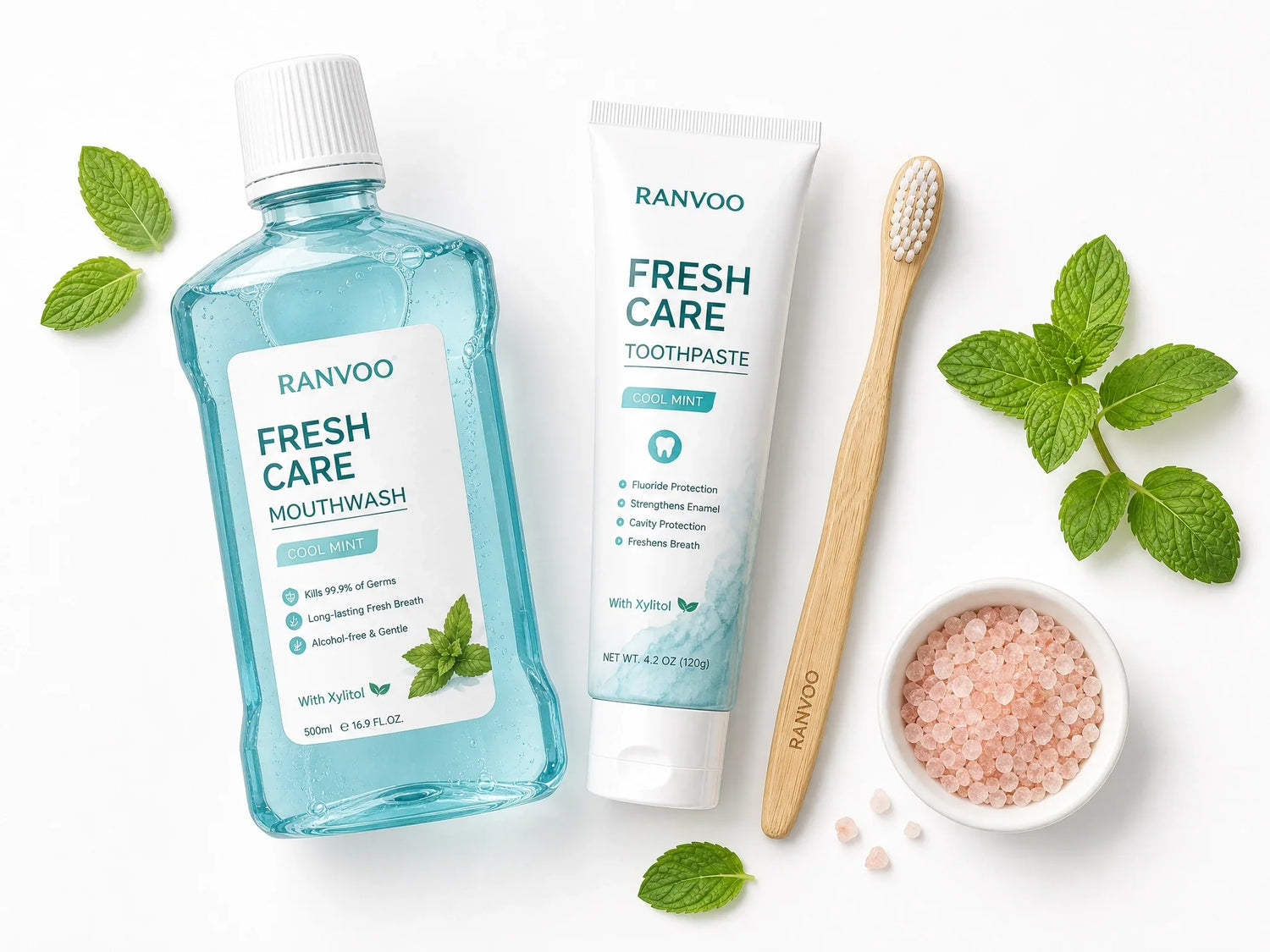
غسول الفم ليس ضارًا بشكل عام — ولكنه أيضًا ليس جزءًا ضروريًا من النظافة اليومية للجميع. الحقيقة هي أن غسولات الفم المطهرة القوية للاستخدام اليومي تعطل الميكروبيوم الفموي، وتضعف مسار أكسيد النيتريك الهام، ويمكن أن تسبب مشاكل أكثر مما تحل. الخيار الأكثر أمانًا: نظف أسنانك جيدًا باستخدام فرشاة أسنان كهربائية لطيفة وفعالة مثل RANVOO AirJet X5 تستخدم تقنية فرشاة الفقاعات لتنظيف ما بين الأسنان وعلى طول خط اللثة بعمق دون قوة كاشطة يمكن أن تهيج الأنسجة الحساسة — ثم استخدم خيط الأسنان، واستخدم فقط غسولًا موجهًا (خالٍ من الكحول، يحتوي على الفلورايد) عندما يكون لديك سبب واضح. وجدت دراسة طويلة الأمد تابعت البالغين لما يقرب من 19 عامًا أن التنظيف الجيد بالفرشاة والخيط يقلل بشكل كبير من خطر الوفاة بأمراض القلب والأوعية الدموية، بينما إضافة غسول الفم لم تساعد أو تضر — الفائدة جاءت من التنظيف الميكانيكي، وليس المواد الكيميائية


