
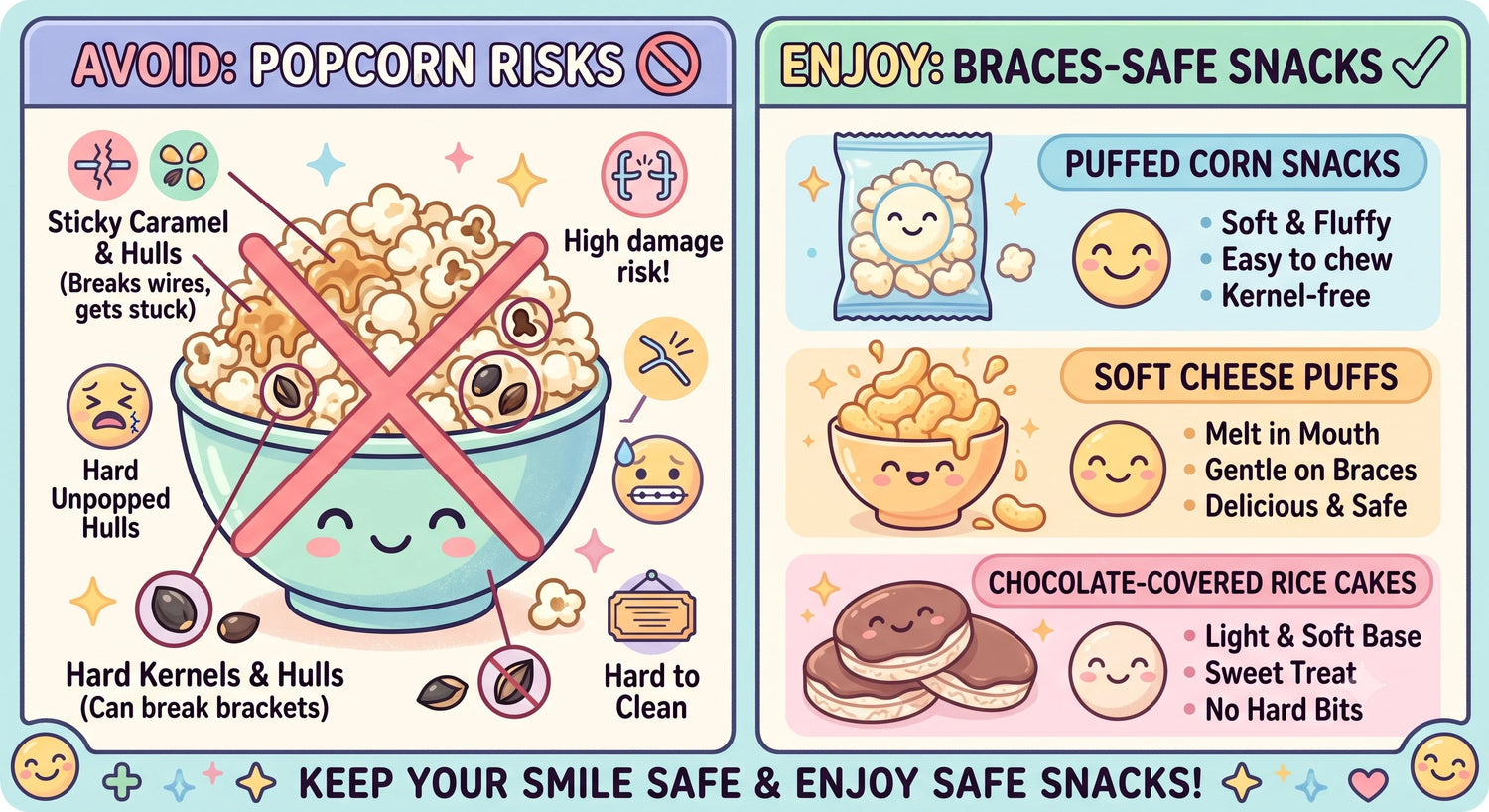
باختصار — يكاد أطباء التقويم يجمعون على قول لا للفشار أثناء علاج التقويم. فالحبات الصلبة غير المنفوشة قد تكسر الحاصرات وتثني الأسلاك، كما أن القشرة الورقية قد تنزلق بسهولة تحت خط اللثة مسببة التهابًا مؤلمًا. وإذا حصل ذلك، فإن الشطف الفوري والتنظيف الدقيق باستخدام فرشاة أسنان كهربائية يمكن أن يخففا الضرر، لكن الأفضل اختيار بديل آمن للتقويم إلى أن يكتمل ابتسامتك.
إن رائحة الفشار الطازج لا تُقاوَم، ومع مرور أشهر وأنت ترتدي التقويم، قد تبدو قائمة الأطعمة الممنوعة كأنها استفزاز شخصي. نحن نفهم ذلك. والسؤال «هل أستطيع فقط ... من فضلك؟» شائع، وأصعب ما يُقال فيه لا هو طبق دافئ من فشار السينما. والإجابة القصيرة والصادقة هي: يجب تجنب الفشار أثناء ارتداء التقويم. لكن فهم السبب بدقة — وما يجب فعله إذا أكلت منه بالخطأ — قد يجعل هذا القيد يبدو أقل اعتباطية وأكثر كاستثمار مباشر في النتيجة النهائية.
لماذا يتعارض الفشار مع التقويم
الفشار يسبب مشكلة للتقويم لسببين مختلفين تمامًا: الحبات الصلبة والقشرة الشفافة. كلاهما يهدد الأجهزة الحساسة والأنسجة الرخوة المجاورة لها.
أول ما يفكر فيه معظم الناس هو الحبات غير المنفوشة (وغالبًا ما تُسمى “الحبات العجوز”). هذه البذور الكثيفة الشبيهة بالحجر تستقر في قاع كل كيس. وعندما تعض عليها بالخطأ، لا يقتصر الضرر على ألم السن — بل تنتقل القوة مباشرة إلى الحاصرات المثبتة على المينا. فحاصرات التقويم مصممة لتحمل قوى المضغ العادية للأطعمة اللينة، لكن الحمل المفاجئ والمركّز من حبة صلبة قد يتجاوز قوة التصاقها. وقد قيست في دراسة مخبرية عام 2023 الضغوط الميكانيكية التي تفرضها أطعمة مختلفة على الحاصرات، ووجدت أن حبات الفشار تولّد ضغوطًا انضغاطية أعلى بكثير من معظم الأطعمة الأخرى المختبرة. وبالمناسبة، كانت القوى مماثلة لتلك التي تسببها الحلوى الصلبة — وهي أصلًا ضمن قائمة “لا تُؤكل أبدًا” لدى الجميع.
والنتيجة؟ حاصرة مكسورة قد ترتخي أو تنفصل تمامًا، أو سلك قوسي مثني يحرّك الأسنان في الاتجاه الخاطئ. وفي الحالتين ستحتاج إلى زيارة غير مخطط لها إلى أخصائي التقويم، مع انزعاج وتأخير محتمل في مدة العلاج. وحتى إذا لم تنفصل الحاصرة فورًا، فإن شقًا دقيقًا في السيراميك أو كسرًا مجهريًا في نقطة الالتصاق قد يضعفها، ممهّدًا لفشلها بعد أيام.
الأخطار الخفية (الأمر ليس مجرد حاصرة مكسورة)
الحاصرة المكسورة أمر واضح ومزعج. لكن الأكثر خفاءً — وغالبًا الأكثر ألمًا — هو قشر الفشار (الغلاف الورقي الرقيق الذي يحيط بالحبة). هذا الغشاء الشفاف لا يذوب في اللعاب. وعندما تمضغ الفشار، قد تنحشر أجزاء من القشرة تحت خط اللثة أو تنزلق بين قاعدة الحاصرة وسطح السن، حيث يصعب جدًا ملاحظتها.
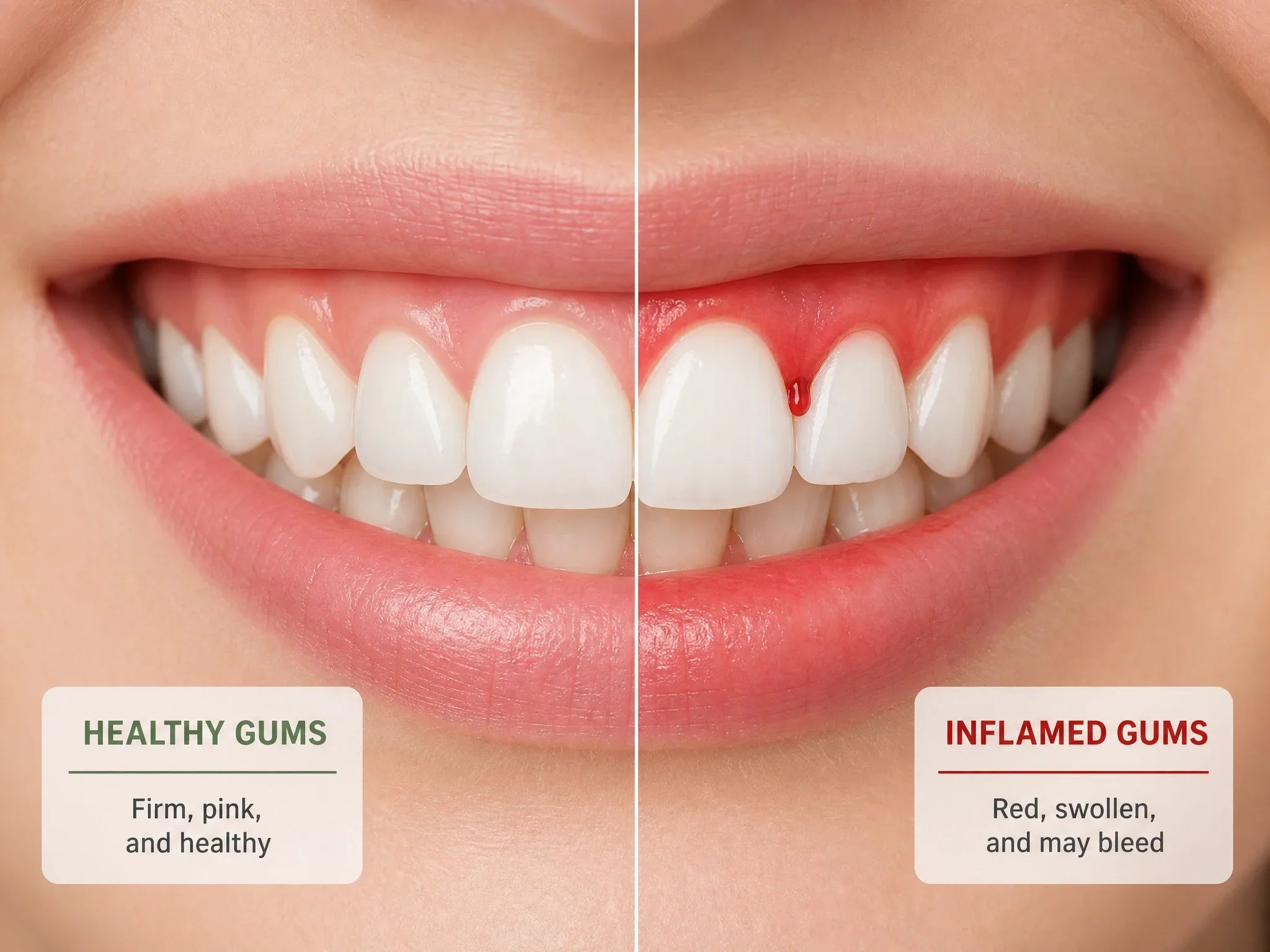
بمجرد أن تعلق، تعمل القشرة كشوكة صغيرة. فهي تثير التهاب اللثة، مما يجعل الأنسجة المحيطة حمراء ومتورمة وحساسة للغاية. وتُعد الحوادث العرضية في تقويم الأسنان، بما في ذلك إصابات الأنسجة الرخوة الناتجة عن أجسام غريبة، شائعة، وغالبًا ما يكون القشر العالق سببًا مهملًا لألم موضعي يظنه المرضى بسبب سلك يجرحهم. وإذا لم تُزل القشرة سريعًا، تتغذى البكتيريا على بقايا الطعام المحتبسة، مما قد يؤدي إلى خراج أو عدوى شبيهة بالتهاب ما حول التاج — وهي حالة طارئة مؤلمة قد تتطلب مضادات حيوية وتنظيفًا احترافيًا، وربما حتى إزالة الحاصرة. وكل زيارة غير متوقعة للعيادة بسبب التهاب اللثة تسرق وقتًا من خطة العلاج وتُبعد خط النهاية أكثر.
الأنواع المغطاة واللزجة من الفشار (فشار الكراميل، فشار الكيتل، الفشار المغموس بالشوكولاتة) تزيد المشكلة سوءًا. فالسكر يلتصق بالحاصرات ويبقى في الشقوق لساعات، ما يرفع خطر إزالة التمعدن بشكل كبير — تلك البقع البيضاء الدائمة المزعجة التي تبقى بعد إزالة التقويم. وحتى نشا الفشار العادي قد يسرّع تكوّن اللويحة إذا لم يُنظف جيدًا.
إذا لم تستطع المقاومة: دليل تقليل الضرر
لن نعطيك الضوء الأخضر، لكننا نعلم أن الرغبة أحيانًا تنتصر. وإذا كنت ستأكل الفشار على أي حال، فإن اتباع بروتوكول صارم يقلل كثيرًا من احتمالات الطوارئ.
- اختر حباتك بعناية شديدة. اختر فقط الرقائق الكبيرة والهشة المشبعة بالزبدة. فالزبدة تُلين بنية الحبة قليلًا، مما يجعلها أقل إيلامًا. ولا تأخذ أبدًا من قاع الوعاء حيث تتجمع الحبات غير المنفوشة.
- امضغ ببطء وبقصد. استخدم أسنانك الخلفية وتجنب الضغط بعنف. وإذا شعرت بقطعة صلبة، توقف — وابصقها بدلًا من الاستمرار.
- اشطف فورًا بماء دافئ وملح. تمضمض بقوة لمدة 30 ثانية. فهذا يساعد على إزالة النشا المفتت وقطع القشرة الصغيرة قبل أن تستقر تحت السلك.
- استخدم جهاز خيط مائي على إعداد منخفض. وجّه التدفق على طول خط اللثة وتحت السلك القوسي بلطف. فتيار الماء النابض هو الأداة الأكثر أمانًا لإخراج قشرة ليست عالقة بعمق. ولا تحاول نزعها بعود أسنان.
- نظّف باستخدام فرشاة أسنان كهربائية. بعد الشطف، نظف جيدًا حول كل حاصرة. ففرشاة الأسنان الكهربائية يمكنها إزالة بقايا الطعام الصغيرة واللزجة التي غالبًا ما تفلت من التنظيف اليدوي، خصوصًا حول الحاصرات وعلى طول السلك — وهذا مهم جدًا عندما تكون قد أكلت للتو طعامًا مشهورًا بالالتصاق.
إذا بقيت بعد هذه الخطوات تشعر بضغط حاد موضعي أو رأيت موضعًا متورمًا وأحمر في اللثة، فغالبًا هناك قشرة عالقة. جرّب مسحًا لطيفًا باستخدام فرشاة بين الأسنان من جهة اللثة إلى الخارج. وإذا استمر الألم أو شعرت بأن الحاصرة مرتخية، فتوقف واتصل بأخصائي التقويم. تجاهله لن يجعل القشرة تذوب؛ بل سيزيد الالتهاب سوءًا فقط.
بدائل ذكية تلبي رغبة القرمشة
الحرمان غير قابل للاستمرار. وأفضل طريقة للبقاء على المسار هي العثور على وجبات خفيفة تحاكي قرمشة الفشار وحجمه، لكنها تذوب أو تلين بسرعة كافية بحيث لا تشكل أي خطر.
- وجبات puffcorn الخالية من القشرة. منتجات مصنوعة من دقيق الذرة (وغالبًا ما تُسمى “puffcorn” أو “butter puffs”) تبدو مثل الفشار لكنها تذوب في ثوانٍ. وبنيتها الهوائية تعني عدم وجود شظايا صلبة ولا غلاف عنيد.
- نفخات الجبن الطرية. الوجبات الخفيفة الكلاسيكية المنفوخة بالجبن مناسبة للتقويم لأنها تبدأ بالذوبان مع أول قضمة. فهي تمنحك الإحساس المالح والمقرمش من دون أي مقاومة صلبة.
- أقراص الأرز المغطاة بالشوكولاتة الذائبة. قرص أرز مقرمش قليلًا ومغطى بالشوكولاتة يمنحك قوامًا هشًا يلين بسرعة. قطّعها إلى قطع صغيرة بحجم اللقمة.
- فاكهة خالية من البذور مقطعة إلى قطع صغيرة جدًا. الموز الناضج أو الشمام أو التوت يوفر حلاوة طبيعية من دون أي احتمال لمفاجأة نواة أو قشرة.
- بارفيه الزبادي مع خلطات جرانولا طرية. ابحث عن الجرانولا الموصوفة بأنها “مخبوزة حتى تطرى” أو استغنِ عنها واستخدم بدلًا منها حبوب إفطار مطحونة ومناسبة للتقويم.
إن الحفاظ على نظافة التقويم يوميًا مهمة أكبر من المعتاد أصلًا، لكن إذا استمتعت أحيانًا بوجبة خفيفة مقرمشة مناسبة للتقويم، فإن فرشاة أسنان كهربائية صوتية تتولى التنظيف الدقيق حول الحاصرات بسهولة، وتحول ما قد يكون عملًا روتينيًا مملًا إلى عادة سريعة وفعالة.

الخلاصة
الخيار الأكثر أمانًا على الإطلاق هو الانتظار حتى تُزال الحاصرات قبل الاستمتاع بوعاء من الفشار. فخطر حاصرة مكسورة أو سلك منزوع من مكانه أو التهاب لثة مؤلم بسبب قشرة مخفية واحدة لا يستحق هذه الوجبة الخفيفة.
لكن إذا حصلت الزلة — وكثيرون يفعلون ذلك — فلا داعي للذعر. اشطف بماء دافئ وملح، واستخدم جهاز الخيط المائي وفرشاة بين الأسنان بلطف، وراقب أي تورم أو ألم مستمر. غطِّ أي حاصرة مكسورة بـ شمع التقويم واتصل لحجز موعد. أنت لست موضع لوم؛ بل تُمنح المعرفة التي تحمي الابتسامة التي تبذل كل هذا الجهد من أجلها. فبضعة أشهر إضافية من اختيار الوجبات المناسبة ثمن بسيط لابتسامة صحية ومستقيمة مدى الحياة.


اترك تعليقًا
This site is protected by hCaptcha and the hCaptcha Privacy Policy and Terms of Service apply.