
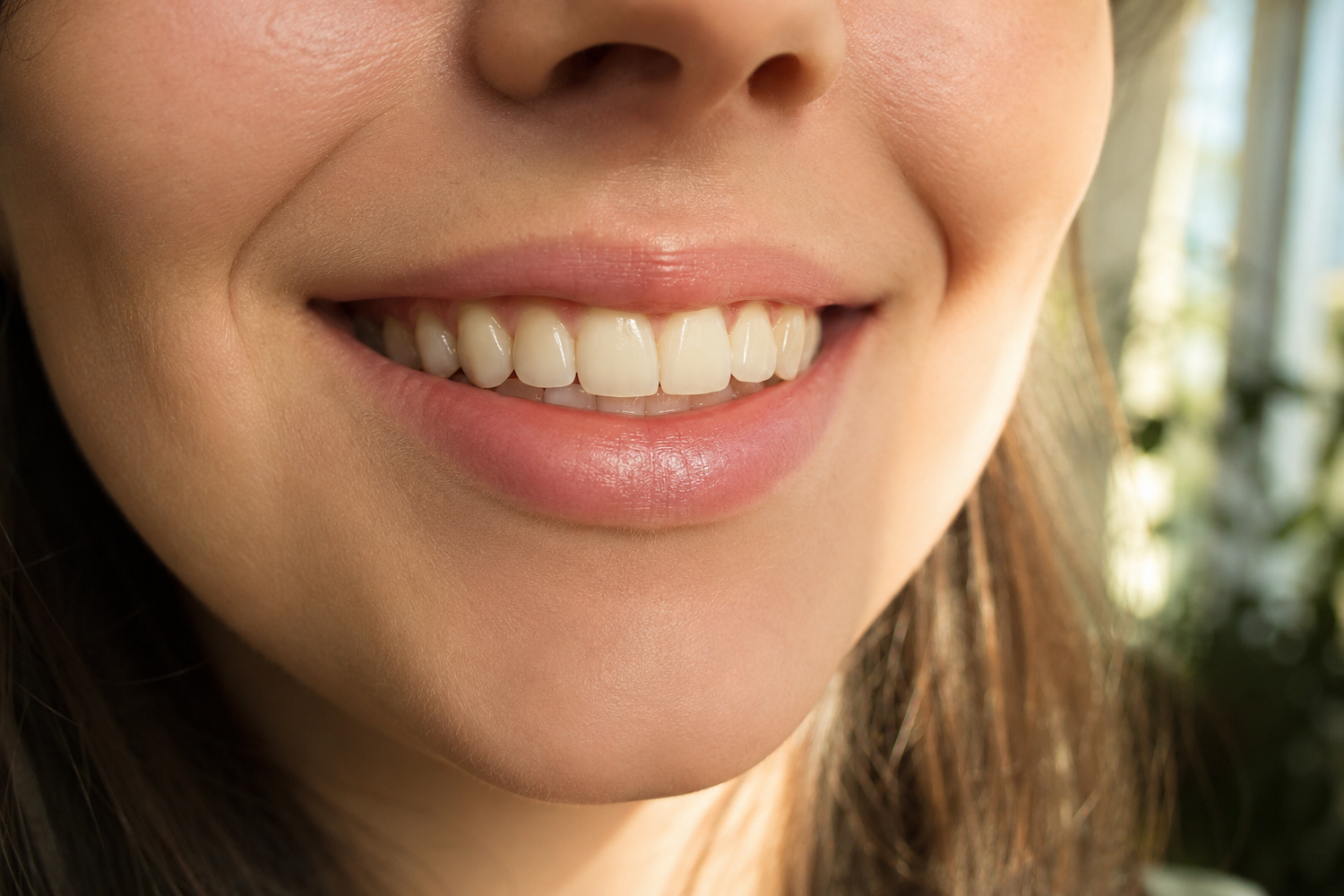
TL;DR: Fluoride does not bleach or chemically whiten your teeth. Its real job is to strengthen enamel and stop cavities. True whitening requires peroxide-based treatments that can change your tooth color from the inside out. But here’s what many people miss: fluoride’s ability to smooth and reinforce enamel can make your teeth look noticeably brighter over time — not by bleaching, but by making it harder for stains to grab on.

The Quick, Honest Answer
You’ve probably seen fluoride listed on your toothpaste tube alongside words like “whitening” or “brightening,” and wondered: does fluoride actually whiten teeth? The straight answer is no. There is no evidence that fluoride can bleach your teeth, lift deep stains, or change the natural hue of your enamel. But that doesn’t mean fluoride has no effect on how your smile looks. Understanding the distinction can save you money on the wrong products and help you appreciate what this mineral really does for your mouth.
Fluoride’s Real Superpower: Strengthening Enamel and Fighting Cavities

Fluoride is a naturally occurring mineral that works on the surface of your tooth enamel, the hard outer shell of each tooth. Its primary role — and the reason it’s added to toothpaste, mouth rinses, and even community water supplies — is to stop tooth decay.
Every day, your enamel loses tiny amounts of calcium and phosphate in a process called demineralization, especially when you eat or drink something acidic. Fluoride steps in to speed up remineralization, helping your saliva deposit those lost minerals back into the enamel, often forming an even stronger crystal called fluorapatite. This rebuilt surface is more acid-resistant and less likely to develop cavities.
In other words, fluoride is your enamel’s construction crew, not its paint job. It patches up microscopic damage and even can reverse early decay, including small white spot lesions — those chalky marks that signal the very beginning of a cavity. While those spots may look whiter, they’re actually signs of structural weakness. Fluoride restores healthy mineral levels, which often makes those spots fade into a more natural, translucent shade. It’s a repair, not a cosmetic whitening effect.
Using a sonic electric toothbrush can take this remineralization benefit further. Its fluid dynamics drive fluoride toothpaste deep between teeth and along the gumline, ensuring the mineral reaches every microscopic pit and groove where decay would otherwise start.
Why Whitening and Cavity Protection Are Two Different Games

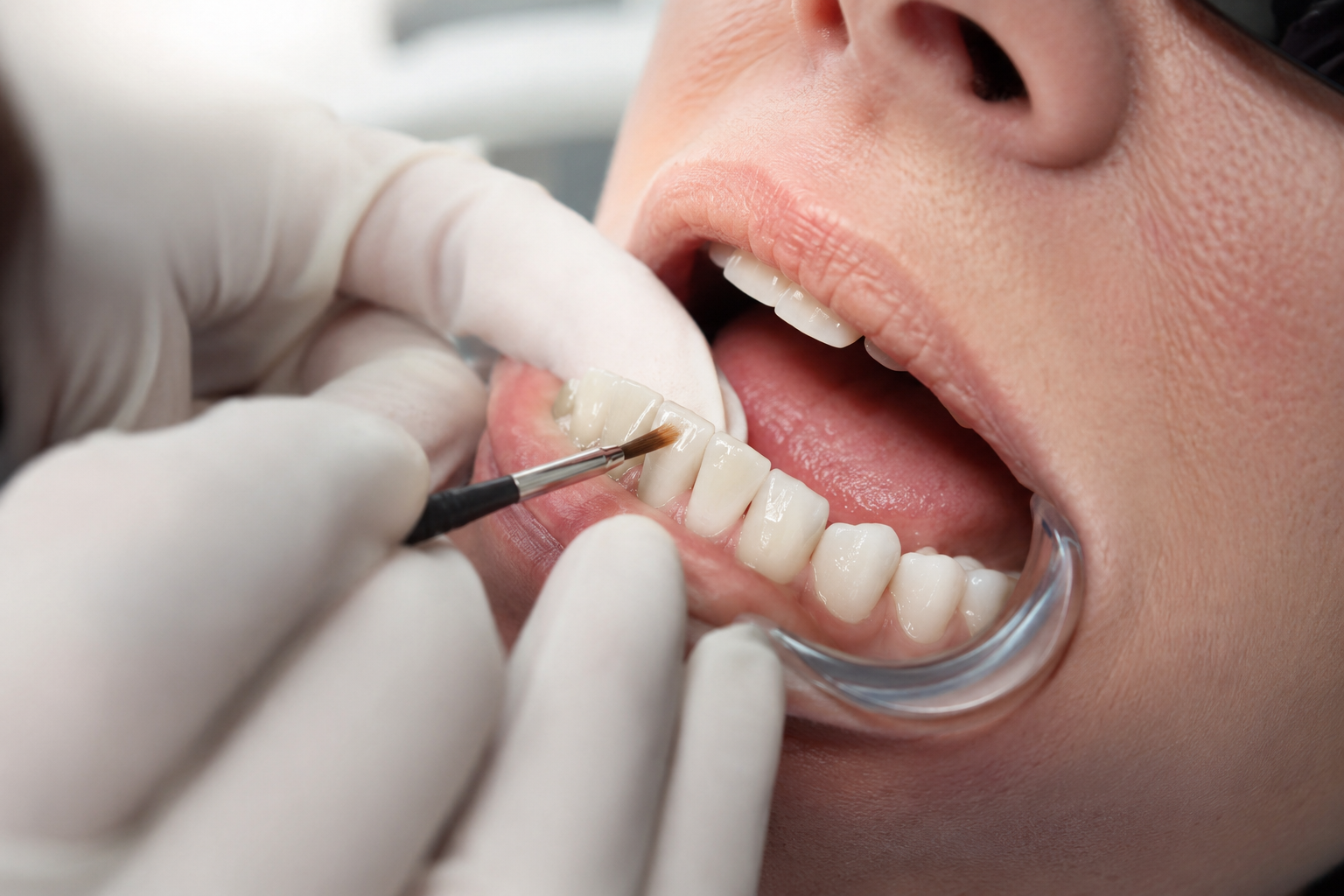
To see why fluoride doesn’t whiten, you need to understand what real tooth whitening — what dentists call tooth bleaching — actually involves. True whitening relies on active chemicals like hydrogen peroxide or carbamide peroxide. These compounds break down into oxygen molecules that seep through the enamel and oxidize intrinsic stains embedded deep in the tooth structure. That’s how a yellowed or darkened tooth can become visibly lighter: the pigment molecules inside are chemically broken apart.
Fluoride can’t do that. It doesn’t penetrate to the inner layers of the tooth, and it doesn’t have any oxidative power. Even when fluoride is added to bleaching gels, it’s not there to boost whitening — it’s there to combat the temporary surface roughness and sensitivity the peroxide can cause.
An in-vitro study put this to a test by applying fluoridated mouth rinse, toothpaste, and fluoride varnish before, after, or around in-office bleaching. The results were clear: fluoride products had no effect on the color change achieved by the bleaching agent. The teeth got just as white with added fluoride as without. So fluoride doesn’t interfere with whitening, but it also doesn’t create or enhance it.
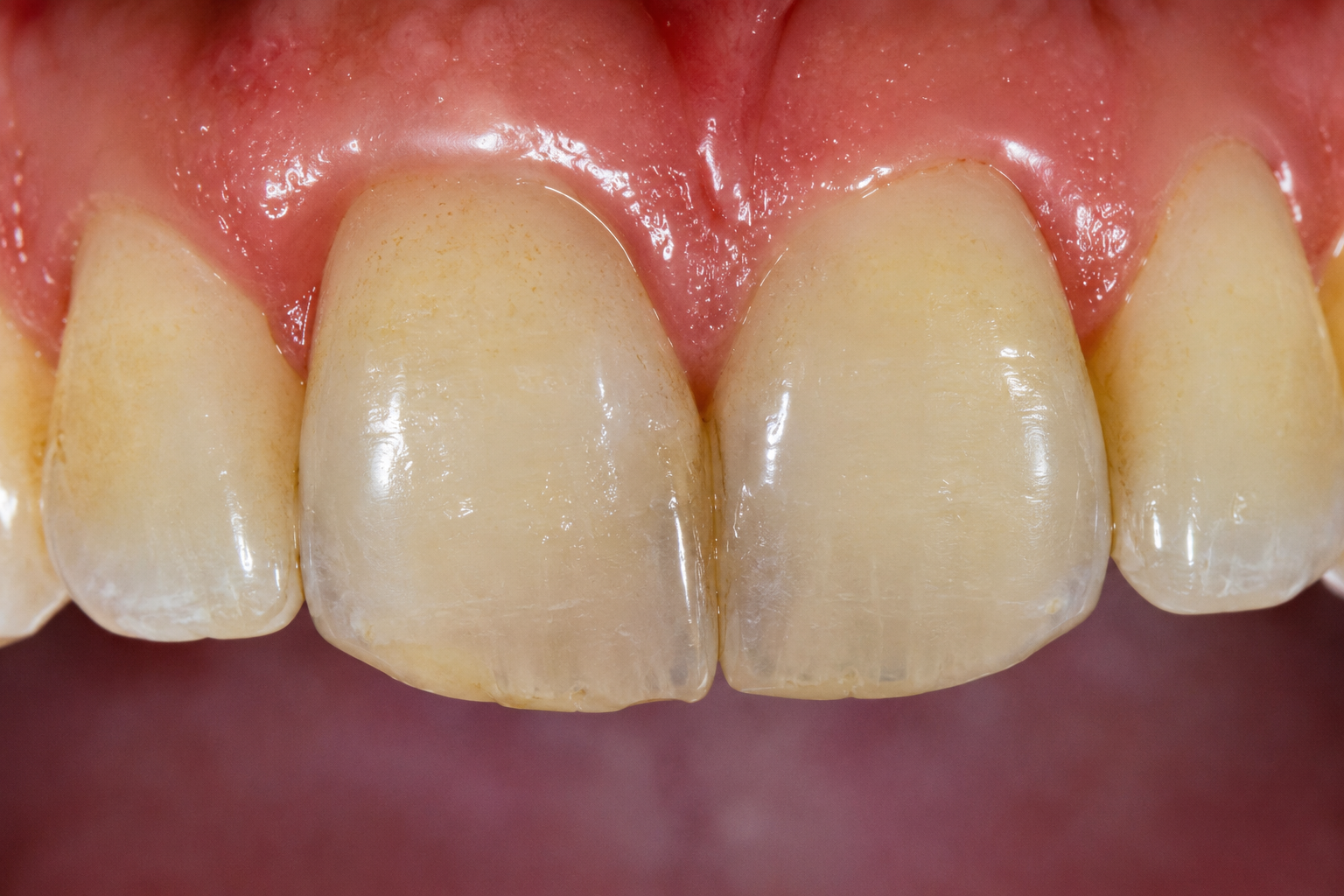
Similarly, extrinsic stains — the brownish layer from coffee, tea, red wine, or tobacco — sit on the outer surface of the enamel. These are removed by brushing with abrasives like silica or calcium carbonate, not by fluoride. Many whitening toothpastes pack both fluoride (for cavity protection) and mild abrasives (for surface stain removal), plus sometimes optical brighteners like blue covarine that create an instant illusion of whiteness. It’s easy to assume the fluoride is doing the whitening, but it’s really the physical scrub and the visual trick.
The Subtle Connection: How Stronger Enamel Can Keep Your Smile Looking Brighter

Even though fluoride doesn’t bleach, it can still influence how bright your teeth appear — but in an indirect, maintenance-type way.
When fluoride accelerates remineralization, it fills in microscopic roughness and pits that occur naturally or after acidic attacks. A smoother enamel surface reflects light more uniformly and is less likely to trap dietary pigments. This means that over time, teeth treated with fluoride may resist new surface stains better than weakened, demineralized enamel. You won’t see a drastic color change like after a bleaching treatment, but your smile can look cleaner and more luminous simply because the enamel stays healthier.
That effect was supported by a recent study on bleached teeth. Researchers found that while remineralizing agents containing fluoride didn’t affect the initial whitening, those containing casein phosphopeptide-amorphous calcium phosphate fluoride (CPP-ACPF) or hydroxyapatite plus fluoride helped maintain brightness and slowed restaining from red wine. So fluoride’s real cosmetic contribution is keeping your smile bright after it’s been whitened, not creating the whitening in the first place.
Switching to an electric toothbrush can support this maintenance. The excellent plaque removal and even pressure you get from a power brush reduce the film where staining compounds stick, while fluoride toothpaste keeps the enamel continually rebuilding.
What to Use for Actual Whitening

If you’re after a noticeably whiter shade, you need a product that chemically bleaches. Here’s what the evidence says actually works:
- Peroxide-based gels and strips: Whether applied at home with custom trays or in a dentist’s office, products containing hydrogen peroxide or carbamide peroxide are the backbone of safe, effective whitening. A systematic review of 30 studies confirmed that both in-office and at-home bleaching effectively lighten tooth color, and that at-home carbamide peroxide tend may offer longer-lasting results with lower sensitivity.
- Professional in-office treatments: A dental professional can use higher peroxide concentrations (often with light activation) for faster results. However, this can increase temporary post-whitening sensitivity.
- Over-the-counter whitening strips and paint-on gels: These can be effective if they contain a proven concentration of peroxide, but results are often slower and more subtle compared to dentist-supervised kits.
A word of caution: avoid overusing highly abrasive “whitening” toothpastes that promise dramatic results without peroxide. These can remove surface enamel over time, actually making teeth look more yellow as the darker dentin underneath begins to show through. Always look for the ADA Seal of Acceptance on fluoride toothpastes if you want a reliable cavity fighter.
After whitening, your teeth may feel temporarily sensitive. That’s where desensitizing agents containing fluoride, potassium nitrate, or amorphous calcium phosphate come in. They help calm the nerves and rebuild the enamel surface — but they are not whitening agents themselves. Your dentist can recommend the right post-whitening care so you can enjoy your brighter smile without discomfort.
The bottom line: Fluoride is a champion at keeping teeth strong, healing early decay, and preserving a smooth surface that resists stains. But for visible whitening, you need a peroxide-based treatment. Knowing the difference helps you choose the right tools and love the results.


اترك تعليقًا
This site is protected by hCaptcha and the hCaptcha Privacy Policy and Terms of Service apply.