
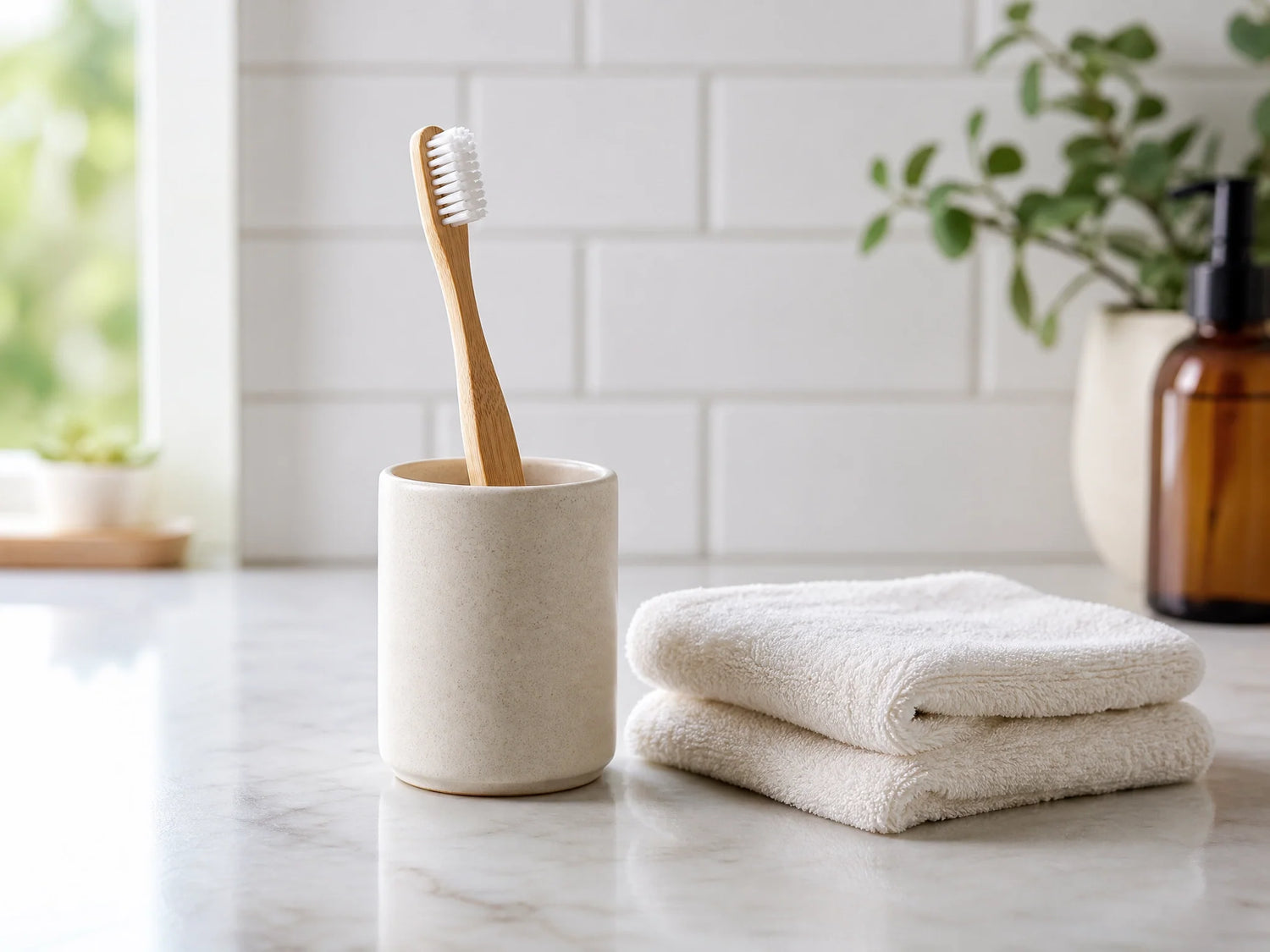
الخلاصة — فرش الأسنان المصنوعة من الخيزران تنظف أسنانك بنفس فعالية البلاستيكية منها، وتبقى صحية إذا جففتها بشكل صحيح، وتقلل بشكل كبير من النفايات البلاستيكية المرتبطة بروتينك الصباحي. التغيير الوحيد في العادة؟ ستحتاج إلى نزع شعيرات النايلون قبل تحويل المقبض إلى سماد. بالنسبة لمعظم الناس، هذا تنازل صغير يستحق القيام به.
ما هي فرشاة الأسنان المصنوعة من الخيزران بالضبط؟
المقبض يأتي من خيزران موسو — وهو نوع سريع النمو لا يُحصد من أراضٍ مخصصة للمحاصيل الغذائية. إنه دافئ وجاف وملمسه محبب قليلاً، لا يشبه البلاستيك الناعم إطلاقاً. ومع ذلك، لا تزال الشعيرات صناعية أو مشتقة من الحيوانات. تقريبًا كل "فرشاة صديقة للبيئة" في السوق تستخدم واحدًا من ثلاثة خيارات:
| نوع الشعيرات | القابلية للتحلل | المتانة | الملمس |
|---|---|---|---|
| نايلون-6 | غير قابل للتحلل | 3 أشهر، قياسي | ملمس متوسط |
| نايلون-4 | قابل للتحلل جزئيًا (يتطلب سمادًا صناعيًا) | مشابه لنايلون-6 | أكثر نعومة قليلاً |
| شعر الخنزير | قابل للتحلل | يمتص الماء، يتلف بشكل أسرع | ناعم، إسفنجي |

تتجنب معظم العلامات التجارية العبوة البلاستيكية الفقاعية وتختار صندوقًا من الورق المقوى البسيط. عادةً لا يحتوي المقبض نفسه على أي ورنيش أو طلاء صناعي — فقط خيزران مصقول خفيفًا.
ما مدى جودة تنظيفها فعليًا؟
الجواب المختصر: يمكن لفرشاة الخيزران أن تضاهي البلاستيكية، خاصة عندما تحتوي على شعيرات دائرية الأطراف بشكل صحيح لا تخدش اللثة.
- في مقارنة مباشرة بين تلاميذ المدارس، كانت فرش الأسنان المصنوعة من الخيزران الأكثر فعالية في إزالة البلاك، متفوقة على كل من الفرش البلاستيكية وفرش النيم المصدر.
- وجدت دراسة سريرية أخرى أنه بعد 8 أسابيع، كان الانخفاض في نزيف اللثة متطابقًا تقريبًا — انخفاض بنسبة 21% لفرشاة الخيزران، و22.7% لفرشاة النايلون العادية المصدر.
يتفق أخصائيو الأسنان عمومًا على أن قوة التنظيف تعتمد أكثر بكثير على تصميم الشعيرات من مادة المقبض. معظم فرش الخيزران تستخدم رؤوسًا مستقيمة غير مائلة. إذا كنت معتادًا على قبضة منحنية، فقد تشعر بأنها غير مريحة قليلًا في البداية، لكن الفرق يختفي بعد أيام قليلة. نصيحة سريعة للتكيف: أمسك الفرشاة بالقرب من الرأس للتحكم بشكل أفضل في المناطق الضيقة.
هل فرش الأسنان المصنوعة من الخيزران صحية ومتينة؟
أكبر مصدر قلق لدى الناس — العفن — يمكن التحكم فيه. يحتوي الخيزران على مركبات طبيعية مضادة للميكروبات (فينولات مشتقة من اللجنين وفوران) تقلل البكتيريا بشكل نشط بعد الاستخدام.
أكدت دراسة مخبرية عام 2022 أن عدد البكتيريا على فرش الخيزران كان أقل بنسبة 95-99٪ بعد 12-24 ساعة من التخزين، مطابقًا لمستويات النظافة في الفرش البلاستيكية القياسية. ترطيب الفرشاة قبل الاستخدام قلل من الالتصاق البكتيري الأولي بشكل أكبر.
هذا يعني أن فرشاة الخيزران الخاصة بك ليست مغناطيسًا للبكتيريا طالما اتبعت روتينًا بسيطًا للعناية:
- اشطفها جيدًا بعد كل استخدام وتخلص من الماء الزائد.
- جفف المقبض بمنشفة — لا تترك الماء في حامل الفرشاة.
- خزّنها بشكل عمودي في مكان مفتوح وجيد التهوية، ومن الأفضل بعيدًا عن منطقة رذاذ الدش.
- مرة في الأسبوع، اتركها في ضوء الشمس غير المباشر لساعتين حتى تجف تمامًا.

المقبض نفسه يدوم تمامًا مثل البلاستيكي — حوالي 3 أشهر. استبدلها عندما ترى الشعيرات تتشعب جانبًا أو تلاحظ أي بقع داكنة على الخشب لا تختفي عند المسح.
القصة البيئية الحقيقية
تتألق فرش الخيزران عندما تنظر إلى الأثر من المهد إلى اللحد. تصنف تقييمات دورة الحياة باستمرار هذه الفرش إلى جانب الفرش البلاستيكية ذات الرؤوس القابلة للاستبدال كخيارات ذات التأثير الأقل المصدرينمو مقبض الخيزران دون ري، ونادرًا ما يحتاج إلى مبيدات حشرية، ويمتص الكربون بسرعة.
لكن هناك فارق دقيق. كشفت دراسة مشتركة بين كلية إيستمان في UCL وكلية ترينيتي في دبلن أن زراعة الخيزران قد تتنافس على الأراضي التي قد تدعم التنوع البيولوجي أو تعوض الكربون المصدر. لذا فإن المكسب ليس مطلقًا — بل يعتمد على المصدر.
عندما يصل المقبض إلى نهاية عمره الافتراضي، يمكن وضعه مباشرة في صندوق السماد المنزلي ويتحلل في غضون بضعة أشهر. ومع ذلك، فإن الشعيرات لا تزال بلاستيكية (عادةً من النايلون-6). يجب عليك سحبها بالكماشة ووضعها في النفايات العادية. للحصول على فرشاة قابلة للتحويل إلى سماد حقًا، ابحث عن شعيرات من النايلون-4، على الرغم من أنها لا تزال بحاجة إلى مرافق تحويل صناعية عالية الحرارة لتتحلل تمامًا.
دليل سريع لعلامات الثقة عند التسوق: - شهادة FSC — تتحقق من أن الخيزران جاء من غابات تدار بمسؤولية. - B-Corp — تؤكد أن الشركة تلتزم بمعايير اجتماعية وبيئية عالية. - التغليف النباتي والخالي من البلاستيك — جيد، لكن تحقق مما إذا كانوا يقصدون "البلاستيك الحيوي" بدلاً من المواد النباتية الحقيقية.
أين تقصر فرش الأسنان المصنوعة من الخيزران
لا يوجد منتج مثالي. إليك ما تتخلى عنه:
- تكلفة أعلى لكل فرشاة: معظم فرش الخيزران تكلف 4-7 دولارات، مقارنة بـ 2 دولار لفرشاة بلاستيكية أساسية. على مدار عام (4 استبدالات)، هذا مبلغ إضافي يتراوح بين 8-20 دولارًا.
- تنوع محدود في التصميم: لن تجد بسهولة رؤوسًا مائلة أو مقابض مستدقة أو خيارات شعيرات فائقة النعومة. إذا كنت تعاني من انحسار اللثة أو أسنان حساسة جدًا، فقد تستفيد من فرشاة كهربائية مصممة خصيصًا للثة الحساسة — مثل RANVOO AirJet X5. تستخدم تقنية "الفرشاة الفقاعية" فقاعات دقيقة لطيفة لتنظيف عميق دون تهيج الأنسجة الحساسة، مما يوفر ترقية أكثر ذكاءً إذا كانت لثتك بحاجة إلى عناية إضافية.
- خطوة إزالة الشعيرات: يجب أن تقضي 10 ثوانٍ في نزع خصلات النايلون قبل تحويل المقبض إلى سماد. إنها مهمة صغيرة، لكنها غير قابلة للتفاوض.
دليل عملي للتحول
قائمة تحقق المشتري لفرشاة خيزران عالية الجودة: - شعيرات عادية أو مملوءة بالفحم (الفحم لا يبيض بشكل موثوق، لكنه جيد) - أطراف شعيرات مستديرة (تمنع تلف اللثة) - مقبض معتمد من FSC - عناقيد شعيرات مثبتة بإحكام (بدون خصلات فضفاضة عند الوصول) - مقبض خالٍ من الشمع — سطح أملس مصقول قليلاً - تغليف خالٍ من البلاستيك تمامًا
متى يجب تجنب فرشاة الخيزران: - لديك براعة يدوية محدودة وتحتاج إلى مقبض مائل - حمامك رطب للغاية بدون دوران للهواء - لديك حساسية معروفة من شعر الخنزير (إذا كنت تفكر في الشعيرات الطبيعية)
العناية اليومية باختصار:
| افعل | لا تفعل |
|---|---|
| جفف المقبض بمنشفة بعد الاستخدام | اتركها ملقاة في بركة ماء |
| خزنها في حامل مفتوح أو حقيبة مهواة | ضع غطاءً عليها أو خزنها في درج مغلق وهي مبللة |
| اشطف الشعيرات جيدًا | استخدم غسول فم قاسيًا يوميًا — فقد يؤدي ذلك إلى تدهور الخيزران بشكل أسرع |
الخلاصة
لأسنانك ولثتك، فرشاة أسنان من الخيزران جيدة الصنع بشعيرات مستديرة الأطراف تنظف بفعالية مماثلة لفرشاة بلاستيكية يدوية — الأبحاث تدعم ذلك. للنظافة، خصائص الخيزران الطبيعية المضادة للميكروبات تضعك على قدم المساواة، بشرط أن تتركها تجف تمامًا بين الاستخدامات.
بالنسبة للكوكب، هي الفائز الواضح، بمجرد التعامل مع التخلص من الشعيرات بشكل صحيح. تلك الخطوة الإضافية الصغيرة — سحب النايلون قبل التسميد — هي أهم عادة يجب بناؤها.
إذا كنت مستعدًا لتقليل كومة الفرش البلاستيكية التي ترافقك طوال حياتك، فإن فرشاة الخيزران هي بديل بسيط وصادق. اختر واحدة بملصق شهادات نظيف، وعاملها بقليل من العناية، ولن تفتقد النسخة البلاستيكية أبدًا.




اترك تعليقًا
This site is protected by hCaptcha and the hCaptcha Privacy Policy and Terms of Service apply.